
The Upside: Growth, Potential, and the Future of Fairfield County, Connecticut
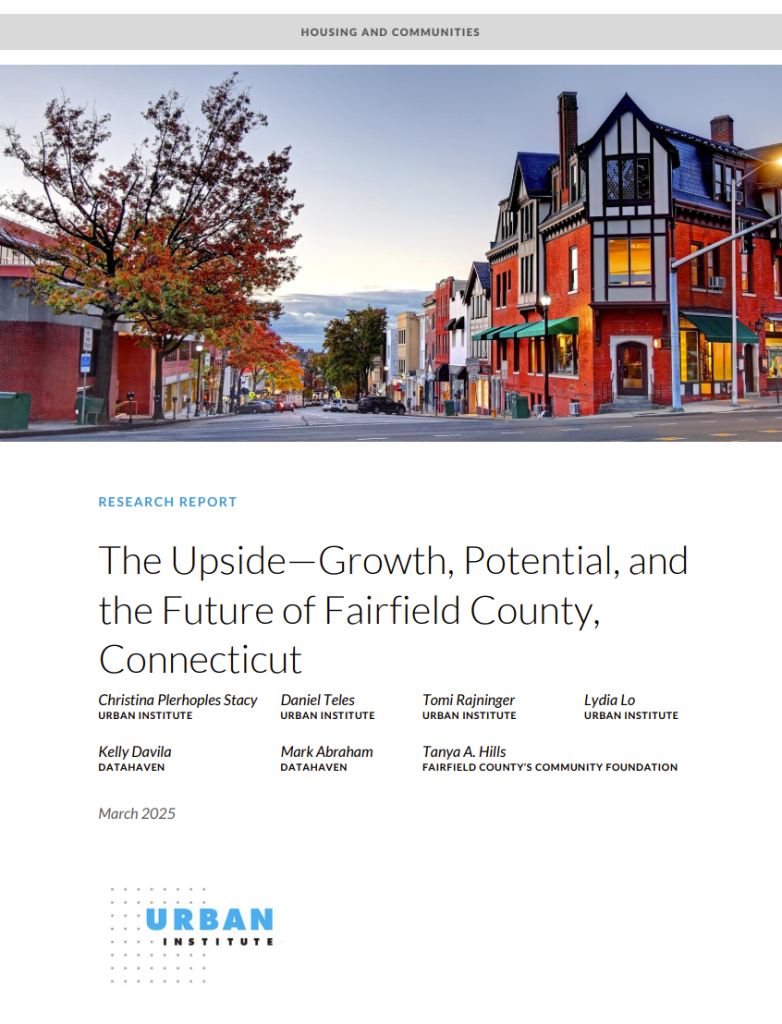
Report authors: Christina Plerhoples Stacy, Daniel Teles, Tomi Rajninger, Lydia Lo (Urban Institute); Kelly Davila, Mark Abraham (DataHaven); Tanya A. Hills (Fairfield County’s Community Foundation)
Summary: This March 2025 report from the Urban Institute, DataHaven, and Fairfield County’s Community Foundation examines the racial and ethnic inequities in Fairfield County, Connecticut — one of the most unequal regions in the United States — and estimates the economic benefits that would flow to the entire community if those gaps were closed. The research finds that if Black and Latino residents had the same incomes, educational attainment, and homeownership rates as their white neighbors, the county’s GDP could grow by $15.6 billion, 84,000 more residents could hold college degrees, 33,000 more households could own homes, and local and state tax revenues could increase by over $1.8 billion combined. The report also offers a concrete, evidence-based roadmap, developed in partnership with a 27-member community advisory panel, covering education, workforce development, housing, wealth building, and health, with specific recommended actions tailored to businesses, government, philanthropies, and the general public.
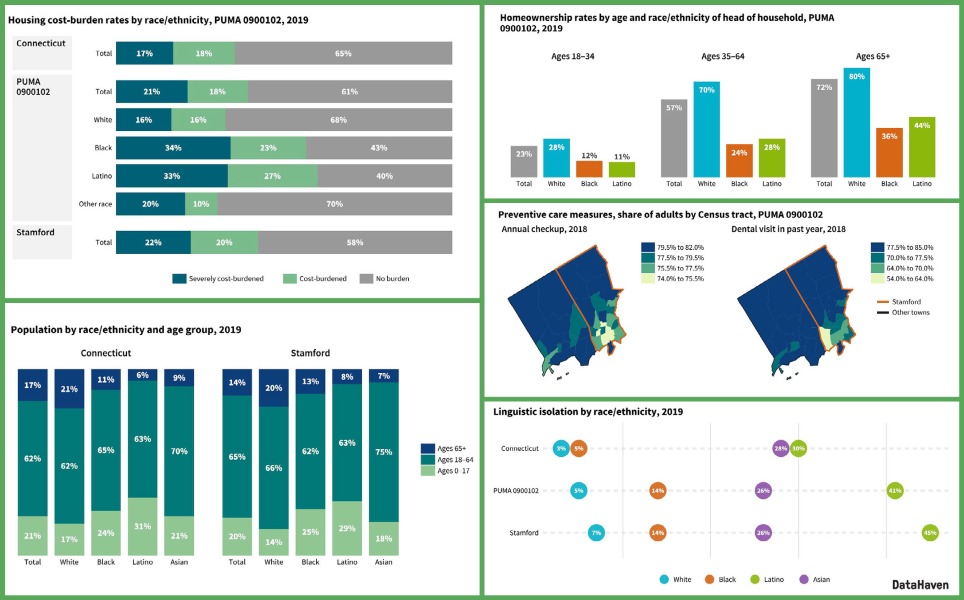
Key Indicators & Data Sources include: Demographics; Median household income, Educational attainment (bachelor’s degree rates), Homeownership rates and home values, Mortgage denial rates by race and income (Home Mortgage Disclosure Act (HMDA) data); Gross Domestic Product (GDP); State income tax revenue; State aid to municipalities and schools; Property tax revenue; Unmet mental health needs and discrimination experiences from the DataHaven Community Wellbeing Survey.
An executive summary of the report is also available here.
Related Reports
Related Data
Document
The Upside: Growth, Potential, and the Future of Fairfield County, Connecticut (PDF)
Document
Fairfield County Equity Report 2023
Dataset
DataHaven Community Index Scores from 2023 reports with data for 169 CT towns
Document
Fairfield County Community Wellbeing Index 2023 (PDF)
Document
Housing Connecticut’s Future 2021 Report (PDF)
Document