
[Excerpt from news article by Sasha Allen and Katy Golvala, 1/27/26]
For months, Patricia hasn’t slept through the night. She’s stopped visiting friends, she no longer goes to the gym or the park, and she’s gained 60 pounds since immigration enforcement ramped up in the past year.
Patricia moved to the U.S. from Mexico 18 years ago and built a life as an active member of her community in Connecticut. But today, the only time she leaves her house is to work for a few hours each weekend, cleaning offices.
[….]
Across Connecticut, residents who fear they or a loved one may be deported are self-isolating and facing mounting mental and physical health consequences as a result.
A survey from DataHaven released in October found nearly a third of Connecticut residents worry “a lot” or “some” that either they or someone close to them could be deported, detained or have their legal immigration status revoked. That concern is significantly higher among Latino residents, 44% of whom reported such fears.
Anxiety surrounding potential immigration enforcement measures is leading some people to skip medical appointments, lose sleep and opt out of social activities — all of which, physicians say, damages mental and physical health.
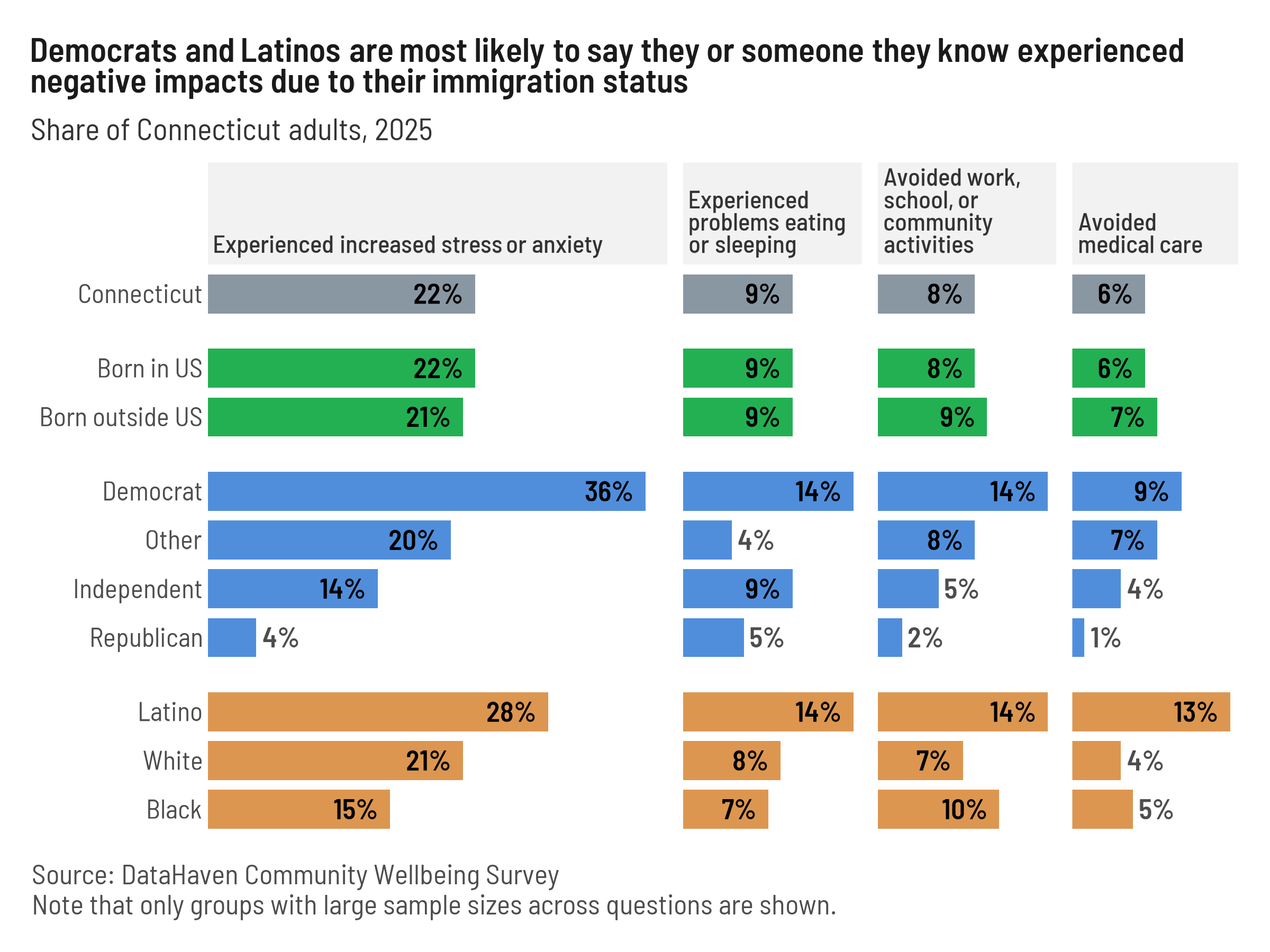
Researchers at DataHaven found that, of the Connecticut residents who fear immigration enforcement, 14% have avoided medical care or know someone who has.
Camila Bortolleto is a steering committee member for HUSKY for Immigrants, a group that advocates to expand state-sponsored health coverage for residents regardless of immigration status. She said many immigrants are fearful that ICE will show up at their doctor’s appointment, or that they will get in trouble if they seek health care.
“We’re seeing a lot of folks who are very scared to seek medical care,” Bortolleto said. “They ‘tough it out’ until it gets so bad that they need urgent medical care. At that point, it’s much, much worse, health-wise. It’s also much more expensive by that point.”
Research finds this is a general trend influenced by immigration enforcement increases or policy change. Atheendar Venkataramani, a clinician, researcher and professor at the University of Pennsylvania, contributed to a study in 2021 that found that increased immigration enforcement correlated with a reduction in Hispanic individuals seeking health care.
“On average, what we found was that there was less health care seeking, even among people with chronic conditions who we would expect to see their doctor relatively frequently,” Venkataramani said. “Ours is one study, but there are tons of studies that link immigration enforcement with health care seeking and health care outcomes.”
[….]
The DataHaven survey found that more than half of Connecticut residents who fear immigration enforcement report increased stress or anxiety. And of residents fearing enforcement, around 20% report avoiding public settings, like school and work, or reported problems eating and sleeping.
Venkataramani agreed with Shader, saying that mental health is likely the aspect of health that “shifts most exquisitely” with immigration policy and enforcement changes. He’s seen these changes first-hand in his own patients who are immigrants.
“They’ll screen positive for depression and anxiety. They will come in with elevated heart rate, possibly elevated blood pressure,” Venkataramani said. “They’re very circumspect to share what’s going on.”
Plus, increased stress can have dramatic physical effects on the body, impacting cortisol levels, metabolism and heart health, he added. One 2018 study found that immigration policy targeting undocumented residents in Arizona led to lower birth weight in babies born to immigrant mothers.
[Excerpt from feature article by Cris Villalonga-Vivoni, Dec 5, 2025, across all Hearst CT newspapers]
Connecticut may be one of the country’s healthiest states, but that good health continues to be unequally experienced across the state, according to the latest report from DataHaven.
The New Haven-based research non-profit’s latest community well-being survey is in its eighth edition, said Mark Abraham, executive director of DataHaven. More than 53,000 Connecticut adults have participated in interviews for DataHaven’s survey since it began in 2015.
This year, 1,371 adults were interviewed about their health, economic stability and community. It was then statistically weighted to better match the state’s demographics, leaving the overall results with a maximum margin of error of 3.5%, according to the study.
Roughly 20% of respondents described their health as “fair” or “poor,” a figure that was higher among low-income residents, parents, people with disabilities, and those previously incarcerated. At the same time, more people are experiencing mental health and chronic health issues while also facing barriers to accessing care.
Here are some of the other key insights into the health of Connecticut residents:
Health at a glance
How healthy someone feels depends on several factors and varies widely across demographics, according to the data.
More residents, for example, are being diagnosed with chronic health conditions.
According to the survey, about 150,000 more adults have been diagnosed with diabetes or hypertension since 2018. Meanwhile, roughly 17% of respondents reported an asthma diagnosis, including 27% of Latinos, 17% of Black residents, and 15% of white residents. Among Latinos, asthma rates were exceptionally high for Puerto Ricans, at 36%.
Mental health challenges also continue to rise, with more than 200,000 additional adults reporting anxiety and depression since 2018. LGBTQ+ respondents, in particular, were 1.5 times more likely to screen positive for major depression, 1.4 times more likely to report anxiety, and 1.6 times more likely to delay medical care in the past year.
Abraham said it’s difficult to pinpoint a single cause of rising mental health issues because residents are often dealing with overlapping pressures, like financial instability, housing problems, food insecurity, and more.
“If people are financially stressed, that can increase anxiety and depression and thinking about financial insecurity and the effects that has on your social networks, ability to go out to events and visit family members,” he said. “If you’re financially stressed, it could make it more difficult to get that social support.”
Insurance gaps
Around 92% of people have health insurance, with Black (91%) and Latino (81%) adults being less likely to have coverage compared to white adults (96%). However, the data show that the likelihood of having insurance increases with both education and income levels.
In Connecticut, more than half of respondents get their health insurance through a current or past employer or union, while 17% are covered by HUSKY, the state’s Medicaid program. At the same time, 23% use Medicare while 9% buy their insurance directly from the insurers.
Medicaid enrollment is highest in Connecticut’s urban centers and is more common among men, low-income residents, and people with prior incarceration. Among those covered, 22% have children at home and 27% report a disability.
Racial disparities are also apparent, with 31% of Black residents and 36% of Latino residents relying on Medicaid, compared with 11% of white residents.
Gaps in access
Accessing medical care remains a growing problem across Connecticut, with about 11% of respondents reporting they don’t have a regular place to go for medical care.
Some people were more likely to say they don’t have a regular provider, including men, people of color, and individuals who have been incarcerated multiple times. Of those without a usual source of care, about 17% also have children at home.
About 12% said they didn’t get the care they needed in the past year. In particular, people born outside the U.S., those with low incomes, individuals with disabilities, and those who were previously incarcerated were more likely to forgo medical care.
Although 60% of respondents saw a dentist in the previous six months, over 14% said they hadn’t been to one in at least two years—a gap that was more common among low-income residents, people with disabilities, and LGBTQ adults.
Roughly 13% of adults, including 22% of young adults, reported needing mental health care in the past year but were unable to access it, mainly due to cost or a lack of services.
In comparison, many individuals in the higher income brackets reported having one or more care providers.
Transportation, Abraham said, proved to be a surprising yet significant barrier to care. An estimated 7% of adults reported missing a doctor’s appointment because they had no way to get there, a rise from previous years. This rate was highest among people of color, low-income residents, individuals with disabilities, and those who identify as LGBTQ+.
“That’s something I want to look into more. Like are people unable to buy cars? Or they’re just worried about paying the cost of the bus if you know you’re paying more for rent?” he said. “I’m not sure exactly what’s driving that, but that’s kind of concerning, that people can’t get around.”
Nicotine, cannabis, alcohol
Fewer people are smoking cigarettes across the state, according to the new data; yet, Abraham said, this is partly because vaping has become more popular, especially among younger adults.
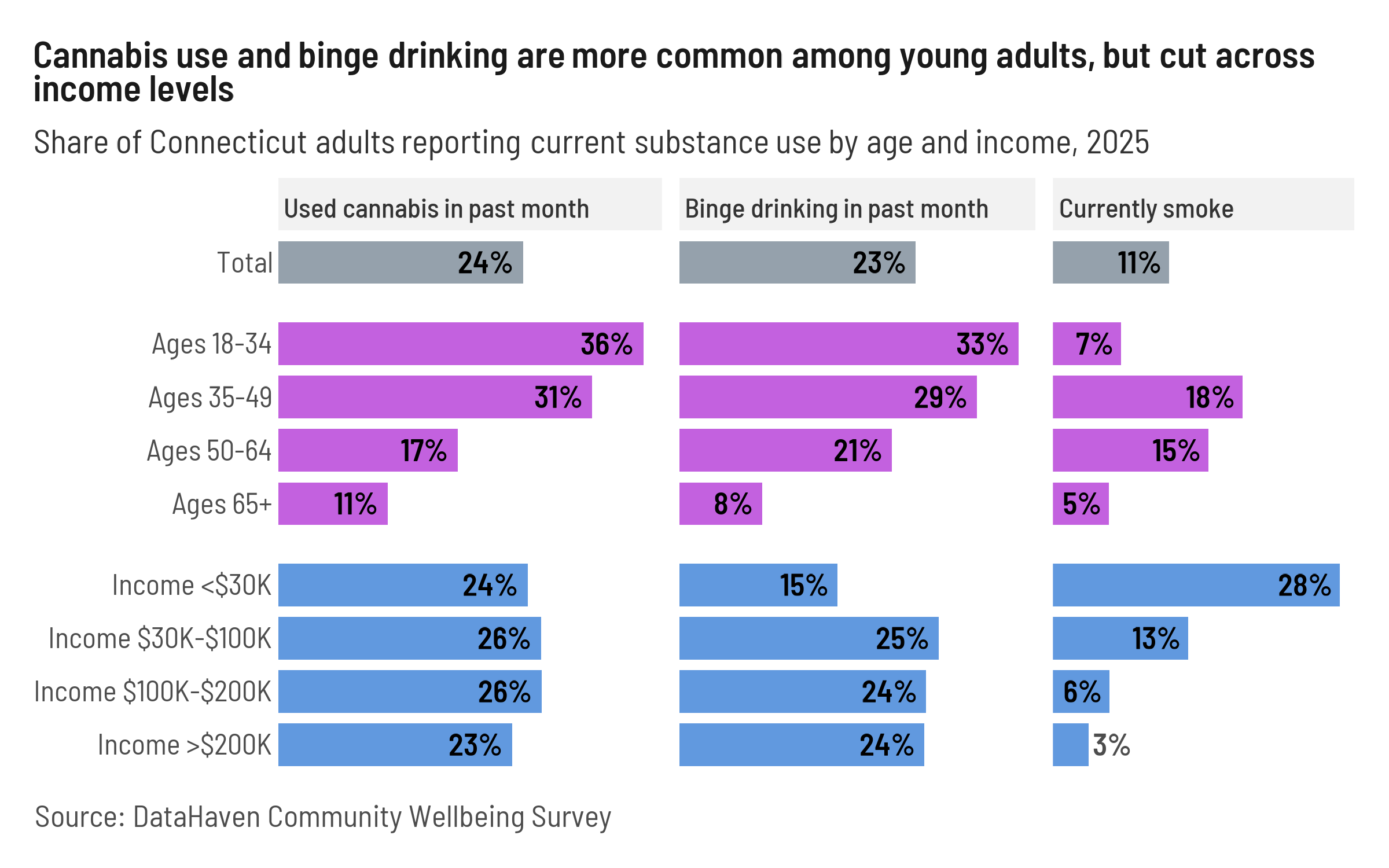
At the same time, cannabis use doubled, likely due to legalization in 2021. Around 24% of people reported using marijuana in the past month, up from 12% in 2018. The spikes in usage come during a time of higher rates of loneliness, Abraham said, prompting further research on the relationship between cannabis and mental health.
Another typical behavior among young adults, at a 23% prevalence rate, is binge drinking, or consuming multiple drinks on an occasion. Black residents reported the highest rate at 31%, compared with 23% of White residents and 19% of Latino residents. About 27% of those who binge drink have children at home.
Changes in policy
Questions about public benefits, such as SNAP and Medicaid, were added to this year’s survey in light of major federal changes to the programs, Abraham said.
About 26 percent of Connecticut adults, or their household members, have received SNAP at some point, while 36 percent have received Medicaid/HUSKY. Most respondents added that there isn’t enough support for low-income residents, and many worry that ongoing changes will lead to more people will struggle to access care or may go hungry during a time of rising food insecurity.
Increasing immigration enforcement and activity is also negatively affecting Connecticut residents, according to the data.
Across Connecticut, 31% of adults worry “somewhat” or “a lot” that they or someone they know could be detained or deported, or lose their legal status. Latino adults, in particular, are reporting higher levels of stress, sleep loss and are avoiding medical care, travel and social activity as a result.
“More people might experience the effects of that system, and the questions in our survey, I think, might be able to track going forward, like, how people are affected by that kind of activity in the communities?” Abraham said.
[Excerpt of front page news article, published 11/20/2025, with interactive data visualizations by Sasha Allen, CT Mirror]
Connecticut residents are struggling more with mental health issues and some basic needs than they were in 2018, according to a community survey released earlier this month by DataHaven, a nonprofit organization producing data for the state.
The survey, conducted from August through October 2025, surveyed over 1,300 Connecticut adults to asses quality of life, health, employment and resources across the state.
One takeaway: Connecticut residents making less than $30,000 per year are, predictably, more likely to struggle with food, housing and transportation costs — but these residents are also more prone to mental health issues.
Mark Abraham, the executive director of DataHaven, said the survey elicited some positive findings.
“Connecticut continues to show great resilience and a high quality of life, with more than 83% of adults saying they are satisfied with the place they live,” Abraham said in a Nov. 6 press release.
The survey found that the majority of those surveyed believe Connecticut is a “good” or “excellent” place to raise children — and most were satisfied with the city they lived in.
However, many questions included in the survey related to the numerous changes and cuts being made to social safety net programs at the federal level — and found that nearly 30% of families with children have struggled this past year.
“The data also reveal areas of concern that communities are working hard to address, including cuts to food assistance, health care and housing that over a million people in our state have been relying on,” Abraham said. “The results also show rising anxiety, worries about immigration enforcement, differences in access to economic and health opportunity, and financial stress, especially for renters and families with children.”
Anxiety, depression and mental health care access
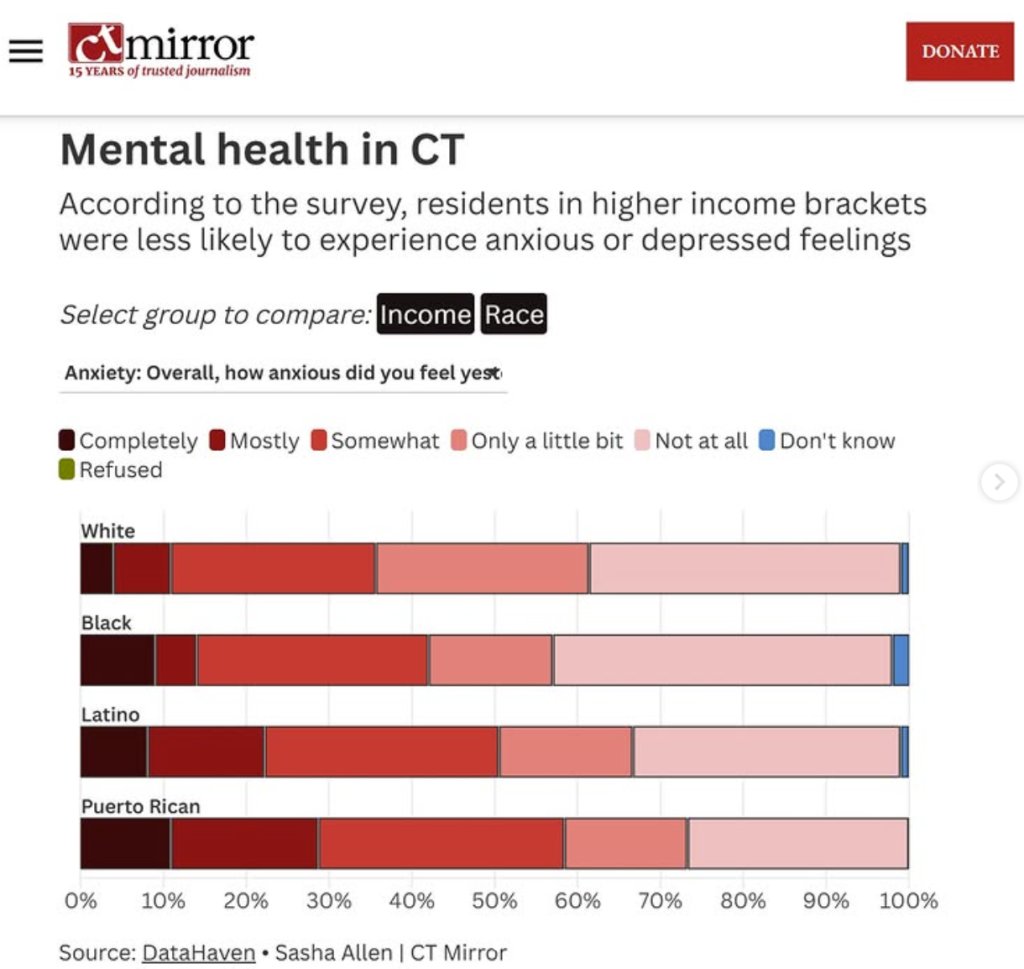
While 200,000 more adults reported feelings of anxiety and depression now compared to 2018, the survey also found a strong correlation between mental health issues and income.
Thomas Burr, the public policy and affiliate relations manager at the Connecticut branch of the National Alliance on Mental Illness, wasn’t surprised by the survey’s findings.
“That’s what I’m hearing,” Burr said. “It seems like this last year especially, all the drama coming out of D.C., coupled with an economy that’s still not great for a lot of people, has really brought a lot of people down.”
“Demographically speaking, mental health affects everyone, whether you’re wealthy or poor,” Burr said. “But I think because being poor and having issues potentially putting food on your table or [keeping] stable housing is just more trauma on people. And the more traumatic stuff you’re dealing with, the more challenges you’re dealing with, the greater the impact on your overall mental health.”
When broken down by race, Black, Latino and Puerto Rican residents had heightened feelings of anxiety.
One question added to the survey just a few years ago asked residents: “During the past 12 months, was there any time when you needed mental health treatment or counseling for yourself but didn’t get it?” Statewide, 13% of Connecticut residents answered yes. But 19% of those making under $30,000 reported not getting mental health treatment when they needed it.
“It’s higher for folks who have limited income because cost was a big reason,” Abraham said. “But also just not knowing where to go for support or to find those services was a big reason, especially for younger people.”
People ages 18 to 24 were more likely to have not found mental health treatment when they needed it compared to older residents.
Compared to the 2018 survey, feelings of depression and hopelessness are more common than they were in 2018. While the number of residents experiencing depressed feelings every day stayed the same, 5% fewer residents experienced no feelings of depression.
DataHaven also included survey questions about immigration status and deportation fears following a steep increase in deportations under the Trump administration.
Statewide, 31% of residents either worried “a lot” or “some” about themselves, family or a close friend getting their immigration status revoked or being detained or deported.
“Even before new policies take effect that will dramatically increase the federal budget for immigration enforcement and deportations, many residents are already feeling an impact on their health and well-being,” Abraham said in the DataHaven press release.
Tabitha Sookdeo is the executive director for Connecticut Students with a Dream. She said that her members, ranging in ages 14 to 25, are scared.
“I feel like this entire survey reaffirmed so much of what we have been seeing on the ground and what we’ve been feeling,” Sookdeo said. “You know, I have to literally create a mental health fund for our staff and for our members and for their families.”
Latino and Puerto Rican residents worried more than white or Black residents about possible deportations or detainments — and Sookdeo said two of the organization’s members were detained by ICE over the past few months. The organization was able to get them back through a bond process, but those members and their families are “not doing well.”
When President Donald Trump took office in January, Sookdeo said, she went to the different chapters of Connecticut Students for a Dream to discuss the possible risks to members and their families.
“You could see the light kind of start to dull in their eyes … trying to process what this means,” Sookdeo said. “And that was before inauguration, so fast forward to today, it truly is a traumatic experience. These are still young people, they’re still children, their brains are still developing. And that’s happening in extraordinarily traumatic circumstances.”
Many of the organization’s members have been struggling, Sookdeo said, and she has been having sleepless nights herself.
“So many people are suffering and in such a state of despair,” Sookdeo said.
Housing and food — can people afford the necessities?
Similar trends emerged when comparing responses among economic brackets on food and housing questions; Connecticut residents making less than $100,000 were much more likely to have struggled with food and housing money in the past 12 months.
However, for families with children, there was more struggle. DataHaven found that over a quarter of families with children did not have enough money for food at some point in the past 12 months, and nearly 15% struggled to pay for housing.
Jason Jakubowski is the president and CEO of Connecticut Foodshare. He said that it is “absolutely” the case that families with children are struggling especially. However, because of the recent government shutdown and the federal changes to SNAP regulations this November, Jakubowski said these issues are exacerbated, and new faces are showing up to the pantries.
“Since this SNAP crisis began, actually, I’ve seen more senior citizens come out in these last couple of weeks,” Jakubowski said. “There’s a lot of them that rely on SNAP benefits that probably weren’t included in that data that ended in October, and now, suddenly, they’re thrust into the system.”
From 2024 to 2025, food insecurity fell for everyone except families with children. But overall, food insecurity is a larger issue now than it was pre-pandemic — 100,000 more adults are experiencing food insecurity today.
Jakubowski said the CT Foodshare pantries have experienced between a 50% and 100% increase in clients in the past couple of weeks. And as for the last couple of years, Jakubowski said, CT Foodshare has seen similar trends to what was identified in the survey.
“We’ve definitely seen food insecurity increase over the last couple of years,” Jakubowski said. “We’ve definitely seen it spike over the last couple of months, and obviously, even more so over the last couple of weeks.”
Nearly a quarter of residents surveyed who make less than $30,000 struggled to afford housing within the last 12 months. Affordable housing in Connecticut has been a heated topic of discussion after Gov. Ned Lamont vetoed House Bill 5002 during session. The bill would have pushed towns to reform their zoning laws, among other initiatives.
Housing growth is slow in the state, but the passage of House Bill 8002 during the special legislative session, among other initiatives, expands fair rent commissions and incentivizes towns to begin creating more housing.
Changes to Medicaid and SNAP programs in CT
Major eligibility changes to SNAP and Medicaid under the Trump administration will leave thousands in Connecticut uninsured or with less money for food. DataHaven found that residents in the state are worried.
The survey asked residents how worried they were about current governmental policies that could lead to residents struggling to afford food, housing and health insurance. These questions specifically referenced changes to Medicaid and the Affordable Care Act, changes to SNAP coverage and changes to subsidized housing or Section 8 programs.
When it comes to Medicaid, those in urban areas and rural towns are the most worried that more residents could lose health insurance coverage. Over half of the residents from both urban and rural areas were “very concerned” about adults and children losing health insurance coverage.
Burr is worried that a federal change not yet implemented, requiring the redetermination of eligibility every six months through a lengthly paperwork process, could also kick some people off Medicaid — especially those with cognitive impairments or mental health conditions.
“Having the wherewithal to be able to provide all the information they’re looking for to be redetermined as eligible, it’s not a trivial thing,” Burr said. “And there will definitely be people who fall off the rolls who would otherwise be eligible, but they just can’t do the paperwork.”
And in terms of food insecurity, Jakubowski said, there is “definitely” an indirect effect between Medicaid cuts and the amount of people utilizing food pantries.
“People come to one of our pantries and people go to one of our mobile trucks, because they have to make a choice … do they pay for shelter, electricity, heat, medication, health care or food?” Jakubowski said. “And they say, ‘Well, food is the thing I can go without.’”
Despite the possible correlation between Medicaid benefits and food, residents in rural towns were less worried about SNAP benefits and affordable housing. Residents in urban towns, however, were most worried about all the cuts.
But overall, an overwhelming majority of Connecticut residents are anticipating the loss of housing, food and health care benefits for many people throughout the state.
[Excerpt of front page news story by Alex Putterman, across Hearst CT newspapers, 11/10/25]
About one in four Connecticut households has used the Supplemental Nutrition Assistance Program at some point, and most adults in the state want to see the program strengthened, not weakened, a new survey shows.
Amid coming cuts to SNAP eligibility and a federal government shutdown that has frozen the program, a detailed survey from the nonprofit DataHaven offers new insight into who uses food assistance in Connecticut and what state residents think should happen to it moving forward.
According to the survey, 26% of Connecticut adults say they or someone in their household have received SNAP benefits at some point, with about half of that group saying they received the benefits within the past 30 days.
State data shows hundreds of thousands of Connecticut residents receive SNAP, including people in all 169 towns across Connecticut.
Responses in the DataHaven survey varied significantly by demographic group, with 50% of Black adults saying they or someone they live with have received SNAP, compared to 40% of Latino adults and 20% of white adults. Additionally, people who live in “urban core towns” were far more likely to have received SNAP than those in suburbs, and those with lower incomes were, unsurprisingly, far more likely than those with higher incomes.
Still, the survey data shows the breadth of SNAP across demographic groups. More than one in 10 Connecticut adults with a bachelor’s degree or higher say they or someone in their household has received SNAP, as do more than one in 10 who have incomes between $100,000 and $200,000.
Women were significantly more likely than men to report using SNAP, with 32% of female respondents saying they or someone in their household had received food assistance through the program, compared to 20% of men. Meanwhile, 36% of those with children in their home report someone in their household having received SNAP, compared to 21% of those without children.
Among people who previously received SNAP but no longer do, most said they stopped because they became ineligible, usually due to an increase in income, but another 28% said they stopped because the application process was too difficult, the benefits weren’t worth the trouble or simply because they chose to.
“These numbers help communities understand who depends on safety net programs, and how policy changes like the pause in SNAP benefits are likely to drive a huge increase in demand at food banks,” DataHaven Executive Director Mark Abraham said in a statement.
The new data comes as millions of Americans go without SNAP benefits during the ongoing federal government shutdown. Though a judge has ordered President Donald Trump’s administration to release November SNAP payments, it was unclear as of Friday afternoon whether the administration would comply or when those benefits might be available in Connecticut.
Gov. Ned Lamont announced Friday that if the federal government does not release the benefits, the state will supply the funds to cover them.
Even once the shutdown ends, however, some Americans are likely to lose SNAP benefits due to the spending bill passed earlier this year by Trump and congressional Republicans, which reduces the share of funding the federal government will commit toward the program.
According to the DataHaven survey, 45% of Connecticut adults are “very concerned” that government policies will lead to more families struggling to afford food due to SNAP cuts, while another 22% were “somewhat concerned.”
Additionally, 51% of Connecticut adults say the government currently provides “not enough assistance” through SNAP, while 23% said it provides “the right amount of assistance” and only 12% said it provides “too much assistance.”
Food insecurity in Connecticut has increased in recent years, data shows, amid inflation and the expiration of certain pandemic-era social safety net programs.
DataHaven also asked about changes to Medicaid and the Affordable Care Act, both of which also face cuts in the Republican spending bill, and found similar results: 52% of Connecticut adults are “very concerned” more adults and children will become uninsured, and another 22% are “somewhat concerned.”
The 2025 DataHaven Community Wellbeing Survey, conducted in partnership with Siena Research Institute, featured interviews in English and Spanish with 1,371 Connecticut adults between Aug. 4 and Oct. 16, followed by statistical weighting to ensure the results accurately represent the state population.
For statewide results, the maximum margin of error is 3.5%, DataHaven says.
Hartford, Conn. — At a packed statewide event hosted yesterday by the Hartford Foundation for Public Giving, DataHaven unveiled the results of its latest DataHaven Community Wellbeing Survey (DCWS), believed to be the largest and most comprehensive neighborhood-level wellbeing survey in the United States. The event, attended by civic leaders, health professionals, and nonprofit partners, featured presentations from DataHaven as well as remarks by Hartford Mayor Arunan Arulampalam and Jay Williams of the Hartford Foundation. Data placemats and graphics, along with detailed crosstabs for each 2025 DCWS question, are available at https://ctdatahaven.org/wellbeingsurvey.
The DataHaven survey captures a portrait of residents’ health, economic stability, and community life through interviews with thousands of randomly-selected adults in every Connecticut ZIP Code. The New Haven-based nonprofit organization collaborates with Siena Research Institute to ensure the reliability and consistency of its research methods, which include live interviews in English and Spanish and statistical weighting to accurately represent Connecticut’s entire adult population. Since 2015, more than 53,000 representative adults have participated in these in-depth interviews. For the 2025 survey, 1,371 adults were interviewed from August 4 to October 16, 2025, and the statewide results carried a maximum margin of error of 3.5 percent.
“Connecticut continues to show great resilience and a high quality of life, with more than 83 percent of adults saying they are satisfied with the place they live,” said Mark Abraham, Executive Director of DataHaven. “But the data also reveal areas of concern that communities are working hard to address, including cuts to food assistance, health care, and housing that over a million people in our state have been relying on. The results also show rising anxiety, worries about immigration enforcement, differences in access to economic and health opportunity, and financial stress, especially for renters and families with children.”
Trust in Local Institutions Remains High
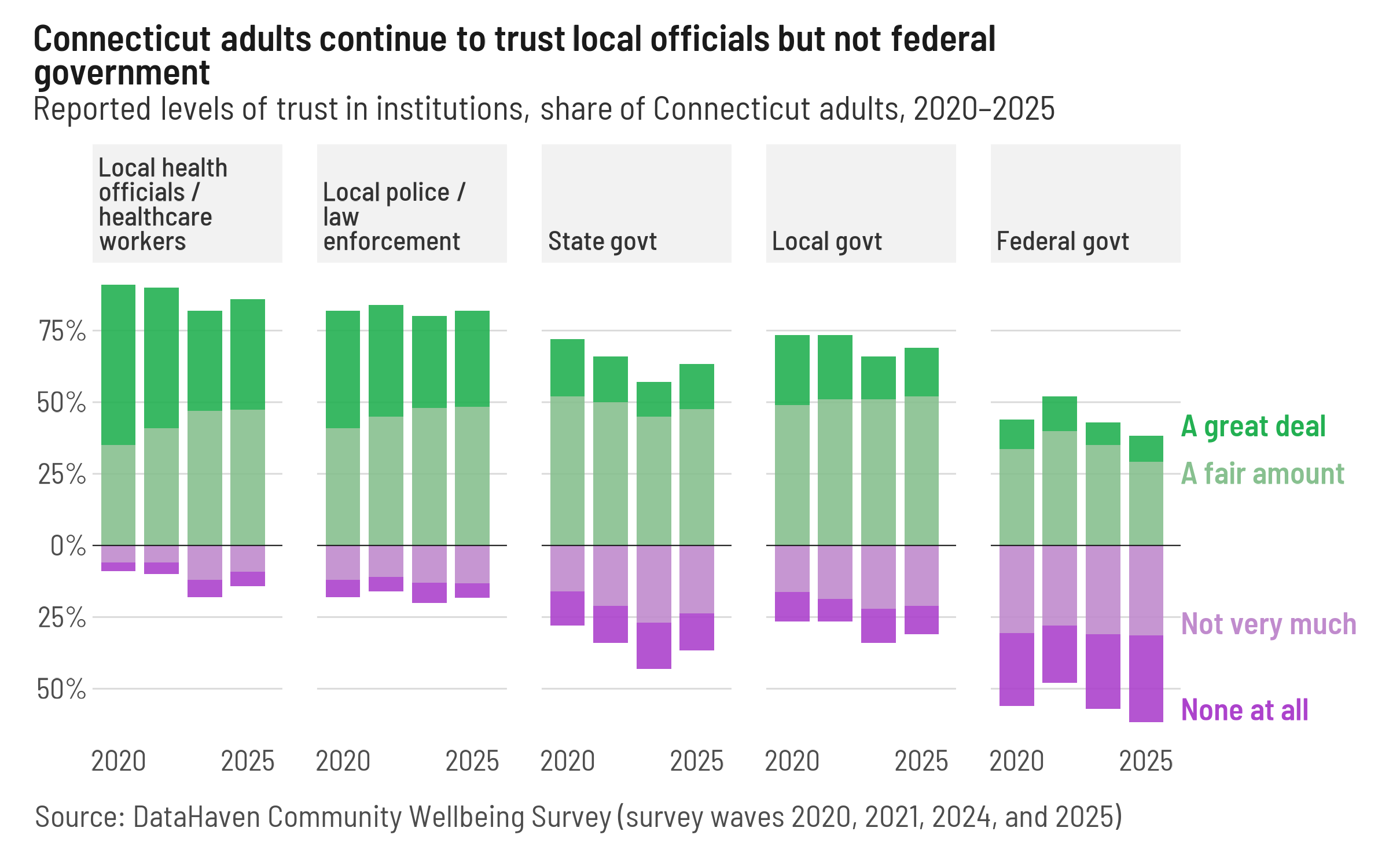
The presentation began with a focus on institutional trust, a theme that resonated among the representatives from local and statewide agencies, philanthropies, and healthcare organizations gathered at the event. “Our data show that trust in local and state government remains high, even as trust in federal government has declined,” said Abraham. “This implicit legitimacy of local partners is one of Connecticut’s greatest assets, as it allows communities to respond with credibility as challenges arise.”
Abraham noted that the survey continues to demonstrate a strong link between responsive government and higher self-reported well-being, underscoring the importance of access to trusted local information at a time when the availability of reliable data has been threatened nationally.
A Collaborative Effort
The survey is made possible through a broad coalition of partners. This year, major supporters include the University of Hartford, American University, and Yale University, Connecticut Children’s, Yale New Haven Health, the Connecticut Department of Public Health, local health departments in Hartford, New Haven, and Stamford, and regional philanthropic organizations including The Community Foundation for Greater New Haven, Connecticut Community Foundation, The Connecticut Project, Fairfield County’s Community Foundation, Hartford Foundation for Public Giving, United Way Coastal Fairfield County, United Way of Greater New Haven, and the United Way of Connecticut, with many other organizations contributing as well.
“This diversity of organizations supporting the survey reflects the fact that the survey measures what matters most to quality of life, whether that is community trust, transportation, affordability, health, housing, or support from friends and family,” Abraham said at the event.
Major Changes Since Prior to the COVID-19 Pandemic
The presentation highlighted the largest statewide changes measured by the DataHaven survey between 2018 and 2025.
• Cannabis use doubled, with about 350,000 more adults now using cannabis or marijuana (24 percent of adults using it at least once during the last 30 days, up from 12 percent in 2018).
• Optimism about local jobs increased and underemployment rates improved somewhat, with 250,000 more adults in Connecticut rating employment opportunities for residents in their area as “excellent” or “good.”
• Mental health challenges rose, with about 200,000 more adults reporting anxiety or depression.
• Chronic disease diagnoses rose, with about 150,000 more adults reporting diabetes or hypertension, potentially reflecting both an aging population and improved screening.
• The number of adults who ran out of money for housing, and the number who had to stay home in the past year because they lacked reliable transportation, both increased by roughly 150,000 adults. In 2025, 11 percent of adults statewide (about 320,000 people) said they ran out of money for housing, which is about double the rate that was measured by the DataHaven survey 10 years ago. Statewide, 7 percent of adults said they had to miss doctor’s appointments because they had no way to get there.
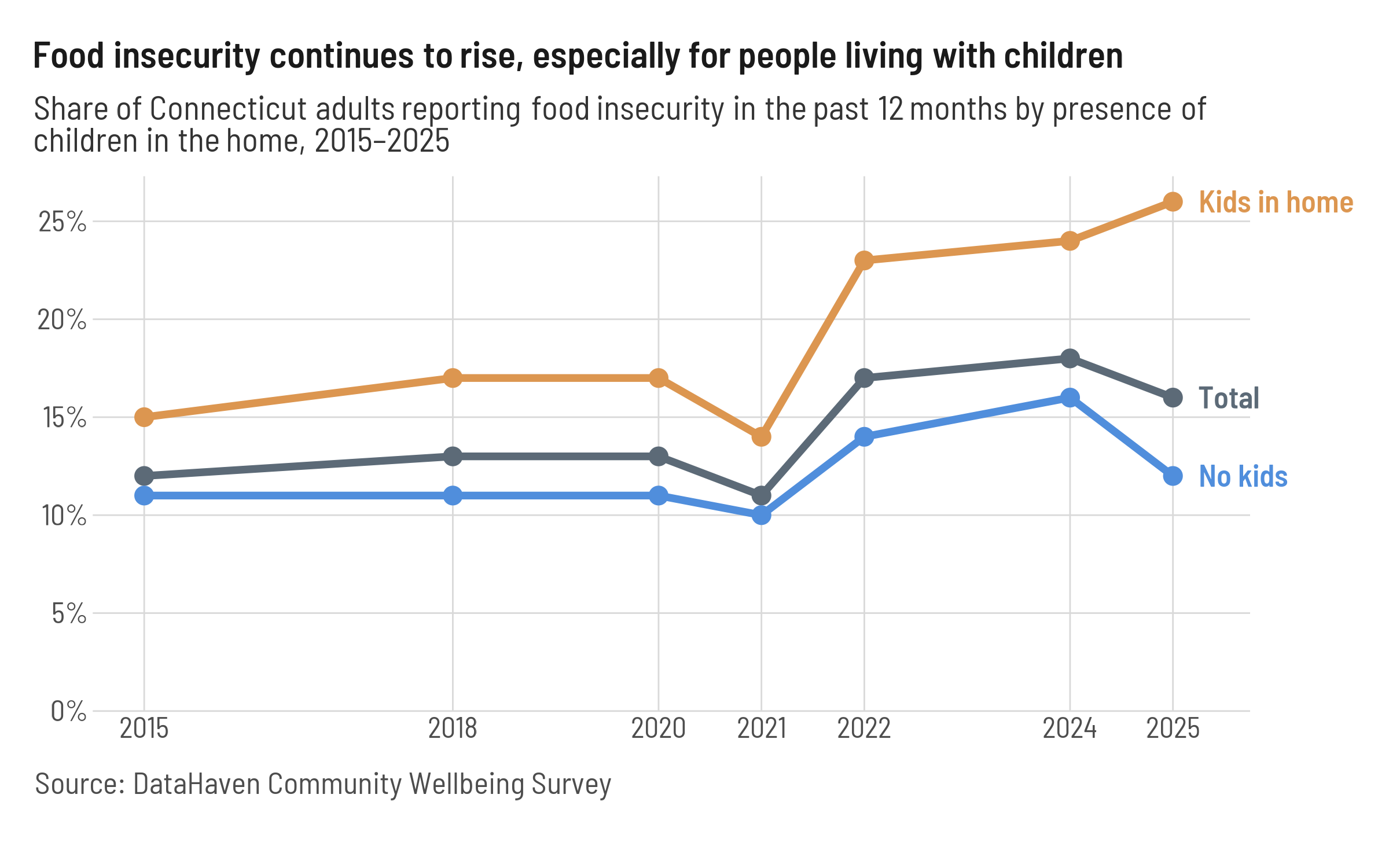
• Food insecurity is rising, increasing by 100,000 adults from pre-pandemic levels. The increase is particularly large for adults living with children (with 26 percent reporting that they ran out of money for food in the past year, compared to 11 percent of adults without children). Abraham noted that this increase is even more striking if compared to 2021’s record low in the food insecurity rate, when the expanded Child Tax Credit helped families and slashed child poverty nationally. In some of Connecticut’s largest city centers, up to half of adults with children report that they ran out of money for food this past year.
• Access to care remains an issue, with 100,000 more adults unable to get needed medical treatment in the last year. The rate of missed care spiked during the peak year of the COVID-19 pandemic and has since improved for higher-income adults but continued to worsen among moderate- and lower-income residents.
• About 100,000 fewer adults in the state smoke cigarettes, though this is partly because vaping has become more popular, especially among younger adults.
• About 150,000 additional residents say they have safe places to ride bicycles, likely reflecting the construction of new protected bike paths in many towns.
• Social support declined, especially for adults with below-median incomes, with 100,000 fewer adults saying they usually receive the social or emotional support they need.
Despite these shifts, Abraham emphasized that “most measures have remained stable over time, meaning that Connecticut continues to outperform national averages on many dimensions of health and well-being.”
Key Topics Shared at the Event
The presentation covered several additional findings from this year’s data:
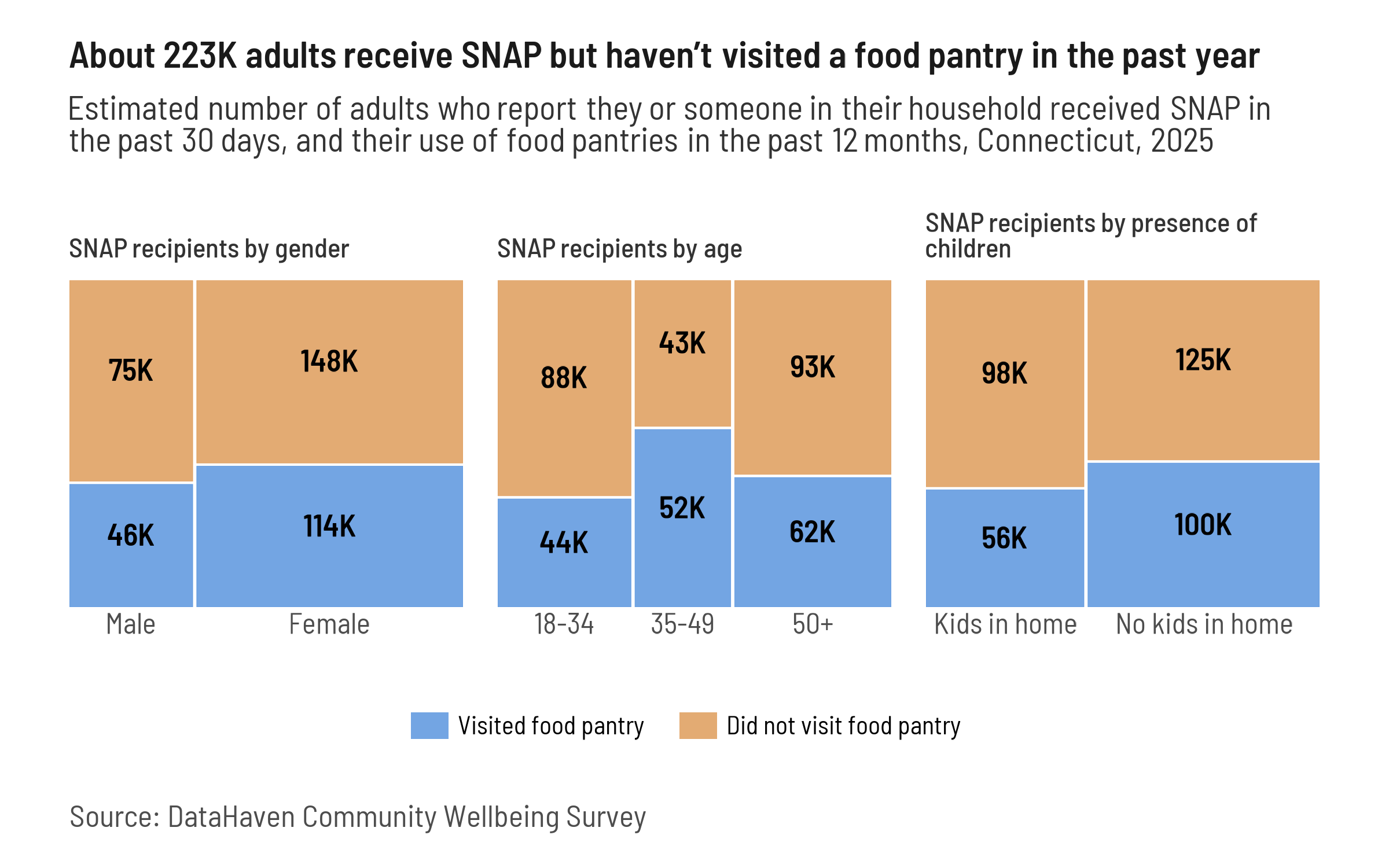
• SNAP and the Social Safety Net: In 2025, new questions were added on public benefits. The survey found that 26 percent of Connecticut adults or their household members have received SNAP at some point, 36 percent have received Medicaid/HUSKY, 9 percent received rental housing assistance, and more than 1 in 10 used a food pantry in the past year. The survey also found that of the adults who received SNAP within the past 30 days, the majority had not used a food pantry or emergency food service at all within the past year. “These numbers help communities understand who depends on safety net programs, and how policy changes like the pause in SNAP benefits are likely to drive a huge increase in demand at food banks,” Abraham said. The survey also examined residents’ attitudes about public programs, finding that most say that there is not enough assistance for low income people, and that most residents are concerned that current national policy changes will lead to more people going hungry or unable to access health care or housing.
• Immigration Concerns: The survey included questions about the personal and community effects of immigration enforcement. In Connecticut, 31 percent of all adults worry “somewhat” or “a lot” that they or someone they know could be detained, deported, or have their legal immigration status revoked. Many residents, particularly Latino adults, reported heightened stress, lost sleep, and delayed medical care related to these concerns. “Even before new policies take effect that will dramatically increase the federal budget for immigration enforcement and deportations, many residents are already feeling an impact on their health and well-being,” Abraham noted.
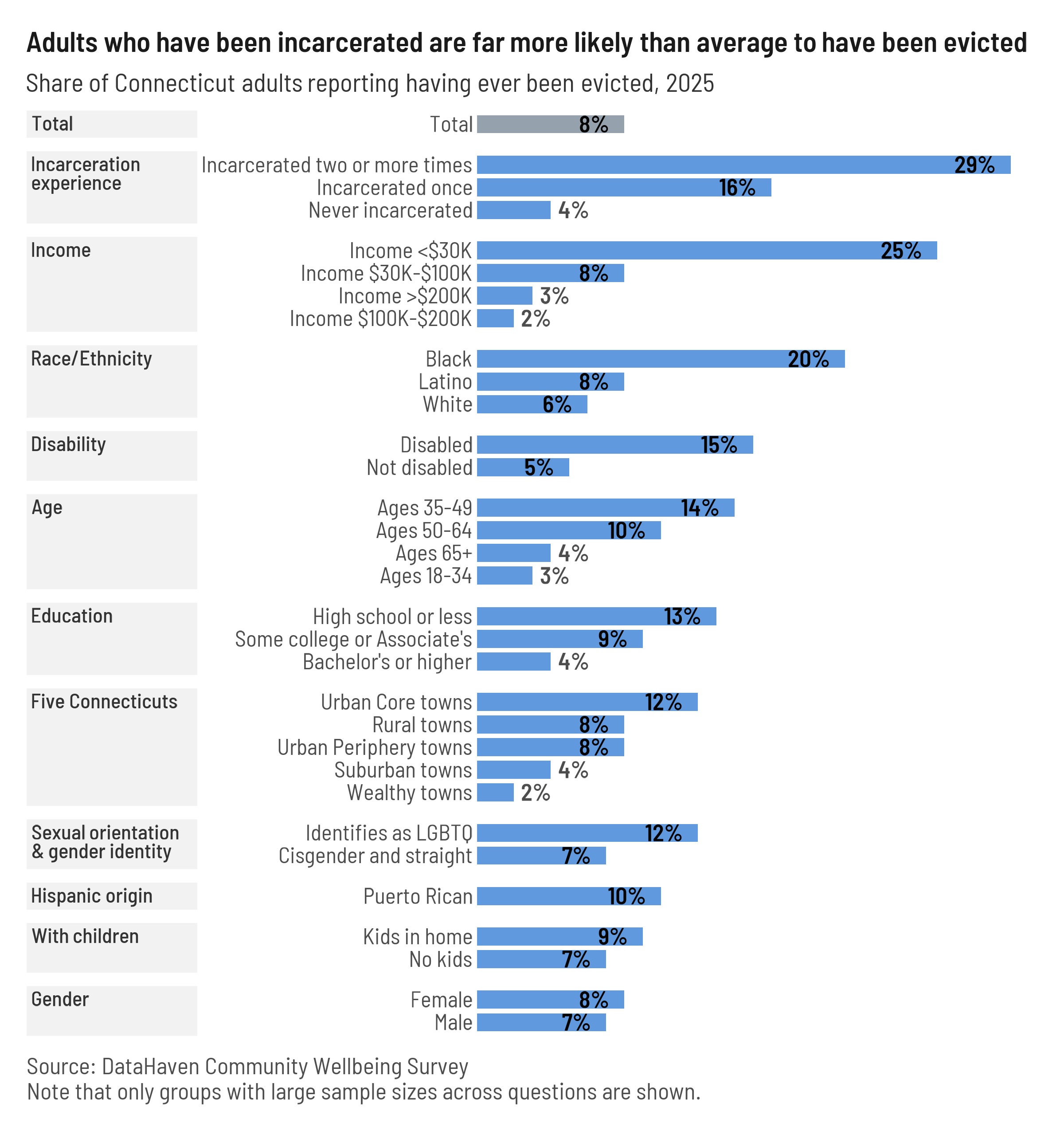
• Eviction and Criminal Justice: A new survey item showed clear disparities in evictions by incarceration experience, suggesting a need for policy interventions that reduce the barriers to stable housing for people with past justice involvement.
• Mental Health: About 13 percent of all adults, including 22 percent of young adults, reported needing mental health treatment within the past year but being unable to get it, often due to cost or lack of available services.
• Social Support: Abraham noted that this single measure of how much support people feel from family and friends predicts happiness and well-being more than any other item in the survey. “The increase in loneliness is something we should take seriously, and we should consider what we can collectively do to support each other in our state,” he said.
Data Access and Next Steps
The 2025 DCWS Connecticut Crosstabs, along with graphics and “Data Placemats,” were distributed to attendees and are publicly available at ctdatahaven.org/wellbeingsurvey. Survey data are also accessible in DataHaven’s town reports and its Connecticut Town Data Viewer, which combines results since 2015 to provide neighborhood-level insights for each of the 169 towns in the state. DataHaven encourages partners and advocates to reach out for analyses or presentations that can bring the findings to life at the local level.
Media Contact
Mark Abraham, MPH, Executive Director, DataHaven, Email: info [at] ctdatahaven.org, Phone: (203) 500-7059.
[Excerpt of front page article by Sasha Allen, CT Mirror, 10/24/25]
Connecticut families receiving at least $25 in SNAP benefits will lose nearly $200 monthly on average if cuts take effect in November as threatened, a bigger hit than families will feel in any other state and only just behind those living in Washington, D.C., according to preliminary estimates from the Urban Institute.
Changes to the program, made under the One Big Beautiful Bill Act, take effect Nov. 1. Signed into law in July, the act cuts $168 billion of federal funding for SNAP, or the Supplemental Nutrition Assistance Program, over the next decade.
A recent report from DataHaven found that thousands of Connecticut residents will entirely lose coverage or see major monthly reductions in SNAP benefits.
Overall, Connecticut residents will receive $11 million to $15 million less in food assistance each month.
In Connecticut, Hartford, New Haven, Waterbury and Bridgeport will be hit the hardest, with thousands of SNAP recipients in each city losing at least $25 a month in benefits (both the Urban Institute and DataHaven used this threshold to focus only on families receiving substantial benefits).
Hartford is projected to receive between $1.2 million and $1.6 million less in SNAP benefits each month. New Haven, Waterbury and Bridgeport could see between $900,000 and $1.2 to $1.3 million less a month.
[….]
“People in every corner of our state are being crushed by the cost of living, and as this data shows, federal SNAP changes are only going to make that worse,” Meghan Holden, the director of marketing and communications for The Connecticut Project Action Fund said in an Oct. 20 DataHaven media advisory. “Right now, 58,000 Connecticut households are at risk of losing an average of $194 per month in SNAP benefits. That money is the difference between a child going to bed with an empty belly or full, between a veteran eating one meal a day or three, between hunger and survival.”
Changes to the program also include stricter cost-of-living adjustments to the Thrifty Food Plan, which determines the cost of a nutritious and balanced meal. The plan serves as the basis for the maximum amount of money put into SNAP, but under the changes, reevaluation for the costs of a meal will be less frequent and cost-neutral, or will only take into account inflation.
Historically, SNAP benefits have not fully covered a “modestly-priced meal” as determined by the TFP, according to data from the Urban Institute. The DataHaven report found that major cost disparities exist between modestly-priced meals and the maximum SNAP benefits currently distributed in Connecticut, especially in the Western Connecticut Planning Region.
[Excerpt from news article by Christopher Keating, Hartford Courant, October 21, 2025]
“As the federal government shutdown reached Day 20 on Monday, state and federal officials are concerned that about 360,000 Connecticut residents could lose their food stamp benefits starting on Nov. 1.
State officials are scrambling to find a way to fill the gap if the federal government shuts off access to the Supplemental Nutrition Assistance Program, formerly known as food stamps. The benefits are awarded on debit cards that are replenished monthly, and those cards would be cut off to stop the benefits, officials said.
The food shutdown would have an impact on grocery stores that could lose an estimated 5 to 10% of their business as nearly 10% of all state residents currently receive food stamps, officials said. Benefits vary based on the size of a family, but the average monthly benefit per person is about $193 or around $50 per week, officials said.
U.S. Sen. Richard Blumenthal and other officials spoke at the Grocery on Broad, a nonprofit market within walking distance of the state Capitol in Hartford.
“Over half of the folks who shop here are using SNAP benefits,” said Ben Dubow, executive director of the nonprofit that runs the Hartford store. “This will have a significant impact on the people we serve, particularly as we head into the holiday season. … It will impact us as a business. We’ve got to think through what we stock and how we manage things. It impacts farmers. It impacts suppliers, so the economic impact is huge.”
[….]
At the same time, a nonprofit data group, DataHaven, released a report on SNAP benefits that shows problems ahead as new work requirements will be instituted under Trump’s tax-and-spending bill that is known as the One Big Beautiful Bill Act.
“In Hartford, about 6,000 families are expected to lose $25 or more in monthly SNAP benefits, with benefit losses totaling between $1.1 million and $1.6 million each month,” the report summary said. “Bridgeport, New Haven, and Waterbury are each projected to see over 4,600 families losing $25 or more in monthly benefits, adding up to total benefit losses of between $890,000 and $1.3 million per month in each city. Impacts will reach beyond urban areas, too.”
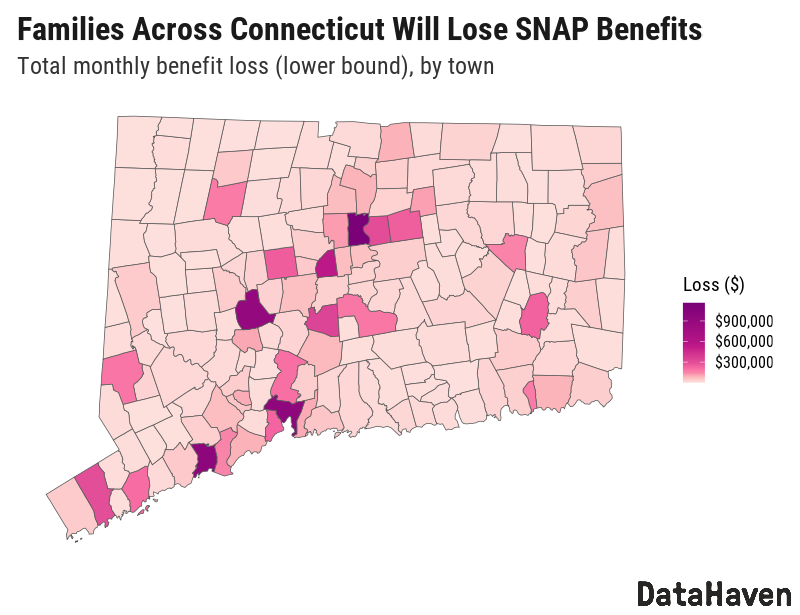
Today, DataHaven released a new report titled “Food Assistance and Local Economies at Risk: Projected Federal SNAP Cuts by Connecticut Town and District,” analyzing projected losses of Supplemental Nutrition Assistance Program (SNAP) benefits tied to recent federal policy changes. According to a July 2025 report from the Urban Institute, 58,000 families in Connecticut are expected to lose at least $25 per month in SNAP benefits, with these families experiencing an average monthly benefit loss of $194. Overall SNAP benefits losses throughout the state will total between $11M and $15M each month.
The new DataHaven report provides town- and legislative district-level estimates across Connecticut. For example, in Hartford, about 6,000 families are expected to lose $25 or more in monthly SNAP benefits, with benefit losses totaling between $1.1M and $1.6M each month. Bridgeport, New Haven, and Waterbury are each projected to see over 4,600 families losing $25 or more in monthly benefits, adding up to total benefit losses of between $890,000 and $1.3 million per month in each city. Impacts will reach beyond urban areas, too. In the state’s northeast corner, 1,700 families from State Senate District 29 stand to lose at least $25 per month, with benefit losses in that area totaling $330,000 to 440,000 per month.
These projected losses stem from federal legislation (the “One Big Beautiful Bill Act”), which introduces work requirements, administrative hurdles, and additional cost burden for states. Under the new law, even as Connecticut pays more to sustain its SNAP program, residents are likely to see essential nutritional benefits diminish or disappear entirely.
The report includes links to interactive data visualizations and colorful maps, showing impacts at the town and legislative district level. Visit the DataHaven website, at ctdatahaven.org/snapcuts, to read the full report.
Researchers and policy experts from DataHaven, The Connecticut Project Action Fund, End Hunger CT, and other statewide organizations are available to comment on the report.
“People in every corner of our state are being crushed by the cost of living, and as this data shows, federal SNAP changes are only going to make that worse,” said Meghan Holden, Director of Marketing and Communications for The Connecticut Project Action Fund. “Right now, 58,000 Connecticut households are at risk of losing an average of $194 per month in SNAP benefits. That money is the difference between a child going to bed with an empty belly or full, between a veteran eating one meal a day or three, between hunger and survival. Our state has to call a special session and broaden and fund the federal safeguard account to protect working class people from SNAP cuts, now.”
“Feeding hungry people should not be a political problem. Food is the most basic building block for a healthy, thriving community. When we cut SNAP, we’re not just cutting benefits — we’re cutting stability, long-term health, and opportunity. Food is medicine. Food is educational success. Food is jobs. Every dollar invested in SNAP pays dividends in healthcare, education, and economic resilience,” said Meg Hadley Zimmerman, Program Manager at End Hunger CT!.
“These cuts to SNAP benefits are coming at a time when rates of food insecurity in Connecticut have reached historic highs, putting even more pressure on families and local main streets alike. This new report is important because it provides town- and district-level estimates that can help legislators and advocates understand the on-the-ground impacts of recent legislation,” said Mark Abraham, Executive Director at DataHaven. “In addition to putting food on the table and ensuring that all children have the nutrition they need to succeed, SNAP benefits keep dollars flowing through neighborhood businesses and help support local jobs. These data make it clear how cutbacks in SNAP as a result of work requirements and other federal policy changes are going to have a significant impact on communities across the entire state.”
[Excerpt from news article by Sasha Allen, 9/5/2025]
The One Big Beautiful Bill Act could cause millions of people to lose Medicaid coverage over the coming years — with estimates of between 100,000 and 170,000 people potentially impacted in Connecticut.
The law, passed on July 4, makes several changes to Medicaid and imposes limits on the amount of funding states can collect from the federal government for the program. However, this change would hit low-income areas the hardest.
Hartford is projected to undergo the biggest loss according to data from DataHaven, with 10.6% of the town’s total population projected to lose Medicaid coverage. That means that of the nearly 120,000 Hartford residents, nearly 13,000 stand to lose their coverage in the next decade. More than 90,000 people in Hartford receive health care under Medicaid.
Waterbury and New Britain residents are also projected to have high levels of health care coverage loss. DataHaven found that 102,000 Connecticut residents who live below 200% of the federal poverty line are projected to lose Medicaid coverage.
While the majority of those that may be impacted are white, a disproportionate percentage of minority communities — 9% of the Latino population and 8% of the Black population — are projected to lose coverage, according to DataHaven.
However, Medicaid isn’t the only health care coverage affected. Residents insured under Access Health CT, Connecticut’s official health insurance exchange, may also be impacted. A July press release from the organization stated that between 30% and 35% of its over 150,000 customers could lose coverage in the next decade.
“These changes can be expected to increase costs for customers here in Connecticut, and nationwide, and create barriers to financial help,” James Michel, the chief executive officer of Access Health CT, said in the press release regarding federal policy changes.
Nationwide, Medicaid enrollment is projected to drop according to analysis done by the KFF Health News, a nonprofit U.S. health policy organization. [….]
Today, DataHaven released a new report titled “Coverage at Risk: Projected Losses in Medicaid and Access Health CT by Town and Community,” analyzing the projected reductions in health insurance coverage tied to recent federal policy changes (see ctdatahaven.org/coverageatrisk
The report provides town- and legislative district-level estimates across Connecticut. For example, in Hartford, 13,000 residents are expected to lose Medicaid, equivalent to 11 percent of that city’s entire population. In the state’s northeast corner, about 5 percent of the total population of State Senate District 29 (4,700 out of 101,000 people) stand to lose their Medicaid coverage, and in rural State Senate District 30, which covers most of Litchfield County, about 3,800 people (4 percent of the total population) are projected to lose coverage. Disaggregations by income, race/ethnicity, household type, and place of birth are included in the report.
These projected losses stem from federal legislation (the “One Big Beautiful Bill Act”), which introduces administrative verification hurdles, work requirements, and stricter eligibility restrictions. Without intervention, coverage losses could raise healthcare costs for all Connecticut residents, strain safety-net institutions, and widen health disparities.
The report includes links to interactive data visualizations and colorful maps, showing both the absolute number and share of the population impacted. Visit the DataHaven website, at ctdatahaven.org/coverageatrisk
Researchers and policy experts from DataHaven, Health Equity Solutions, United Way of Connecticut, and other statewide organizations are available to comment on the report.
“Healthcare coverage is a foundation for community well-being,” said Mark Abraham, Executive Director at DataHaven. “Due to recent changes in federal policy, hundreds of thousands of Connecticut residents are at risk of losing access to affordable care. Without action, these losses will not only threaten individual health, but will deepen inequality in our state and strain the ability of our healthcare system to provide affordable care. The local estimates in this new report make clear how federal decisions can have major consequences for Connecticut families and communities, both in rural areas as well as in our larger urban regions.”
“Connecticut must act quickly to prevent the coverage crisis by investing in sustained access to care, maintained coverage and ensuring new systems are shaped by the voices of those most impacted,” said Ayesha R. Clarke, Executive Director of Health Equity Solutions.
“We know that Connecticut families will have to shoulder additional costs to maintain their healthcare as a result of these changes. As we reveal in the CT ALICE report this week, this is just one additional expense that will be an impossible burden for hardworking families who already live paycheck to paycheck, struggling to make ends meet,” said Daniel Fitzmaurice, Director of Advocacy at United Way of Connecticut.