
Connecticut’s Behavioral Health Services at Risk: Mapping Nearly $100 Million in Suspended Federal SAMHSA Grants
By Camille Seaberry, DataHaven
On January 13, 2026, at least 1,700 organizations across the US, including state and local health departments, were told that thousands of grants awarded to them by the Substance Abuse and Mental Health Services Administration (SAMHSA) were being terminated immediately. Within the next two days, these grants had been reinstated. This incident, however, calls into question the long-term stability of funding for mental health and substance abuse programs, including life-saving care across Connecticut.
By pooling together several data sources—including an independent research project, Grant Witness, and several federal databases—DataHaven estimates that 56 of these grants were awarded to organizations in Connecticut, though this is likely an undercount. The total awarded to Connecticut organizations and agencies was about $92 million, of which $35 million hadn’t been received by grantees.
The 33 different organizations given these grants range from the state Department of Mental Health and Addiction Services (DMHAS), which received about a quarter of the funding we studied, to major hospitals and universities, to smaller community-based organizations and providers. (Full disclosure: this researcher is a former patient of a DMHAS-funded clinic.)
The grants support a variety of vital programs, including campus suicide prevention; addiction support for first responders; care for pregnant and postpartum women; child behavioral health care; HIV care; medication-assisted treatment for opioid users; and training for medical practitioners, educators, families, and community members. Ten of these grants were part of a funding initiative focused on child traumatic stress, including early interventions with infants and young children, services targeting children in rural areas, and care for families with children experiencing trauma and abuse. All of these projects were underway at the time of the termination, and on average still had almost 3 years left in their contracts.
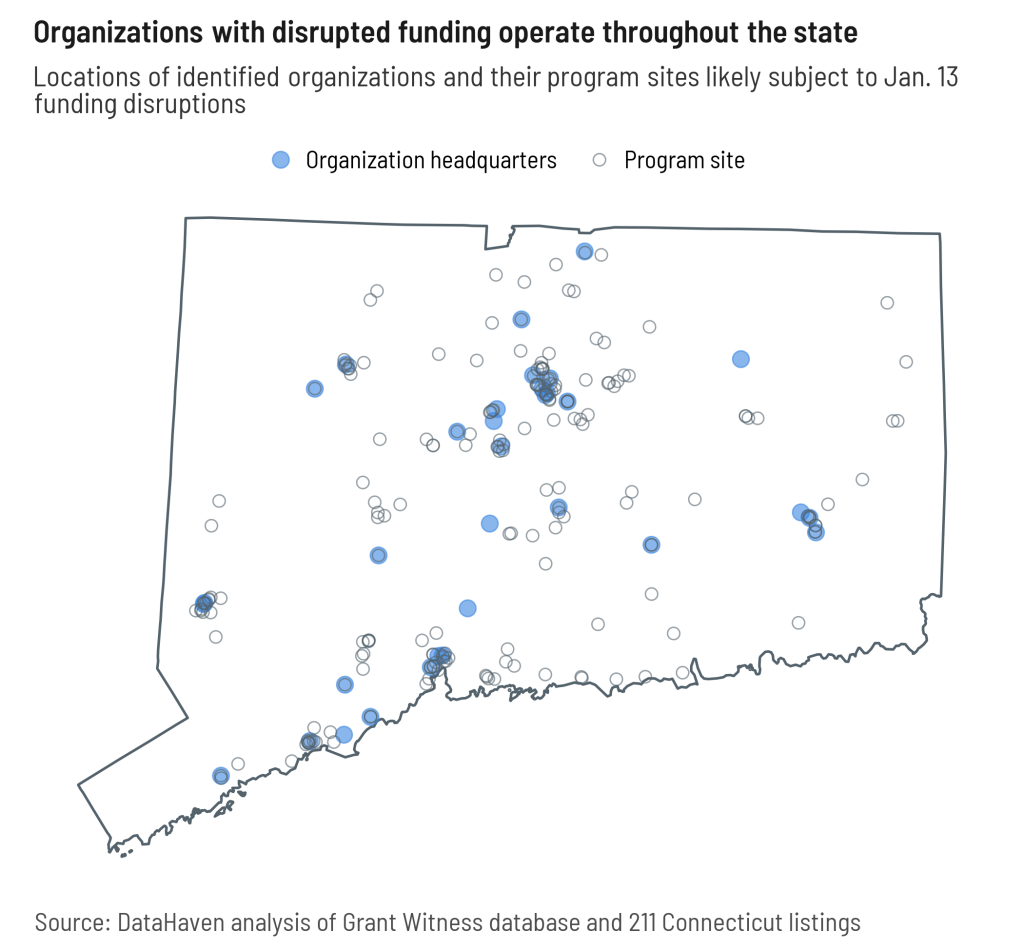
The organizations that DataHaven believes were part of this wave of disruptions are spread throughout the state, headquartered in 23 different towns. But their reach is far greater: based on 211 listings, we identified 225 program sites run by these organizations in 70 towns, many of which, in turn, serve residents of other towns as well. And while not all services at an organization are funded by a specific grant, sudden losses in funding may mean squeezing money out of other programs, putting strain on the quality and scope of all services.
Just as no part of the state is fully isolated from the threat of funding disruptions, no community is immune from mental health challenges or substance abuse. According to the 2025 DataHaven Community Wellbeing Survey (DCWS), Connecticut adults report signs of depression and lack of needed mental health treatment at similar rates whether in a rural town or an urban one. On both of these fronts, however, younger adults and lower-income adults are at heightened risk.
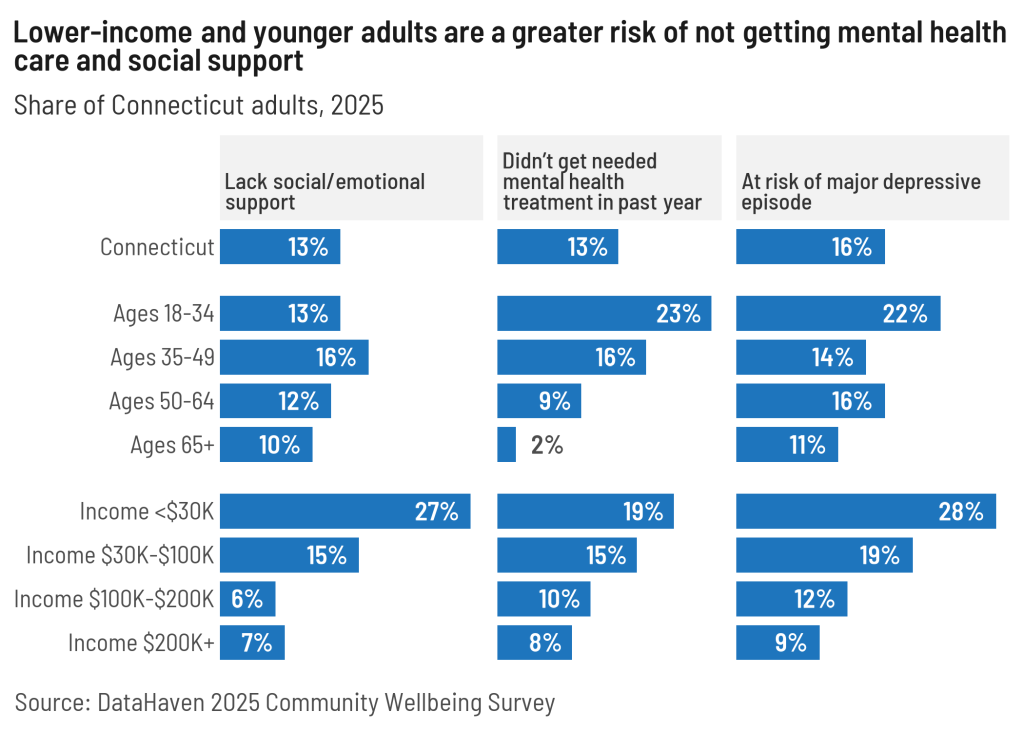
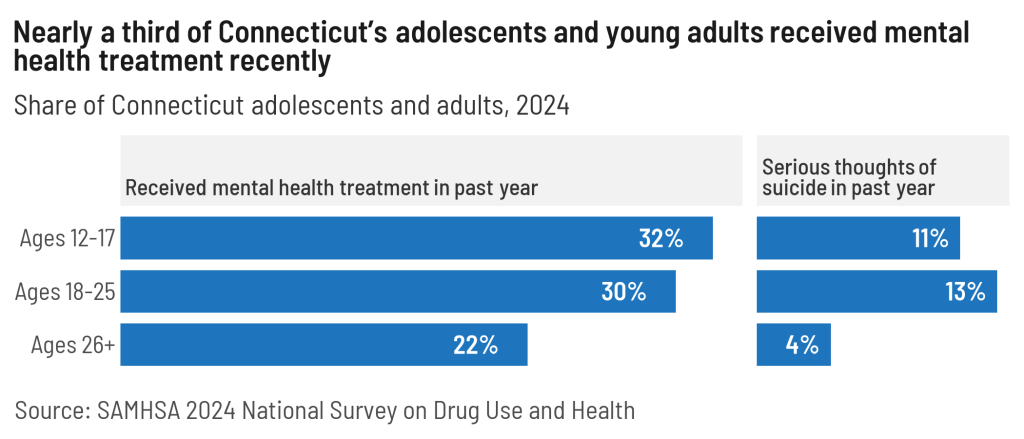
SAMHSA’s own data highlights these needs as well: their 2024 National Survey on Drug Use and Health found that 32 percent of Connecticut’s youth ages 12 to 17 and 23 percent of adults had received some form of mental health treatment in the past year, and 3 percent of residents ages 12 and up had been treated for substance use.
Half of the grants’ abstracts mention awareness—often increasing awareness of community resources—and this is again a need shown in recent data. While 84 percent of adults in the 2025 DataHaven Community Wellbeing Survey had heard of naloxone, a medication used to reverse opioid overdoses, only 58 percent were aware that their local health department was involved in distribution of naloxone and other services for people at risk of drug overdose.
As of yet, there are no clear answers as to why these grants were terminated or whether such a disruption could happen again. The termination letters that have been made public refer to an unspecified “non-alignment with [SAMHSA] policies” for which “no corrective action is possible.”
The linked set of agency priorities, however, are more political ideology than public health platform, leaving an uncertain future for attempts to address community needs that fall out of “alignment.” Just about all of us have been touched by struggles with mental health or substance use—either personally, through a loved one, or in our neighborhoods—and as such, we may all be impacted by ongoing instabilities in our systems of care.
Methodology
The January 13th event was a fast-moving incident with little transparency, so for this project we pieced together several data sources. Our main starting point was the Grant Witness project, which began tracking the grant terminations shortly after they occurred. Their nationwide counts of grants and total dollar amounts line up with the estimates reported by NPR. Grant Witness identified terminated grants with the Tracking Accountability in Government Grants System (TAGGS) database, which has dated entries for grants when they are terminated, as well as unspecified “revisions” with dates that match up with the time of reinstatement. We filled in gaps in monetary details with data from USAspending, the federal government’s official database of federal grants mandated by law. We did this programmatically, because many of the grants’ original links are now broken. We studied the notices of funding opportunities (NOFOs) for these grants from SAMHSA and the project abstracts collected by Grant Witness to get a sense of the types of grants and programs affected. Finally, to understand and estimate the reach of services in Connecticut, we searched organizations in the 211 Connecticut portal. All in all, we believe this is likely an undercount on many fronts, from the number of grants terminated to the extent of services offered by these organizations. Please contact DataHaven with any questions.
Related Reports
Related Data
Data Resource
Connecticut Town Data Viewer
Dataset, Map
Connecticut State Legislative District Profiles
Document
Fairfield County Equity Report 2023
Document
The new ecosystem of health data keeps getting bigger: Tipsheet on public health datasets available from CMS
Document
Greater Bridgeport Community Health Needs Assessment 2013
Document