
The Health and Wellbeing of Formerly Incarcerated People in Connecticut: Insights from the DataHaven Community Wellbeing Survey
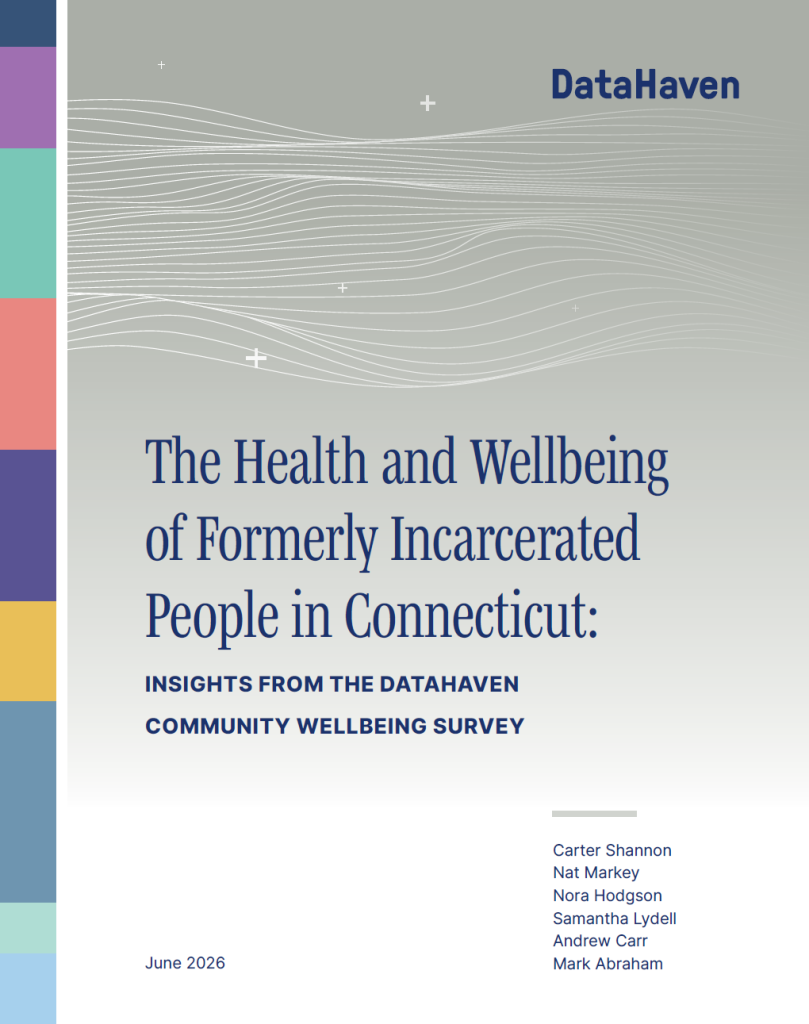
By Carter Shannon, Nat Markey, Nora Hodgson, Samantha Lydell, Andrew Carr, and Mark Abraham, DataHaven
About this Report
Approximately 1 in 5 men aged 18–64 in Connecticut have experienced incarceration at some point in their lives. This population includes people who have been held in a local jail for a single night and those who have served lengthy prison sentences, and it cuts across race, age, geography, and socioeconomic background in ways that reflect broader structural inequities in the criminal legal system. Yet across nearly every indicator of wellbeing, formerly incarcerated people in Connecticut face significant disparities compared to those without an incarceration history.
This report explores data on the experiences of formerly incarcerated men in Connecticut from the DataHaven Community Wellbeing Survey (DCWS). The DCWS illuminates significant gaps in economic wellbeing, physical health, mental health, and social support between men with and without incarceration histories in Connecticut. The survey also reveals worse self-reported outcomes for formerly incarcerated people across a range of quality-of-life indicators, with disparities that are often most severe among those who have been incarcerated more than once.
These disparities do not arise by chance. They are shaped by a policy landscape that erects lasting barriers to housing, employment, and healthcare for people leaving incarceration, as well as by the physical and psychological toll of incarceration itself. This report is being written in the political context of federal funding cuts to social programs and proposed rollbacks to Medicaid eligibility, changes that will disproportionately impact people with incarceration histories, who are more likely to rely on public health coverage and other safety net supports.
Selected Visualizations
The interactive charts shown below are drawn from the figures or tables in the report (see chart footnotes for reference). The report has additional information that is not shown in the charts below. To learn more, or to cite the information found below, please download the report.


Related Reports


Related Data
Dataset
DataHaven September 2026 SNAP Report Tables
Document
The Health and Wellbeing of Formerly Incarcerated People in Connecticut: Insights from the DataHaven Community Wellbeing Survey (PDF)
Data Resource
Connecticut Town Data Viewer
Document
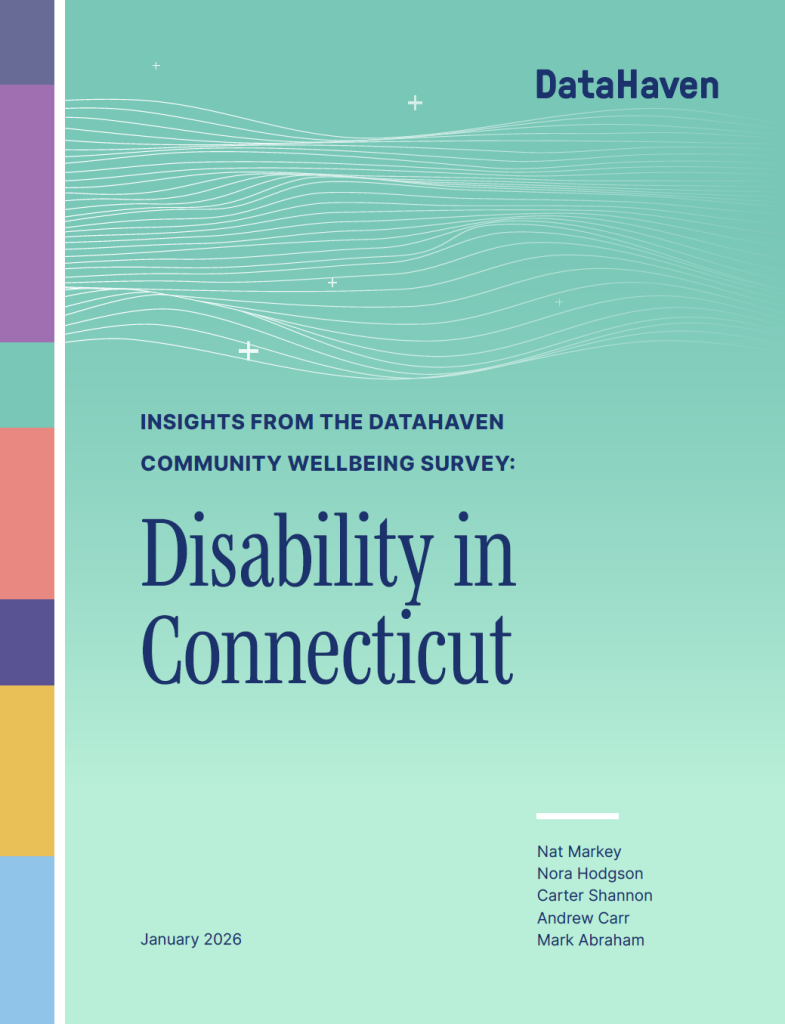
Disability in Connecticut: Insights from the DataHaven Community Wellbeing Survey (PDF)
Dataset, Document
DataHaven HR1 Tax Effects Spreadsheet by Connecticut Town
Document