
[Excerpt from feature article by Cris Villalonga-Vivoni, Dec 5, 2025, across all Hearst CT newspapers]
Connecticut may be one of the country’s healthiest states, but that good health continues to be unequally experienced across the state, according to the latest report from DataHaven.
The New Haven-based research non-profit’s latest community well-being survey is in its eighth edition, said Mark Abraham, executive director of DataHaven. More than 53,000 Connecticut adults have participated in interviews for DataHaven’s survey since it began in 2015.
This year, 1,371 adults were interviewed about their health, economic stability and community. It was then statistically weighted to better match the state’s demographics, leaving the overall results with a maximum margin of error of 3.5%, according to the study.
Roughly 20% of respondents described their health as “fair” or “poor,” a figure that was higher among low-income residents, parents, people with disabilities, and those previously incarcerated. At the same time, more people are experiencing mental health and chronic health issues while also facing barriers to accessing care.
Here are some of the other key insights into the health of Connecticut residents:
Health at a glance
How healthy someone feels depends on several factors and varies widely across demographics, according to the data.
More residents, for example, are being diagnosed with chronic health conditions.
According to the survey, about 150,000 more adults have been diagnosed with diabetes or hypertension since 2018. Meanwhile, roughly 17% of respondents reported an asthma diagnosis, including 27% of Latinos, 17% of Black residents, and 15% of white residents. Among Latinos, asthma rates were exceptionally high for Puerto Ricans, at 36%.
Mental health challenges also continue to rise, with more than 200,000 additional adults reporting anxiety and depression since 2018. LGBTQ+ respondents, in particular, were 1.5 times more likely to screen positive for major depression, 1.4 times more likely to report anxiety, and 1.6 times more likely to delay medical care in the past year.
Abraham said it’s difficult to pinpoint a single cause of rising mental health issues because residents are often dealing with overlapping pressures, like financial instability, housing problems, food insecurity, and more.
“If people are financially stressed, that can increase anxiety and depression and thinking about financial insecurity and the effects that has on your social networks, ability to go out to events and visit family members,” he said. “If you’re financially stressed, it could make it more difficult to get that social support.”
Insurance gaps
Around 92% of people have health insurance, with Black (91%) and Latino (81%) adults being less likely to have coverage compared to white adults (96%). However, the data show that the likelihood of having insurance increases with both education and income levels.
In Connecticut, more than half of respondents get their health insurance through a current or past employer or union, while 17% are covered by HUSKY, the state’s Medicaid program. At the same time, 23% use Medicare while 9% buy their insurance directly from the insurers.
Medicaid enrollment is highest in Connecticut’s urban centers and is more common among men, low-income residents, and people with prior incarceration. Among those covered, 22% have children at home and 27% report a disability.
Racial disparities are also apparent, with 31% of Black residents and 36% of Latino residents relying on Medicaid, compared with 11% of white residents.
Gaps in access
Accessing medical care remains a growing problem across Connecticut, with about 11% of respondents reporting they don’t have a regular place to go for medical care.
Some people were more likely to say they don’t have a regular provider, including men, people of color, and individuals who have been incarcerated multiple times. Of those without a usual source of care, about 17% also have children at home.
About 12% said they didn’t get the care they needed in the past year. In particular, people born outside the U.S., those with low incomes, individuals with disabilities, and those who were previously incarcerated were more likely to forgo medical care.
Although 60% of respondents saw a dentist in the previous six months, over 14% said they hadn’t been to one in at least two years—a gap that was more common among low-income residents, people with disabilities, and LGBTQ adults.
Roughly 13% of adults, including 22% of young adults, reported needing mental health care in the past year but were unable to access it, mainly due to cost or a lack of services.
In comparison, many individuals in the higher income brackets reported having one or more care providers.
Transportation, Abraham said, proved to be a surprising yet significant barrier to care. An estimated 7% of adults reported missing a doctor’s appointment because they had no way to get there, a rise from previous years. This rate was highest among people of color, low-income residents, individuals with disabilities, and those who identify as LGBTQ+.
“That’s something I want to look into more. Like are people unable to buy cars? Or they’re just worried about paying the cost of the bus if you know you’re paying more for rent?” he said. “I’m not sure exactly what’s driving that, but that’s kind of concerning, that people can’t get around.”
Nicotine, cannabis, alcohol
Fewer people are smoking cigarettes across the state, according to the new data; yet, Abraham said, this is partly because vaping has become more popular, especially among younger adults.
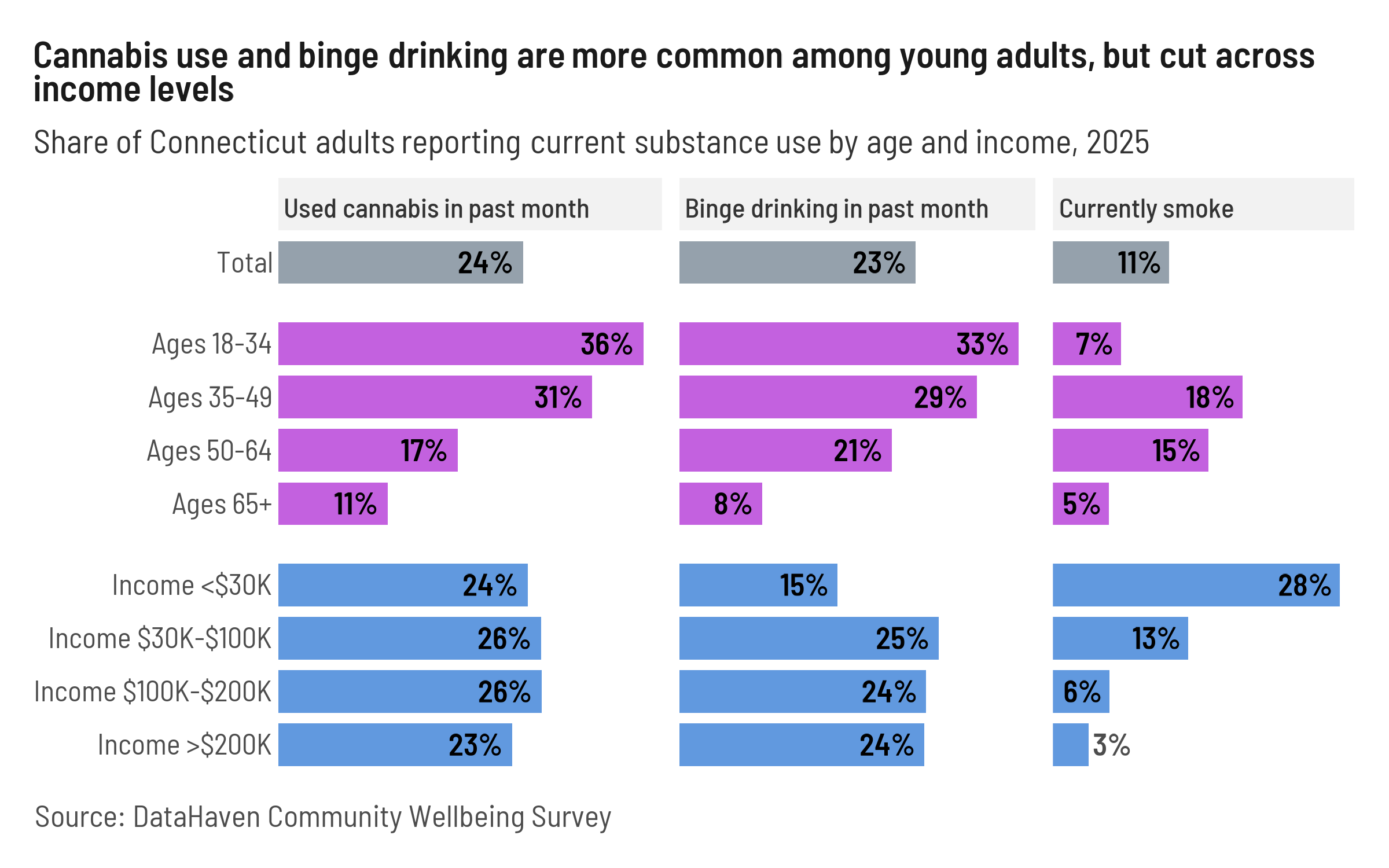
At the same time, cannabis use doubled, likely due to legalization in 2021. Around 24% of people reported using marijuana in the past month, up from 12% in 2018. The spikes in usage come during a time of higher rates of loneliness, Abraham said, prompting further research on the relationship between cannabis and mental health.
Another typical behavior among young adults, at a 23% prevalence rate, is binge drinking, or consuming multiple drinks on an occasion. Black residents reported the highest rate at 31%, compared with 23% of White residents and 19% of Latino residents. About 27% of those who binge drink have children at home.
Changes in policy
Questions about public benefits, such as SNAP and Medicaid, were added to this year’s survey in light of major federal changes to the programs, Abraham said.
About 26 percent of Connecticut adults, or their household members, have received SNAP at some point, while 36 percent have received Medicaid/HUSKY. Most respondents added that there isn’t enough support for low-income residents, and many worry that ongoing changes will lead to more people will struggle to access care or may go hungry during a time of rising food insecurity.
Increasing immigration enforcement and activity is also negatively affecting Connecticut residents, according to the data.
Across Connecticut, 31% of adults worry “somewhat” or “a lot” that they or someone they know could be detained or deported, or lose their legal status. Latino adults, in particular, are reporting higher levels of stress, sleep loss and are avoiding medical care, travel and social activity as a result.
“More people might experience the effects of that system, and the questions in our survey, I think, might be able to track going forward, like, how people are affected by that kind of activity in the communities?” Abraham said.
[Excerpt of front page news story by Alex Putterman, across Hearst CT newspapers, 11/10/25]
About one in four Connecticut households has used the Supplemental Nutrition Assistance Program at some point, and most adults in the state want to see the program strengthened, not weakened, a new survey shows.
Amid coming cuts to SNAP eligibility and a federal government shutdown that has frozen the program, a detailed survey from the nonprofit DataHaven offers new insight into who uses food assistance in Connecticut and what state residents think should happen to it moving forward.
According to the survey, 26% of Connecticut adults say they or someone in their household have received SNAP benefits at some point, with about half of that group saying they received the benefits within the past 30 days.
State data shows hundreds of thousands of Connecticut residents receive SNAP, including people in all 169 towns across Connecticut.
Responses in the DataHaven survey varied significantly by demographic group, with 50% of Black adults saying they or someone they live with have received SNAP, compared to 40% of Latino adults and 20% of white adults. Additionally, people who live in “urban core towns” were far more likely to have received SNAP than those in suburbs, and those with lower incomes were, unsurprisingly, far more likely than those with higher incomes.
Still, the survey data shows the breadth of SNAP across demographic groups. More than one in 10 Connecticut adults with a bachelor’s degree or higher say they or someone in their household has received SNAP, as do more than one in 10 who have incomes between $100,000 and $200,000.
Women were significantly more likely than men to report using SNAP, with 32% of female respondents saying they or someone in their household had received food assistance through the program, compared to 20% of men. Meanwhile, 36% of those with children in their home report someone in their household having received SNAP, compared to 21% of those without children.
Among people who previously received SNAP but no longer do, most said they stopped because they became ineligible, usually due to an increase in income, but another 28% said they stopped because the application process was too difficult, the benefits weren’t worth the trouble or simply because they chose to.
“These numbers help communities understand who depends on safety net programs, and how policy changes like the pause in SNAP benefits are likely to drive a huge increase in demand at food banks,” DataHaven Executive Director Mark Abraham said in a statement.
The new data comes as millions of Americans go without SNAP benefits during the ongoing federal government shutdown. Though a judge has ordered President Donald Trump’s administration to release November SNAP payments, it was unclear as of Friday afternoon whether the administration would comply or when those benefits might be available in Connecticut.
Gov. Ned Lamont announced Friday that if the federal government does not release the benefits, the state will supply the funds to cover them.
Even once the shutdown ends, however, some Americans are likely to lose SNAP benefits due to the spending bill passed earlier this year by Trump and congressional Republicans, which reduces the share of funding the federal government will commit toward the program.
According to the DataHaven survey, 45% of Connecticut adults are “very concerned” that government policies will lead to more families struggling to afford food due to SNAP cuts, while another 22% were “somewhat concerned.”
Additionally, 51% of Connecticut adults say the government currently provides “not enough assistance” through SNAP, while 23% said it provides “the right amount of assistance” and only 12% said it provides “too much assistance.”
Food insecurity in Connecticut has increased in recent years, data shows, amid inflation and the expiration of certain pandemic-era social safety net programs.
DataHaven also asked about changes to Medicaid and the Affordable Care Act, both of which also face cuts in the Republican spending bill, and found similar results: 52% of Connecticut adults are “very concerned” more adults and children will become uninsured, and another 22% are “somewhat concerned.”
The 2025 DataHaven Community Wellbeing Survey, conducted in partnership with Siena Research Institute, featured interviews in English and Spanish with 1,371 Connecticut adults between Aug. 4 and Oct. 16, followed by statistical weighting to ensure the results accurately represent the state population.
For statewide results, the maximum margin of error is 3.5%, DataHaven says.
Hartford, Conn. — At a packed statewide event hosted yesterday by the Hartford Foundation for Public Giving, DataHaven unveiled the results of its latest DataHaven Community Wellbeing Survey (DCWS), believed to be the largest and most comprehensive neighborhood-level wellbeing survey in the United States. The event, attended by civic leaders, health professionals, and nonprofit partners, featured presentations from DataHaven as well as remarks by Hartford Mayor Arunan Arulampalam and Jay Williams of the Hartford Foundation. Data placemats and graphics, along with detailed crosstabs for each 2025 DCWS question, are available at https://ctdatahaven.org/wellbeingsurvey.
The DataHaven survey captures a portrait of residents’ health, economic stability, and community life through interviews with thousands of randomly-selected adults in every Connecticut ZIP Code. The New Haven-based nonprofit organization collaborates with Siena Research Institute to ensure the reliability and consistency of its research methods, which include live interviews in English and Spanish and statistical weighting to accurately represent Connecticut’s entire adult population. Since 2015, more than 53,000 representative adults have participated in these in-depth interviews. For the 2025 survey, 1,371 adults were interviewed from August 4 to October 16, 2025, and the statewide results carried a maximum margin of error of 3.5 percent.
“Connecticut continues to show great resilience and a high quality of life, with more than 83 percent of adults saying they are satisfied with the place they live,” said Mark Abraham, Executive Director of DataHaven. “But the data also reveal areas of concern that communities are working hard to address, including cuts to food assistance, health care, and housing that over a million people in our state have been relying on. The results also show rising anxiety, worries about immigration enforcement, differences in access to economic and health opportunity, and financial stress, especially for renters and families with children.”
Trust in Local Institutions Remains High
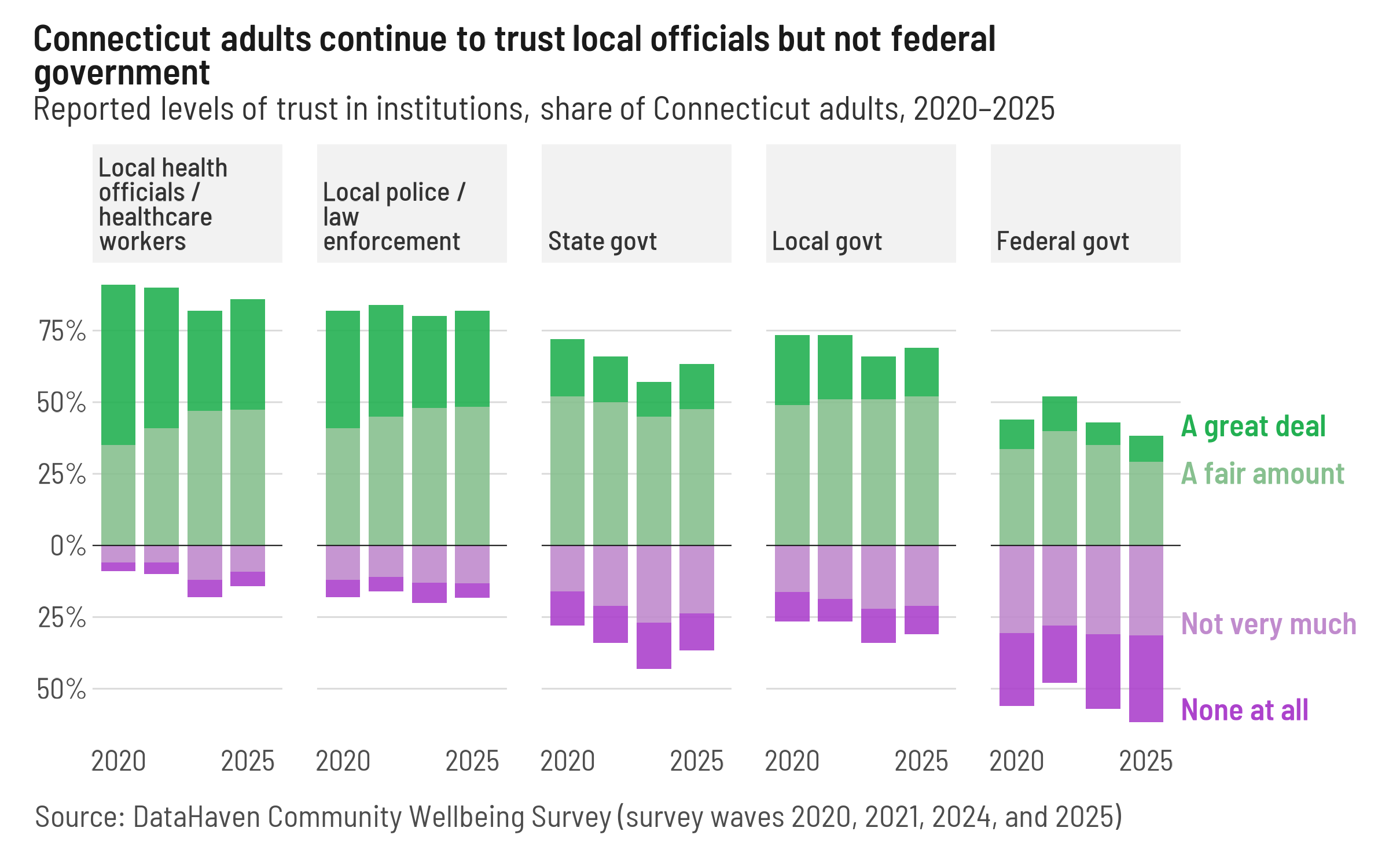
The presentation began with a focus on institutional trust, a theme that resonated among the representatives from local and statewide agencies, philanthropies, and healthcare organizations gathered at the event. “Our data show that trust in local and state government remains high, even as trust in federal government has declined,” said Abraham. “This implicit legitimacy of local partners is one of Connecticut’s greatest assets, as it allows communities to respond with credibility as challenges arise.”
Abraham noted that the survey continues to demonstrate a strong link between responsive government and higher self-reported well-being, underscoring the importance of access to trusted local information at a time when the availability of reliable data has been threatened nationally.
A Collaborative Effort
The survey is made possible through a broad coalition of partners. This year, major supporters include the University of Hartford, American University, and Yale University, Connecticut Children’s, Yale New Haven Health, the Connecticut Department of Public Health, local health departments in Hartford, New Haven, and Stamford, and regional philanthropic organizations including The Community Foundation for Greater New Haven, Connecticut Community Foundation, The Connecticut Project, Fairfield County’s Community Foundation, Hartford Foundation for Public Giving, United Way Coastal Fairfield County, United Way of Greater New Haven, and the United Way of Connecticut, with many other organizations contributing as well.
“This diversity of organizations supporting the survey reflects the fact that the survey measures what matters most to quality of life, whether that is community trust, transportation, affordability, health, housing, or support from friends and family,” Abraham said at the event.
Major Changes Since Prior to the COVID-19 Pandemic
The presentation highlighted the largest statewide changes measured by the DataHaven survey between 2018 and 2025.
• Cannabis use doubled, with about 350,000 more adults now using cannabis or marijuana (24 percent of adults using it at least once during the last 30 days, up from 12 percent in 2018).
• Optimism about local jobs increased and underemployment rates improved somewhat, with 250,000 more adults in Connecticut rating employment opportunities for residents in their area as “excellent” or “good.”
• Mental health challenges rose, with about 200,000 more adults reporting anxiety or depression.
• Chronic disease diagnoses rose, with about 150,000 more adults reporting diabetes or hypertension, potentially reflecting both an aging population and improved screening.
• The number of adults who ran out of money for housing, and the number who had to stay home in the past year because they lacked reliable transportation, both increased by roughly 150,000 adults. In 2025, 11 percent of adults statewide (about 320,000 people) said they ran out of money for housing, which is about double the rate that was measured by the DataHaven survey 10 years ago. Statewide, 7 percent of adults said they had to miss doctor’s appointments because they had no way to get there.
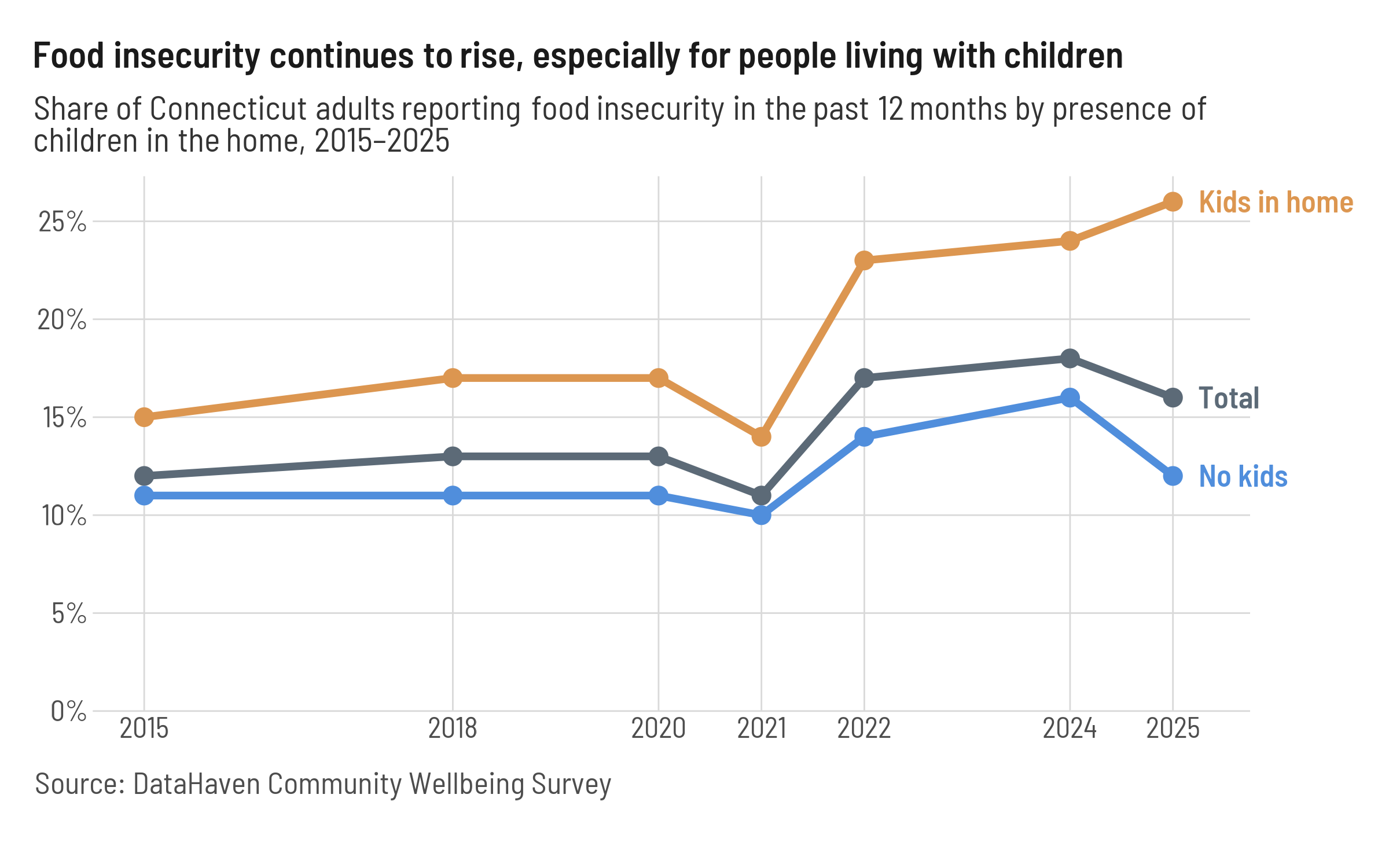
• Food insecurity is rising, increasing by 100,000 adults from pre-pandemic levels. The increase is particularly large for adults living with children (with 26 percent reporting that they ran out of money for food in the past year, compared to 11 percent of adults without children). Abraham noted that this increase is even more striking if compared to 2021’s record low in the food insecurity rate, when the expanded Child Tax Credit helped families and slashed child poverty nationally. In some of Connecticut’s largest city centers, up to half of adults with children report that they ran out of money for food this past year.
• Access to care remains an issue, with 100,000 more adults unable to get needed medical treatment in the last year. The rate of missed care spiked during the peak year of the COVID-19 pandemic and has since improved for higher-income adults but continued to worsen among moderate- and lower-income residents.
• About 100,000 fewer adults in the state smoke cigarettes, though this is partly because vaping has become more popular, especially among younger adults.
• About 150,000 additional residents say they have safe places to ride bicycles, likely reflecting the construction of new protected bike paths in many towns.
• Social support declined, especially for adults with below-median incomes, with 100,000 fewer adults saying they usually receive the social or emotional support they need.
Despite these shifts, Abraham emphasized that “most measures have remained stable over time, meaning that Connecticut continues to outperform national averages on many dimensions of health and well-being.”
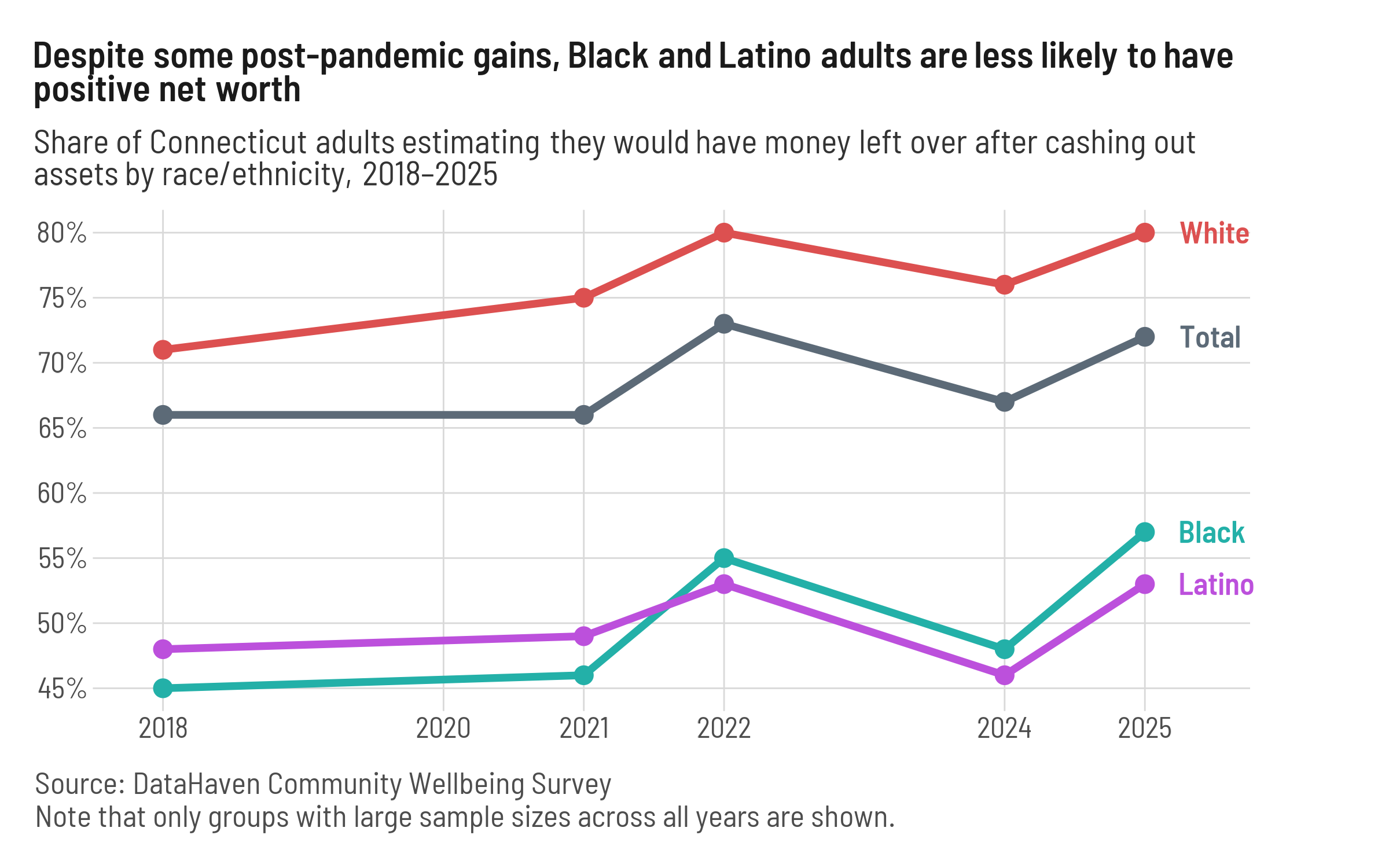
Key Topics Shared at the Event
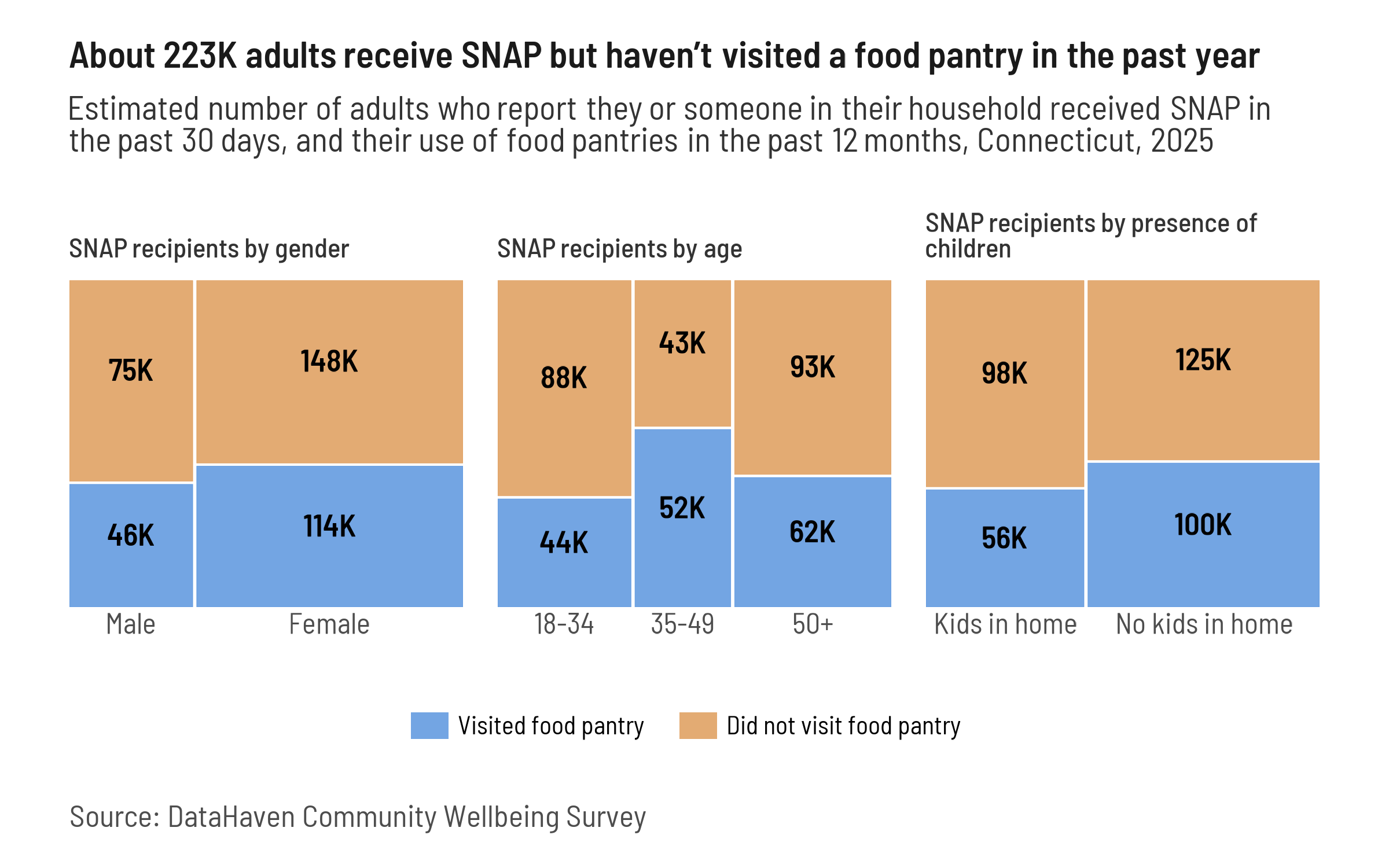
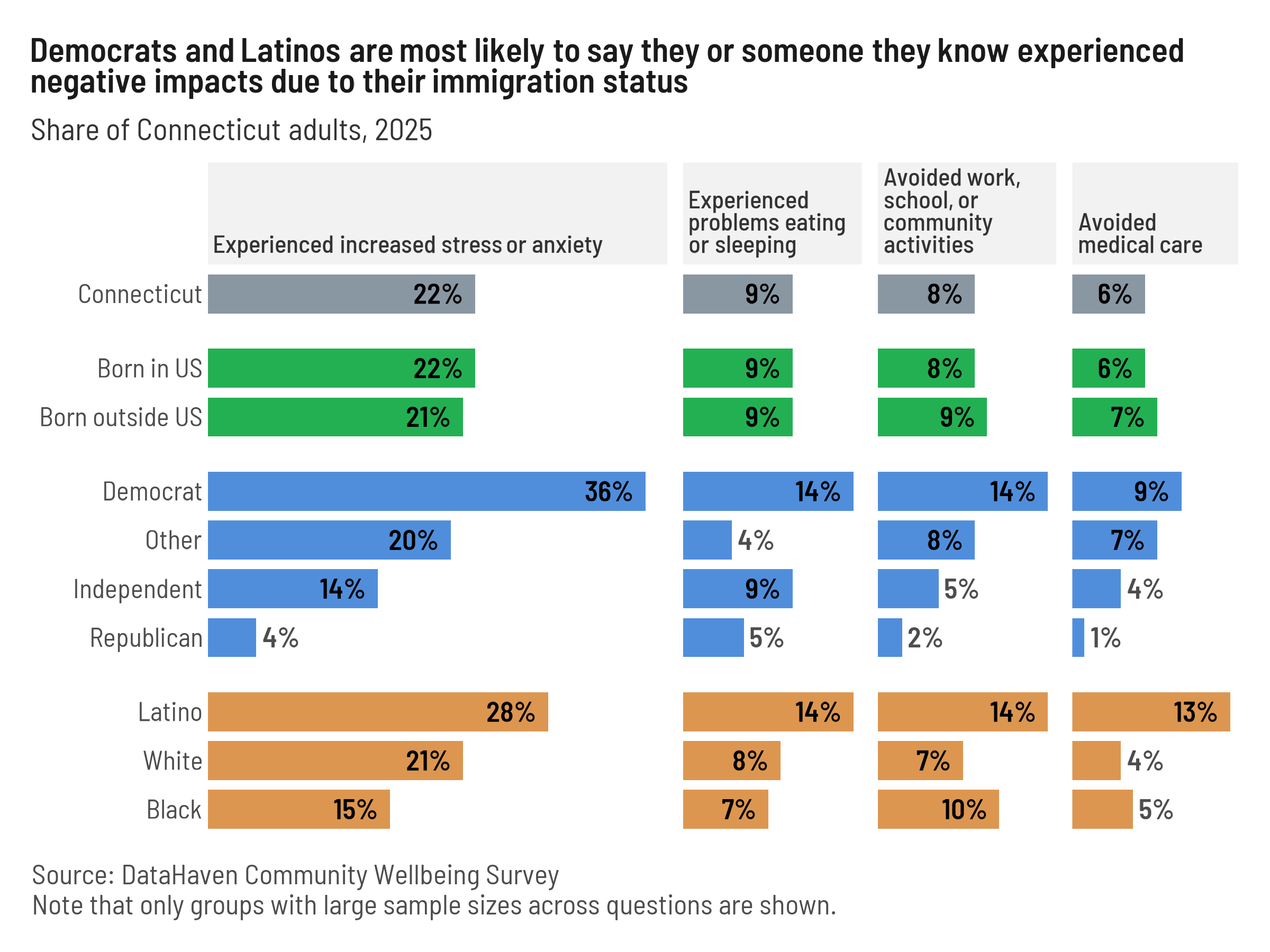
The presentation covered several additional findings from this year’s data:
• SNAP and the Social Safety Net: In 2025, new questions were added on public benefits. The survey found that 26 percent of Connecticut adults or their household members have received SNAP at some point, 36 percent have received Medicaid/HUSKY, 9 percent received rental housing assistance, and more than 1 in 10 used a food pantry in the past year. The survey also found that of the adults who received SNAP within the past 30 days, the majority had not used a food pantry or emergency food service at all within the past year. “These numbers help communities understand who depends on safety net programs, and how policy changes like the pause in SNAP benefits are likely to drive a huge increase in demand at food banks,” Abraham said. The survey also examined residents’ attitudes about public programs, finding that most say that there is not enough assistance for low income people, and that most residents are concerned that current national policy changes will lead to more people going hungry or unable to access health care or housing.
• Immigration Concerns: The survey included questions about the personal and community effects of immigration enforcement. In Connecticut, 31 percent of all adults worry “somewhat” or “a lot” that they or someone they know could be detained, deported, or have their legal immigration status revoked. Many residents, particularly Latino adults, reported heightened stress, lost sleep, and delayed medical care related to these concerns. “Even before new policies take effect that will dramatically increase the federal budget for immigration enforcement and deportations, many residents are already feeling an impact on their health and well-being,” Abraham noted.
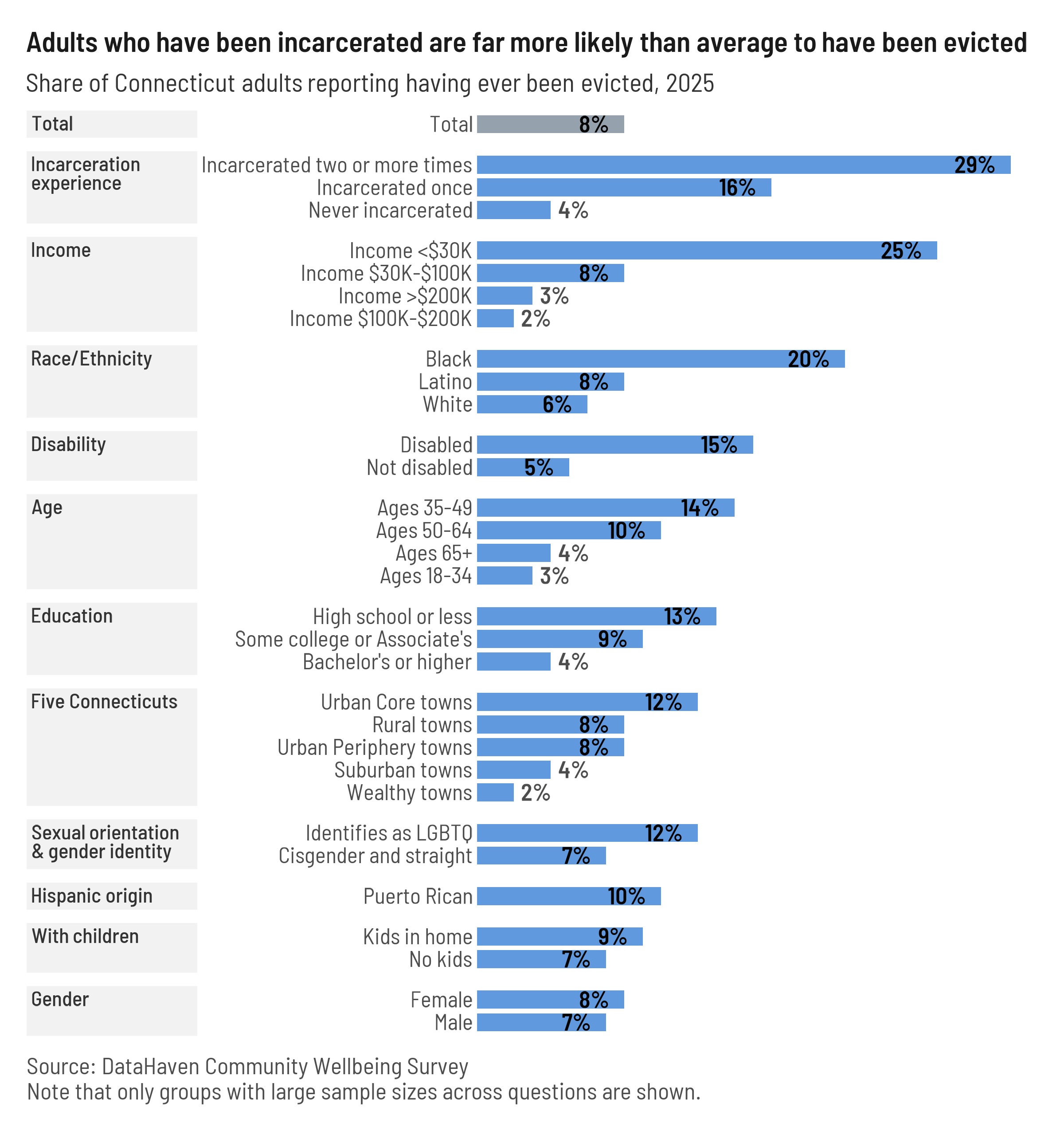
• Eviction and Criminal Justice: A new survey item showed clear disparities in evictions by incarceration experience, suggesting a need for policy interventions that reduce the barriers to stable housing for people with past justice involvement.
• Mental Health: About 13 percent of all adults, including 22 percent of young adults, reported needing mental health treatment within the past year but being unable to get it, often due to cost or lack of available services.
• Social Support: Abraham noted that this single measure of how much support people feel from family and friends predicts happiness and well-being more than any other item in the survey. “The increase in loneliness is something we should take seriously, and we should consider what we can collectively do to support each other in our state,” he said.
Data Access and Next Steps
The 2025 DCWS Connecticut Crosstabs, along with graphics and “Data Placemats,” were distributed to attendees and are publicly available at ctdatahaven.org/wellbeingsurvey. Survey data are also accessible in DataHaven’s town reports and its Connecticut Town Data Viewer, which combines results since 2015 to provide neighborhood-level insights for each of the 169 towns in the state. DataHaven encourages partners and advocates to reach out for analyses or presentations that can bring the findings to life at the local level.
Media Contact
Mark Abraham, MPH, Executive Director, DataHaven, Email: info [at] ctdatahaven.org, Phone: (203) 500-7059.
[Article excerpt by Gary Larkin, April 4, 2025]
NORWALK – By closing gaps in income, home ownership, home values, and educational attainment Fairfield County could generate $15.6 billion in gross domestic product growth, according to a recently released report.
A new research report unveiled on Wednesday called The Upside—Growth, Potential, and the Future of Fairfield County co-authored by experts from Fairfield County’s Community Foundation, the Urban Institute and DataHaven paints a clear picture of what’s possible for Fairfield County if it comes together to create a more competitive, resilient, and inclusive regional economy.
Intentionally planning to expand opportunity could generate a $15.6 billion boost to the region’s GDP, the equivalent of the entire annual economic output of nations like the Bahamas, the report states.
“This research sends a powerful message: Expanding opportunity is a game-changing economic strategy,” said Mendi Blue Paca, CEO and president of Fairfield County’s Community Foundation. “For the first time, we have hard data proving that an inclusive Fairfield County isn’t just possible — it’s the key to unlocking our region’s full economic potential. The time for bold action is now.”
Key outcomes from closing opportunity gaps:
- $13.3 billion in additional aggregate income for local residents
- 33,000 more homeowners and 84,000 more college graduates
- $603 million in additional local property tax revenue and $1.2 billion in state tax revenue.
- Despite being one of the wealthiest counties in the nation, Fairfield County ranks second highest in income inequality among U.S. metro areas.
“Fairfield County has long been recognized as one of the most unequal counties in America,” said Kelly Davila, principal research associate at DataHaven. “While we often rely on economic indicators and well-being surveys to demonstrate the various factors driving these disparities and their effect on quality of life, this new research goes a step further and actually demonstrates the benefits to all residents that could arise from closing opportunity gaps in Fairfield County.”
The report highlights deep economic disparities that contribute to widening income inequality such as White households earn $134,000 more on average annually than Black households and approximately $125,000 more than Latino households. It also found median home values for White households are approximately $580,000, compared to $343,000 for Black and $413,000 for Latino households.
“Fairfield County, Connecticut, has the opportunity to strengthen the local and state economy, creating new opportunities for residents and local businesses,” said Dr. Christina Plerhoples Stacy, principal research associate, at the Urban Institute. “In our research, we found that increasing opportunities for Fairfield County residents and closing socioeconomic gaps could lead to long-term economic gains. At a time of economic uncertainty, this new evidence-based research outlines ways in which the Fairfield County community can continue to grow and thrive using recommendations from local leaders across the private, public, nonprofit, and philanthropic sectors.”
A Call to Action
FCCF is urging business leaders, policymakers, philanthropists, and community members to act now. The study outlines key steps to drive inclusive growth, including:
- Expanding access to education: Universal preschool, stronger K-12 support, and college/trade school subsidies.
- Workforce & small business development: More apprenticeships, fair hiring practices, and expanded business financing.
- Housing solutions: Down-payment assistance for first-time homebuyers and reducing barriers to new housing construction.
- Wealth-building programs: Baby bonds, matched savings initiatives, and financial coaching.
[Excerpt of article from Viktoria Sundqvist, CT News Junkie, 12/4/2024]
State Republican lawmakers say a recent survey showing nearly 40% of adults in Connecticut are struggling financially should be “a wake-up call to all state Democrats.” Democrats, however, stress that now is the time to come together across party lines to respond to the needs of Connecticut families.
The well-being survey, conducted by DataHaven, also revealed a rise in food and housing insecurity, with certain populations facing disproportionately high rates of hardship, such as immigrants from Puerto Rico, people with disabilities and LGBTQ+ individuals, the organization said.
The survey used probability sampling and consisted of in-depth interviews with nearly 7,500 randomly-selected adults in every Connecticut town.
The results of this year’s survey marks the highest rate of financial insecurity since the start of statewide data collection in 2015, DataHaven said.
“The gender gap is especially notable, with women reporting higher rates of financial hardship than men across most indicators,” DataHaven Executive Director Mark Abraham said in a news release.
“The financial strain faced by so many Connecticut residents is a major concern, especially given the rising costs of housing, healthcare, and everyday essentials. These trends highlight the urgent need for policy solutions that provide long-term economic stability for our communities.”
The survey also looked at things like the quality of parks and bike lanes, trust in local and state government, access to mental health services, social support, discrimination, and life satisfaction.
The Senate Republican Caucus was quick to blame Democratic state leadership for the situation, claiming Democrats have “no sense of urgency to address the cost of living crisis” in Connecticut.
“Wherever we go, Connecticut Republicans hear this same troubling message loud and clear from working and middle class families. From groceries and electric bills to insurance and housing, Connecticut is becoming increasingly unaffordable,” the Republican caucus said in a news release. “Every issue the state legislature debates in the 2025 must focus on one word: Affordability. Because right now, as this survey clearly reveals, Connecticut is trending in the wrong direction.”
Senate President Pro Tempore Martin Looney, however, said Connecticut voters have made it clear they trust Democrats to respond to the pressures families across the country are facing.
“Instead of engaging in obstructionist political games and voting against overwhelmingly popular economic initiatives, we welcome Connecticut Republicans to join us in responding to the needs of Connecticut families,” Looney said.
The DataHaven report repeatedly cites the drop in federal pandemic aid – including the federal child tax credit – as the primary driver for increased costs, Looney said, and that Democrats are “focused on delivering” for low- and middle-income families, whether that be through increasing the minimum wage or passing the largest income tax cut in state history.
“We encourage the Trump administration and our Republican colleagues in the General Assembly to join us in investing the state and federal funds necessary to improve the economic security of all residents in Connecticut,” Looney said. “With or without their support, we will be forging ahead to deliver real relief for residents.”
[Excerpt from article by Alex Putterman that appeared on the top of the front page of all Hearst Connecticut newspapers, Sunday, December 1, 2024]
About 40% of Connecticut adults are struggling financially or “just getting by,” a new survey has found. The survey, from the nonprofit DataHaven, found that more people report being worse off financially than they were a year ago than report being better off, amid increases in food and housing insecurity.
For its survey, DataHaven partnered with Siena College to interview 7,458 randomly selected adults across every Connecticut town, with statistical weights to ensure representation across demographic categories. The group says results have a maximum margin of error of 1.5%.
Here are some takeaways from the findings.
Connecticut residents are less economically stable than before
This survey marked the sixth time since 2016 that DataHaven has asked Connecticut residents about their financial security. The trend? Not good, the data shows.
Asked how they are managing financially, 29% said “living comfortably” and another 30 percent said “doing all right.” That left 21% who are “just getting by,” 11% who are “finding it difficult” and 8 percent who are “finding it very difficult.”
The total share of people “just getting by” or worse was up 12 percentage points from the previous survey in 2022 and was the highest on record.
DataHaven’s survey backs up findings in several other recent reports, which similarly showed a rise in economic precarity in Connecticut. In October, the United Way of Connecticut found that the number of residents earning less than a living wage has increased in recent years, leaving more than 560,000 households below the threshold at which they can afford essentials.
Just weeks later, a separate report from Connecticut Voices for Children found that poverty in the state rose more than 40 percent from 2021 to 2022 as key federal programs expired.
Housing and food costs are particularly challenging
Connecticut in recent years has seen a spike in rental costs and a rise in homelessness, so maybe it’s no surprise that DataHaven’s survey shows an increase in housing insecurity.
According to the survey, 12% of Connecticut adults have lacked money to pay for adequate housing in the past year, up from 10% two years ago and the highest figure since DataHaven began asking the question in 2015.
Food has also become an issue for a growing number of people. The survey found that 12% of people have received groceries or meals from a food pantry or similar emergency food service over the past year, while 18% said there has been a time in the past year when they couldn’t afford adequate food.
Food insecurity dipped in 2021 amid a wave of federal pandemic-relief efforts, including stimulus payments and an expanded child tax credit, but has risen again since, DataHaven’s survey results show.
In a response to increases in economic stability, the United Way of Connecticut and Connecticut Voices for Children, among other groups, have called for the creation of a state child tax credit, which would benefit households below a certain income level.
Mark Abraham, DataHaven’s executive director, said this week housing could also be an area for policymakers to focus on if they want to help Connecticut residents achieve greater financial security.
“I think there are probably a lot of approaches to making housing more affordable in Connecticut, mainly building more of it,” Abraham said.
The problems are worst for poor, Black, Latino and indigenous residents
Across essentially every category, poorer Connecticut residents reported being in worse shape than wealthier residents, and Black, Latino and indigenous residents reported being in worse shape than white residents.
Take, for example, housing: According to DataHaven, 20% of Black adults, 20% of indigenous adults and 18% of Latino adults have lacked money for adequate shelter in the past year, compared to 9% of white adults and 7% of Asian adults.
Similar patterns hold for food insecurity, transportation challenges and other categories. Only 66% of Black adults and 65% of Latino adults said they have access to a car, as compared to 86% of white adults.
Unsurprisingly, poorer people across racial and ethnic groups were far more likely to report issues with food, housing or transportation than wealthier people.
Wealthy people were also more likely to like where they live: 92% of people with incomes over $200,000 said they’re satisfied with their city or area, compared to 75% of people with incomes under $30,000.
These trends may help explain the recent election
Struggles with housing and food costs likely help explain why nearly every state — including Connecticut — shifted in the recent presidential election toward Donald Trump, who many voters saw as representing change from the status quo.
Even in Connecticut, where Democrat Kamala Harris defeated Trump comfortably, only 42% of adults trust the federal government either “somewhat” or “a great deal,” according to DataHaven’s survey.
Abraham noted that low-income people, who are struggling most financially, moved most toward Trump.
As government gets more local, the survey found, trust improves, perhaps explaining why Democratic incumbents fared well in Connecticut even as Harris lost ground. DataHaven reports that 56% of adults in Connecticut trust the state government, while 65% trust their local government.
Despite struggles, people mostly like life in Connecticut
For all those troubling results about economic instability, housing prices and food insecurity, in other parts of the survey Connecticut residents reported feeling happy with aspects of life in the state.
Asked whether they’re satisfied with the city or area where they live, 82% of people said yes. Asked whether the place they live is getting better or worse, 30% said “better” and 46% said “about the same,” while only 22% said “worse.”
Respondents also gave relatively good marks to the police (67 percent said they do a “good” or “excellent” job keeping residents safe) and to public parks and other public recreational facilities (which 71 percent said were in “good” or “excellent” condition). Meanwhile, 68 percent said their area was a “good” or “excellent” place to raise children, with only 9 percent responding “poor.”
As for the people in their communities, 81% of people said those in their neighborhood can be trusted, and 73% said those in their neighborhood are trying to improve it.
NEW HAVEN, Conn., November 25, 2024 — In one of the richest states in the U.S., a newly released report from DataHaven highlights concerning trends in financial, food, and housing insecurity across Connecticut.
According to the 2024 DataHaven Community Wellbeing Survey, released today at a statewide event celebrating the organization’s 30th Anniversary, nearly 40 percent of adults in Connecticut are struggling financially, marking the highest rate of financial insecurity since the start of statewide data collection in 2015. The report also reveals a troubling rise in food and housing insecurity, with certain populations facing disproportionately high rates of hardship.
The survey also highlights disparities in how different populations experience financial, food, and housing insecurity. Certain groups, such as immigrants from Puerto Rico, people with disabilities, and LGBTQ+ individuals, face significantly higher levels of insecurity in all three areas. The gender gap is especially notable, with women reporting higher rates of financial hardship than men across most indicators.
While today’s announcement focused on financial and food insecurity in Connecticut, the full survey results, including information on a wide range of topics such as the quality of parks and bike lanes, trust in local and state government, access to mental health services, social support, discrimination, and life satisfaction, can be found on the DataHaven website. Future releases will highlight trends observed by DataHaven in those areas during the past 10 years of this survey program.
For the full press release, and detailed crosstabs with data tables for each question across detailed demographic groups, please visit the main DataHaven Community Wellbeing Survey page and view the “2024 DCWS” section.
PRESS RELEASE
DataHaven wins federal innovation prize for empowering residents with data
National award recognizes DataHaven’s innovative new town-by-town map of well-being and environmental conditions
NEW HAVEN, Conn., September 26, 2024— DataHaven, a non-profit organization that has provided communities with information to advance equity and well-being across Connecticut neighborhoods for thirty years, continues to show how organizations can drive social change through data and technological innovation. On September 26, DataHaven was awarded a $72,500 prize from the U.S Department of Health and Human Services (HHS) Environmental Justice Community Innovator Challenge.
This national award recognizes DataHaven’s efforts to make data accessible for all 169 towns in Connecticut, through public outreach and tools such as its Connecticut Town Equity Reports and Connecticut Town Data Viewer.
More specifically, the award also acknowledges the organization’s work to develop and test a set of multilevel regression and poststratification (MRP) models and local estimates based on the DataHaven Community Wellbeing Survey (DCWS), a statewide survey that has completed live interviews with over 50,000 randomly-selected adults in every Connecticut town. These models create more detailed and accurate data about Connecticut towns. Communities can use the model’s data to engage residents and make better decisions about local needs, such as access to public park systems, housing, youth programs, health care, and affordable fresh produce. DataHaven’s data reveals specific health and environmental disparities that disproportionately impact marginalized communities, thereby informing effective policy and systems changes aimed at improving health equity.
Many of DataHaven’s latest town-by-town estimates are included in its Connecticut Town Data Viewer, which was recently made available on the DataHaven website at ctdatahaven.org/data-dashboard. Granular data about demographic groups within each town and region, as well as about specific neighborhoods within the largest cities, are found in DataHaven’s other reports or available on request.
“We believe that access to these new datasets, which reflect quality of life and economic issues that are of greatest importance to Connecticut residents, can help residents shape the success of their community now and in the future,” said Mark Abraham, Executive Director of DataHaven. “Furthermore, the models developed by DataHaven do not just benefit Connecticut, but can also be applied to other state and national surveys, enabling estimation of community-level measures that were previously not possible. We are honored to have received this prize from the U.S. Department of Health and Human Services.”
DataHaven’s day-to-day activities, including its new data viewer as well as its approaches to survey data collection, are informed by a volunteer Advisory Council of over 300 residents and agency leaders from across the state. The Advisory Council members suggest improvements, highlight key topics for DataHaven to include, and conduct user testing. During the next year, DataHaven plans to use the innovation prize funding to expand its Advisory Council and develop new user-friendly approaches to sharing data about different communities. Results from DataHaven’s latest statewide survey will be released later this fall.
Advisory Council members commented on DataHaven’s receipt of the national prize:
“Our congratulations to DataHaven on this well-deserved honor,” said Matt Hart, the Executive Director of the Capitol Region Council of Governments (CRCOG) in Hartford, Connecticut. The DataHaven Connecticut Town Data Viewer provides access to a vast range of economic, demographic, and well-being topics and indicators. The user can easily summarize this data by state, municipal, and COG level geographies, in both map and tabular form. This dynamic tool will help regional and municipal staff to quickly visualize, compare, and contrast various socioeconomic and quality of life datasets at a statewide, regional, and municipal level. We look forward to using the Data Viewer at CRCOG as part of our regional planning studies and projects.”
“Understanding the full picture of health and well-being in Connecticut requires digging deeper into the data and asking questions to see how people in every community are really doing. DataHaven’s Connecticut Town Data Viewer makes this possible in a user-friendly way, and we hope many people will use it this information to explore the strengths and challenges that exist in communities across the state,” said Tiffany Donelson, president and CEO of the Connecticut Health Foundation. “While Connecticut as a whole is a healthy state, more granular data shows us that not everyone has the same opportunities to live their healthiest lives. Tools like this help show us where there are gaps and can help shape our policy choices to make Connecticut more equitable.”
“This tool serves as a powerful resource, giving a clear snapshot of public sentiment at a glance. The data shared is more than just numbers—it’s a window into the community’s perceptions of the built environment and local governance. By understanding these trends, you’re better equipped to shape a future that truly reflects the needs and desires of those you serve,” said Rick Dunne, Executive Director of the Naugatuck Valley Council of Governments in Waterbury, Connecticut.
The HHS Environmental Justice Community Innovator Challenge is a nationwide contest to support disadvantaged communities and Tribes facing the brunt of environmental injustices, including health harms due to climate change. This Challenge aims to uplift community-level solutions to address health inequities with prizes totaling $1,000,000 that were awarded in two phases in 2024.
About DataHaven
DataHaven’s mission is to empower people to create thriving communities by collecting and ensuring access to data on well-being, equity, and quality of life. The organization has served Connecticut as a nonprofit organization since 1992, working with many partners to make information more useful to local communities.
Contact
Mark Abraham, Executive Director, 203.500.7059, info at ctdatahaven.org
[Excerpt from Capitol Dispatch article posted by Joe O’Leary, August 3, 2024]
Connecticut stands as a leader when it comes to the rights of the queer community, standing well ahead of many other states when it comes to the rights of LGBTQIA+ residents. With same-sex marriage legalized here seven years before its federal approval and enshrined rights for same-sex and queer parents, legal defenses and the transgender community, Connecticut can stand proud.
However, more can always be done. A recent report by DataHaven and the Hartford Foundation for Public Giving found that the state’s queer community has priorities for further success in the future – these include expansion of youth-focused spaces safe for LGBTQIA+ individuals, making sure more voices are heard and, most prominently, improving access to housing and shelter throughout the state for those in need. Creating a more welcoming and accepting environment – even in a state where queer rights are enshrined – is vital for adults and children alike, especially to preserve the safety of queer youth, who are at increased odds of discrimination and can struggle under conditions where they are otherized.
While Connecticut is largely perceived as a safe haven for LGBTQIA+ people, especially transgender people – the report said Connecticut has a reputation where queer people move to Connecticut from states where fewer protections are in place – there is always more that can be done. Discrimination against LGBTQIA+ people, especially young ones who may be struggling, was a common feature in the report.
Finding work and housing can be challenging for a number of these individuals, and some groups within it struggle more than others; transgender people, as one example, face more discrimination and struggles than others. A third of all LGBTQIA+ people in Connecticut face difficulty paying expenses, which leapt to 47% for transgender individuals; food insecurity, lower incomes and households experiencing loss of work also were more common for transgender respondents than the general queer community.
Queer individuals in Connecticut are also significantly more likely to face mental health problems, primarily anxiety and depression, than cisgender straight individuals, with these conditions reported by 39% of queer people compared to 25% of the general population. This trend continues for other forms of medical care, with queer respondents missing medical care 2.1 times more than the general population and transgender ones 3.9 times more likely to miss such care. Discrimination was also more common for queer people in health care, police and employment interactions compared to the general public. Disability rates were also higher for queer and transgender groups than cisgender ones.
The report found that while Connecticut is a leader in queer rights in many respects, more work can and should be done. It found that the best responses to these issues is to find areas of improvement, including community outreach to those in need, supporting funding efforts aiding these groups and individuals and increased communication and effort to meet the needs of organizations serving the LGBTQIA+ community.
[Excerpt of news article by Natasha Sokoloff, July 27, 2024]
HARTFORD — Despite Connecticut’s relatively strong protections of its LGBTQ+ community, a new report on the greater Hartford community says that it still faces striking disparities in areas of health, well-being, and quality of life.
At a time when other states seem to be increasingly hostile to LGBTQ+ lives through discriminatory policies and lack of protections, there is a common conception of Connecticut being a “safe haven” for LGBTQ+ people, according to a report released on July 22 by DataHaven. However, both qualitative data from Hartford-area residents and federal and statewide surveys indicate that Connecticut’s LGBTQ+ community still has unique barriers to housing, financial security, health care, and employment.
The report, which was done in partnership with the Hartford Foundation for Public Giving, aims to illuminate the current state of the LGBTQ+ community in the Hartford area and ultimately help better direct resources to meet the needs of this community.
“There is a very vibrant and interconnected queer community in the Hartford area,” said Shannon Carter, the lead researcher on the report. “But there’s still these sort of, like, other upstream factors that disproportionately affect queer people that aren’t necessarily directly queer issues.”
According to the report, LGBTQ+ adults in Connecticut disproportionately report more difficulty affording basic needs, having lower household incomes, more likely to face housing insecurity, and overall face higher economic precarity than the cisgender heterosexual population.
“There’s definitely things that make life a little bit more difficult for folks with those identities,” said Kate Szczerbacki, director of Learning and Evaluation and Capacity Building at the Hartford Foundation for Public Giving. “And you see the evidence of that show up as disparities in the data.”
But as queer people themselves, both Carter and Szczerbacki said none of that was necessarily surprising.
“I think being able to look at the data, you really understand that there is sometimes greater need and greater challenge for folks with LGBTQIA identities,” Szczerbacki said. “This is just another point of verification of that reality.”
The report shows that LGBTQ+ adults in Connecticut were at least two times more likely to not get medical care when needed despite experiencing a higher burden of need, as members of this community face barriers to health care access due to lower financial means and discrimination from providers while also having higher rates of chronic and mental illness and disability.
“These things are all interrelated, and I think we understand that they’re related, but really seeing how that shows up in people’s lives and making it really tangible — we can see that in quantitative data, we can see that in data sets,” Szczerbacki said.
Carter said what was most surprising to them in the report’s findings wasn’t the clear challenges the LGBTQ+ population was faced with, but some of the stark disparities within the community itself. Transgender people were far more likely to experience housing insecurity and to have missed needed medical care than other LGBTQ+ adults, according to the report. And people of color within the LGBTQ+ community also experienced higher disparities in other quality of life issues.
So despite relatively strong protections on paper, LGBTQ+ people, and in particular transgender people, experienced discrimination in many dimensions of public life in Connecticut, with reports of discrimination based on gender identity spiking in recent years, according to the report.
“I think what’s really important is to really understand some of the dynamics that are happening, you know, out in the real world, and what sort of structures, systems, experiences that might be driving the trends and disparities that we see in the quantitative data,” Szczerbacki said.
But the lack of quantitative data available was an example of another disparity in itself, Carter said. Sexual orientation and gender identity is rarely collected at the state and federal level, according to the report, which is why the report also relies on DataHaven’s statewide survey responses over recent years and also collected qualitative data in greater Hartford specifically.
The report was commissioned by the Hartford Foundation for Public Giving to guide decision making for the foundation’s Equality Fund, which is focused on the health and well-being of LGBTQ+ residents in greater Hartford, Szczerbacki said.
“There is a really a lack of data about this population,” Szczerbacki said. And because the foundation was seeking to understand how to best support the community, it seemed like an opportune moment to partner with DataHaven to leverage both the quantitative and qualitative data that is out there to drive grant making and strategy to address those inequities that exist in the community, she said.
That’s why, in addition to data from the Census Bureau’s Household Pulse Survey, DataHaven’s Community well-being Survey, and the Connecticut Commission on Human Rights and Opportunities’ yearly discrimination data, the report also draws upon the input and experiences of greater Hartford LGBTQ+ organizations and community members.
The report referenced responses from people in qualitative interviews over a couple of months and in a discussion in April, who were able to share how these inequities show up in their lives.
“One thing that came up in the qualitative interviews a lot is just Connecticut as this state that is, like fairly affirming for queer people, and has been sort of ahead of the curve on a lot of these legal protections,” Carter said.
Having legalized same-sex marriage seven years before federal legalization, a robust record of judicial wins regarding parental rights of same-sex couples, and recently passing the Parentage Act that further advanced these rights, Connecticut has created a strong foundation for its LGBTQ+ community, according to the report.
“And for a lot of folks, that was very comforting and kind of helped them feel safer here, or folks have come to Connecticut for specifically the queer protections,” Carter said.
But not everyone they spoke to in the greater Hartford community felt that way.
“There was also folks that were like, ‘Oh, I came to Connecticut for the safety and then when I got here, I didn’t realize that there were all these other issues, like, things are really expensive here,'” Carter said. “If you’re a person that’s not making a lot of money, or you’re on disability, it can be really difficult to carve out a living here.”
“So lots of folks were like, yes, we really love these legal protections, but it doesn’t always translate into equal treatment,” they said.
Based on the report’s findings, while Connecticut’s policies put the state near the top of the list for protections of the LGBTQ+ community, actual experiences, as seen in both the quantitative and qualitative responses, tell a more harrowing story about inherent challenges, structural stigma and interpersonal bias.
But in spite of the systemic barriers that exist, Carter said that if there’s anything they learned from this study, it’s that there is a lot of strength and resilience in Connecticut’s, and greater Hartford within it, LGBTQ+ community.
And ongoing and improved data collection will allow for a better understanding of the needs of this community, so that organizations like the Hartford Foundation for Public Giving can target funding and resources to where it is needed most.