
[Excerpt from Connecticut Public Radio article by Abigail Brone, 5/28/26]
Fable Burley was one of dozens of housing and LGBTQ-rights activists gathered outside the Pond House Cafe in West Hartford’s Elizabeth Park Thursday.
Burley and other members of her group held signs advocating for expanding eviction protections and passed out fliers detailing the high eviction rates for LGBTQ renters.
“It’s often hard to tell whether you’ve been evicted because you’re trans,” Burley said. “They don’t have to explain why, right? So it’s hard to prove these things.”
LGBTQ renters are more likely to experience housing insecurity, Burley said. Transgender renters are 2.4 times more likely to be housing insecure when compared to cisgender renters, according to a DataHaven survey.
Transgender and queer individuals often face a lack of social and familial support, and may lose their jobs as a result of their gender or sexuality, leading to financial and housing instability.
[….]
[Excerpt from article by Kelly Prinz, 3/29/26]
The Darien Planning and Zoning Commission is planning to vote on a one-year moratorium for “large multifamily developments,” or projects with 25 or more units.
Jeremy Ginsberg, the town’s director of land use, said there were a few reasons behind the proposed moratorium including a need for the commission to finish its work on the 10-year master plan. In addition, he and commissioners said that the town has had a lot of multifamily housing added in the last few years and they wanted to see the impacts of it on the town.
“I’m mindful of the need for this moratorium,” First Selectman Jon Zagrodzky said at the commission meeting. “The idea of a pause to allow what has been a non-trivial amount of development in town that seems not just to make sense, but to resonate with most residents with whom I speak.”
There would be some exemptions—particularly any projects that come under state statutes like 8-30g as they are governed by a separate set of regulations. But the moratorium comes amid a larger conversation happening across the state about the need for more housing.
A February 2026 report from DataHaven found that the state is “facing a historic housing affordability crisis.” The report noted that the state “ranks dead last nationally in the number of active housing listings for every ten thousand households … second to last in its rental vacancy rate, as of 2024.” In addition, the Connecticut Coalition to End Homelessness found that homelessness in Connecticut rose by 44 percent since 2021.
[….]
The February study from DataHaven found that Darien has seen a 4.7% growth in its number of housing units over the past five years, which is above many neighboring communities—although the overall number of units, 345, is lower. Norwalk saw a 4.1% increase in the number of housing units it has, adding 1,564. Stamford had the highest percentage in the state—a 6.2% increase or more than 3,500 units.
Greenwich added 381 units for a 1.5% increase, Westport added 261 for a 2.5% increase, Fairfield added just under 600 for a 2.7% increase, and Bridgeport added 1,550 units for a 2.6% increase.
The report said that while the number of housing units has increased, it’s not enough to meet the growing needs that Lamont outlined. Citing the 2025 Connecticut Fair Share Housing Study, the report found that there is a shortfall of 120,000 housing units for low-income residents. That study noted the ”overall housing gap is even larger—up to 380,000 units statewide.”
The demand is coming from a few places—people wanting to age in place, workers and families moving into Connecticut, and younger people looking to move out of their parents house, DataHaven found, noting that “average household sizes are also shrinking, as fewer people choose to live with roommates or extended family. As a result, even if the population were to remain steady, the demand for new housing supply would still increase with the rising number of households and the gradual loss of existing housing units.”
The report recommends finding ways to accelerate new housing developments, not pause them, such as by allowing multifamily housing by right in areas around transit and job centers.
[….]
[Excerpt from article by Aidan Lame, 3/26/26]
Recently, Connecticut non-profit DataHaven published an article looking at where housing has been built within the state using the Address Count Listings data, a new product from the Census Bureau.
Previously, we could estimate new construction by analyzing permit data through the Building Permits Survey.
The Address Count Listings expands our capabilities by showing recently completed unit counts as they are added to postal service address rolls.
DataHaven’s analysis illustrates some of the key findings we can get from this new product.
Their research shows that 40,000 new units have been built in the state between 2020 and 2025 with just 10 towns, primarily the largest cities, accounting for 39% of housing.
Overall construction is concentrated in just a few census tracts, highlighting that much of the new housing constructed in the state during that period was in large multifamily developments.
Relative Growth
Our analysis looks to build on DataHaven’s research in two ways.
First, we examine new housing construction in per capita terms to better understand the relative growth in communities across the state, as well as how the state compares to others.
Second, we perform a simple regression to better understand relationships between housing construction and price or population growth.
Both of these contributions will give readers a better understanding of where housing construction is growing fastest, and the broader impact this new housing is having on the respective communities.
[….]
Impact on Prices, Population
In 2025, more than 300,000 people in Connecticut reported being unable to pay for housing, double the 150,000 who reported the same in 2015 [according to DataHaven Community Wellbeing Survey data].
Affordability, therefore, is of central concern to the conversations regarding new housing growth in the state.
[….]
[Excerpt from article by Danya Keene, Annie Harper & Caitlin Ryus, 3/17/26]
According to a recently released report [from DataHaven], the prevalence of unsheltered homelessness – people sleeping in places not meant for human habitation, such as sidewalks, parks, or abandoned buildings – has nearly tripled in Connecticut communities over the last five years, from 294 individuals on a given night in 2022 to 833 in 2025.
This 183% increase is poised to triple again if proposed federal funding cuts to permanent supportive housing are passed.
These proposed cuts threaten housing for 6,000 current Connecticut residents of permanent supportive housing, an established and evidence-based approach to preventing and treating homelessness. Indeed, at the end of the day, Connecticut’s current rise in homelessness is a housing problem. Solving it requires investments in safe, stable, affordable housing, as well as subsidies that help keep people housed in an increasingly unaffordable housing market.
[….]
Here in Connecticut, recent data confirm that unaffordable housing is a key driver of unsheltered homelessness. The recent report cited above indicates that affordability was a primary cause of homelessness for the majority of individuals entering Connecticut shelters last year. Close to 30% of those entering Connecticut shelters reported that the primary cause of losing housing was “expenses exceeded their income.” Close to 25% reported that they became homeless after exhausting their options to stay with other people (doubling up). Another 13% reported that eviction was the primary cause, suggesting a need to enhance eviction protections for Connecticut tenants through rental assistance programs and policies that expand just cause eviction such as the recently discussed bill, SB257.
The numbers of people currently experiencing homelessness due to affordability constraints are only the tip of a much larger iceberg. According to a recent report 48% of renter households in Connecticut are rent-cost burdened – meaning that they spend more than 30% of their monthly income on rent – and 25% are severely cost-burdened, spending more than 50% of their income on rent.
[….]
Nationally, fewer than 1 in 4 eligible households receive HUD rental subsidies such as vouchers or project-based housing that reduce a tenant’s rent to 30% of their income. In Connecticut, tens of thousands of households are waiting for these subsidies with wait times often stretching more than 5 years. While households wait for subsidies and struggle with unaffordable rents, even a temporary financial shock (a medical bill, reduced hours at work, or childcare disruption) can push them into homelessness. And when individuals do fall into homelessness, as many as 1 in 4 are turned away from services due to capacity constraints.
If we accept that homelessness is fundamentally driven by housing affordability, the immediate solutions are clear: expand permanent supportive housing; invest in rental assistance; strengthen eviction protections, and fully fund our homelessness response system, so that temporary hardship does not become prolonged homelessness. What remains is the political will to act.
[Excerpt from news coverage by Sasha Allen and Ginny Monk, Connecticut Mirror, 2/27/26]
Homelessness in Connecticut is on the rise, but attempts to change federal housing policy leave the future of critical funding uncertain.
In Connecticut, homelessness has increased steadily over the past four years, according to Connecticut point in time homelessness count data. A recent report from DataHaven, a state-wide data organization, analyzed the potential impact from attempted federal policy change as well as future funding instability on an already growing population.
In November, the U.S. Department of Housing and Urban Development attempted to shift funding away from the Continuum of Care budget, jeopardizing permanent supportive housing programs in the nation. While a court order halted the funding shift, the change would have impacted more than 6,000 Connecticut residents, and the state would have lost up to $98 million annually in homelessness response funding.
Continuums of care coordinate regional systems that serve the unhoused population. Funding flows from HUD to service providers either through these continuums or the state government. Gov. Ned Lamont in December announced that he’d allocate $5.2 million of his emergency fund, approved by the legislature, to help the continuums of care after federal cuts.
In Connecticut, there are thousands of residents relying on this permanent housing all across the state. The programs typically serve people who were formerly homeless by offering them a place to live. Much of this support goes to people with disabilities who need ongoing services in addition to housing.
The Trump administration has indicated that it will continue trying to change the way federal housing dollars are spent, and the DataHaven report looks at the potential results if that were to happen.
For years, HUD has favored a “Housing First” approach to homelessness, meaning that other problems can be more easily addressed once someone has housing. The Trump administration has taken a different approach, saying in November that the approach fails to address “the root causes of homelessness, including illicit drugs and mental illness.”
But national research has tied increased rates of homelessness more to increased housing costs and a lack of available housing than substance abuse or mental illness.
The DataHaven report supports those findings.
During a Housing Committee public hearing on Tuesday, homelessness service providers referenced the DataHaven report as they testified on a bill that would ban landlords from requiring more than one month’s rent as a security deposit.
Sarah Fox, chief executive officer of the Connecticut Coalition to End Homelessness, said in her written testimony that the barriers to housing are too high for many people.
“That is prevention in plain language: when the front door to housing is too expensive, instability grows, and our homelessness response system becomes the backstop,” Fox said.
[Excerpt from CT Public Radio news report by Abigail Brone, 11/7/25]
Connecticut’s housing crisis is raging on as residents struggle to afford housing costs.
DataHaven recently released its annual community wellbeing survey, conducted between August and October. Nearly 1,400 residents were interviewed for the survey.
The report took a particular look at how residents’ health and housing security have changed since the COVID-19 pandemic.
Compared to 2018, there are about 150,000 more families that ran out of money to pay for their housing or shelter in the last year, according to the report.
The rate of families who have run out of money for housing is the same as it was last year and makes up about 12% of Connecticut families, compared to 6% pre-pandemic.
Hartford Foundation for Public Giving CEO Jay Williams hopes the new report can help shape the way housing policy and community advocates approach Connecticut’s housing needs.
“That’s just not like a Hartford issue. That’s just as important in Fairfield County,” Williams said. “If there can be a conversation amongst community foundations that, based on this data, say there is a need for affordable housing across the state.”
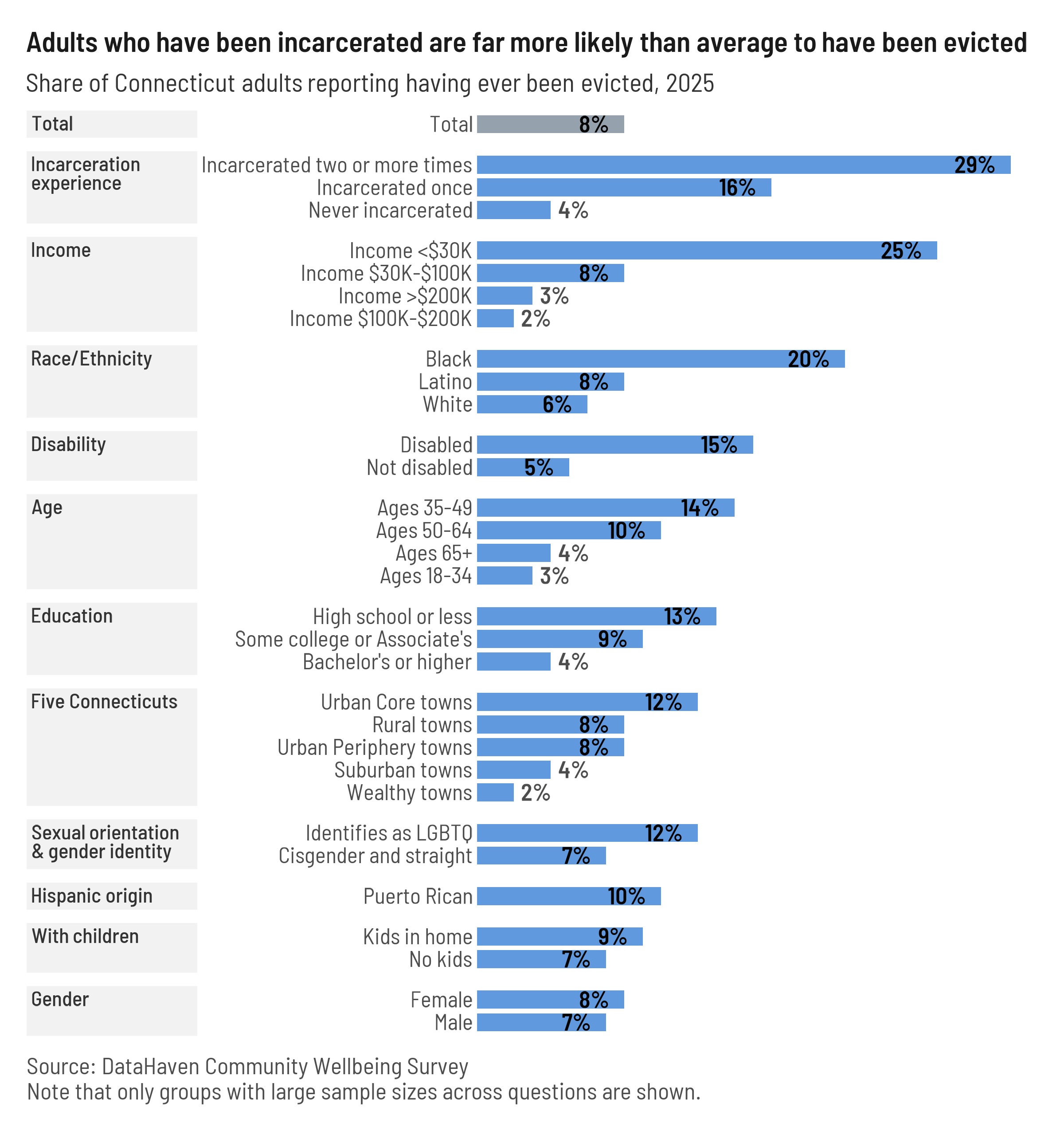
The report also found nearly 30 percent of adults who have been incarcerated two or more times have also experienced multiple evictions.
In general, people who were previously incarcerated have a higher rate of eviction compared to other residents, due in part to the difficulty in securing housing for those with a criminal record.
Last year, state lawmakers considered a law preventing landlords from discriminating against residents with recent felony convictions. For five years, housing advocates have attempted to get the bill passed.
“Having a criminal record has implications for your access to a whole lot of different sorts of supports, including access to public housing and housing subsidies,” said Kim Blankenship, an American University sociologist. “That affects your access to housing. You can be evicted from housing.”
Advocates want landlords to take into consideration circumstances surrounding the crime, including the offender’s age, sentence and behavior since prison release.
Evictions of people with criminal records affect people surrounding the formerly incarcerated as well, Blankenship said.
“That doesn’t just impact the people who are involved, who themselves had the involvement, that’s all the people surrounding them,” Blankenship said.
Hartford, Conn. — At a packed statewide event hosted yesterday by the Hartford Foundation for Public Giving, DataHaven unveiled the results of its latest DataHaven Community Wellbeing Survey (DCWS), believed to be the largest and most comprehensive neighborhood-level wellbeing survey in the United States. The event, attended by civic leaders, health professionals, and nonprofit partners, featured presentations from DataHaven as well as remarks by Hartford Mayor Arunan Arulampalam and Jay Williams of the Hartford Foundation. Data placemats and graphics, along with detailed crosstabs for each 2025 DCWS question, are available at https://ctdatahaven.org/wellbeingsurvey.
The DataHaven survey captures a portrait of residents’ health, economic stability, and community life through interviews with thousands of randomly-selected adults in every Connecticut ZIP Code. The New Haven-based nonprofit organization collaborates with Siena Research Institute to ensure the reliability and consistency of its research methods, which include live interviews in English and Spanish and statistical weighting to accurately represent Connecticut’s entire adult population. Since 2015, more than 53,000 representative adults have participated in these in-depth interviews. For the 2025 survey, 1,371 adults were interviewed from August 4 to October 16, 2025, and the statewide results carried a maximum margin of error of 3.5 percent.
“Connecticut continues to show great resilience and a high quality of life, with more than 83 percent of adults saying they are satisfied with the place they live,” said Mark Abraham, Executive Director of DataHaven. “But the data also reveal areas of concern that communities are working hard to address, including cuts to food assistance, health care, and housing that over a million people in our state have been relying on. The results also show rising anxiety, worries about immigration enforcement, differences in access to economic and health opportunity, and financial stress, especially for renters and families with children.”
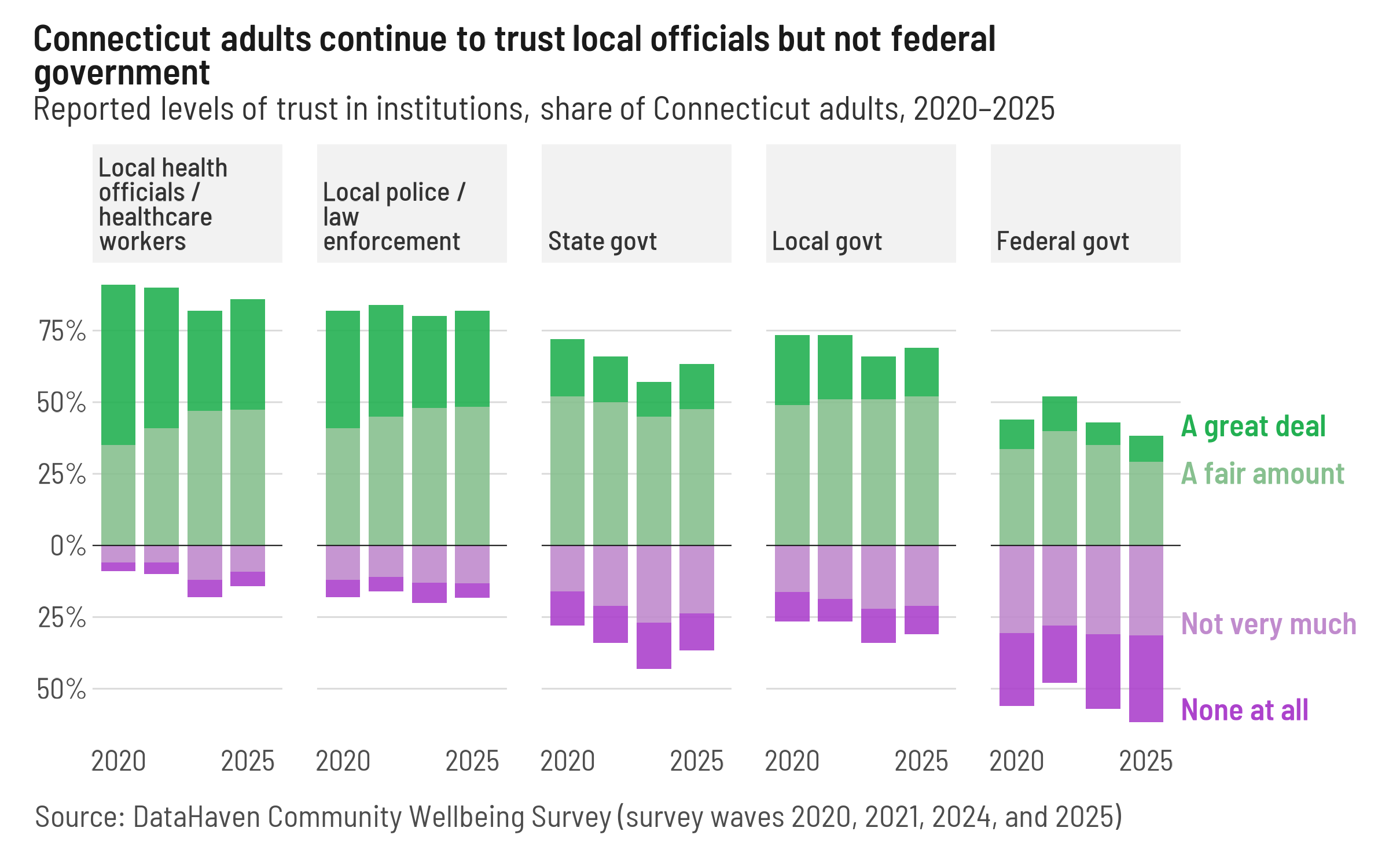
Trust in Local Institutions Remains High
The presentation began with a focus on institutional trust, a theme that resonated among the representatives from local and statewide agencies, philanthropies, and healthcare organizations gathered at the event. “Our data show that trust in local and state government remains high, even as trust in federal government has declined,” said Abraham. “This implicit legitimacy of local partners is one of Connecticut’s greatest assets, as it allows communities to respond with credibility as challenges arise.”
Abraham noted that the survey continues to demonstrate a strong link between responsive government and higher self-reported well-being, underscoring the importance of access to trusted local information at a time when the availability of reliable data has been threatened nationally.
A Collaborative Effort
The survey is made possible through a broad coalition of partners. This year, major supporters include the University of Hartford, American University, and Yale University, Connecticut Children’s, Yale New Haven Health, the Connecticut Department of Public Health, local health departments in Hartford, New Haven, and Stamford, and regional philanthropic organizations including The Community Foundation for Greater New Haven, Connecticut Community Foundation, The Connecticut Project, Fairfield County’s Community Foundation, Hartford Foundation for Public Giving, United Way Coastal Fairfield County, United Way of Greater New Haven, and the United Way of Connecticut, with many other organizations contributing as well.
“This diversity of organizations supporting the survey reflects the fact that the survey measures what matters most to quality of life, whether that is community trust, transportation, affordability, health, housing, or support from friends and family,” Abraham said at the event.
Major Changes Since Prior to the COVID-19 Pandemic
The presentation highlighted the largest statewide changes measured by the DataHaven survey between 2018 and 2025.
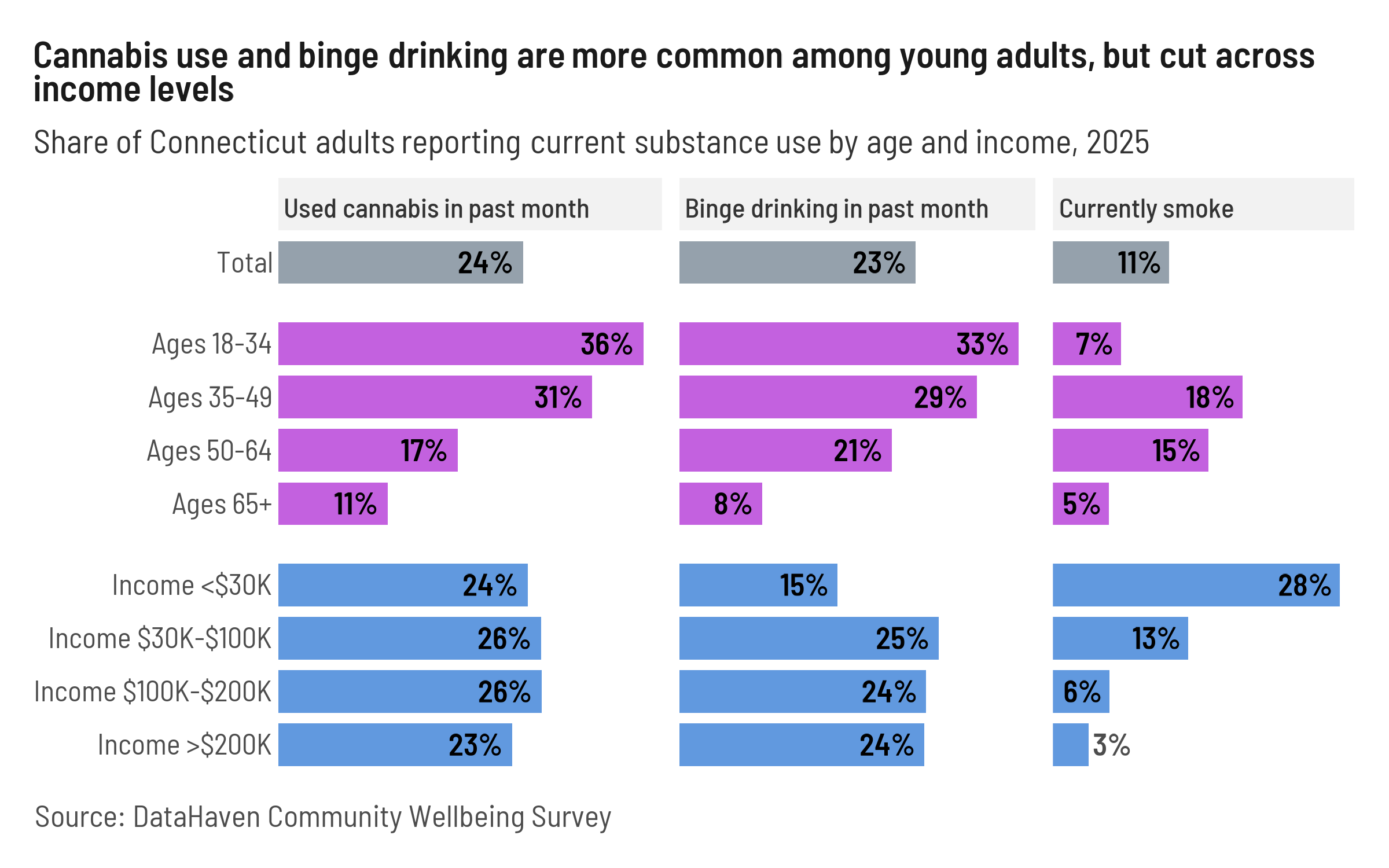
• Cannabis use doubled, with about 350,000 more adults now using cannabis or marijuana (24 percent of adults using it at least once during the last 30 days, up from 12 percent in 2018).
• Optimism about local jobs increased and underemployment rates improved somewhat, with 250,000 more adults in Connecticut rating employment opportunities for residents in their area as “excellent” or “good.”
• Mental health challenges rose, with about 200,000 more adults reporting anxiety or depression.
• Chronic disease diagnoses rose, with about 150,000 more adults reporting diabetes or hypertension, potentially reflecting both an aging population and improved screening.
• The number of adults who ran out of money for housing, and the number who had to stay home in the past year because they lacked reliable transportation, both increased by roughly 150,000 adults. In 2025, 11 percent of adults statewide (about 320,000 people) said they ran out of money for housing, which is about double the rate that was measured by the DataHaven survey 10 years ago. Statewide, 7 percent of adults said they had to miss doctor’s appointments because they had no way to get there.
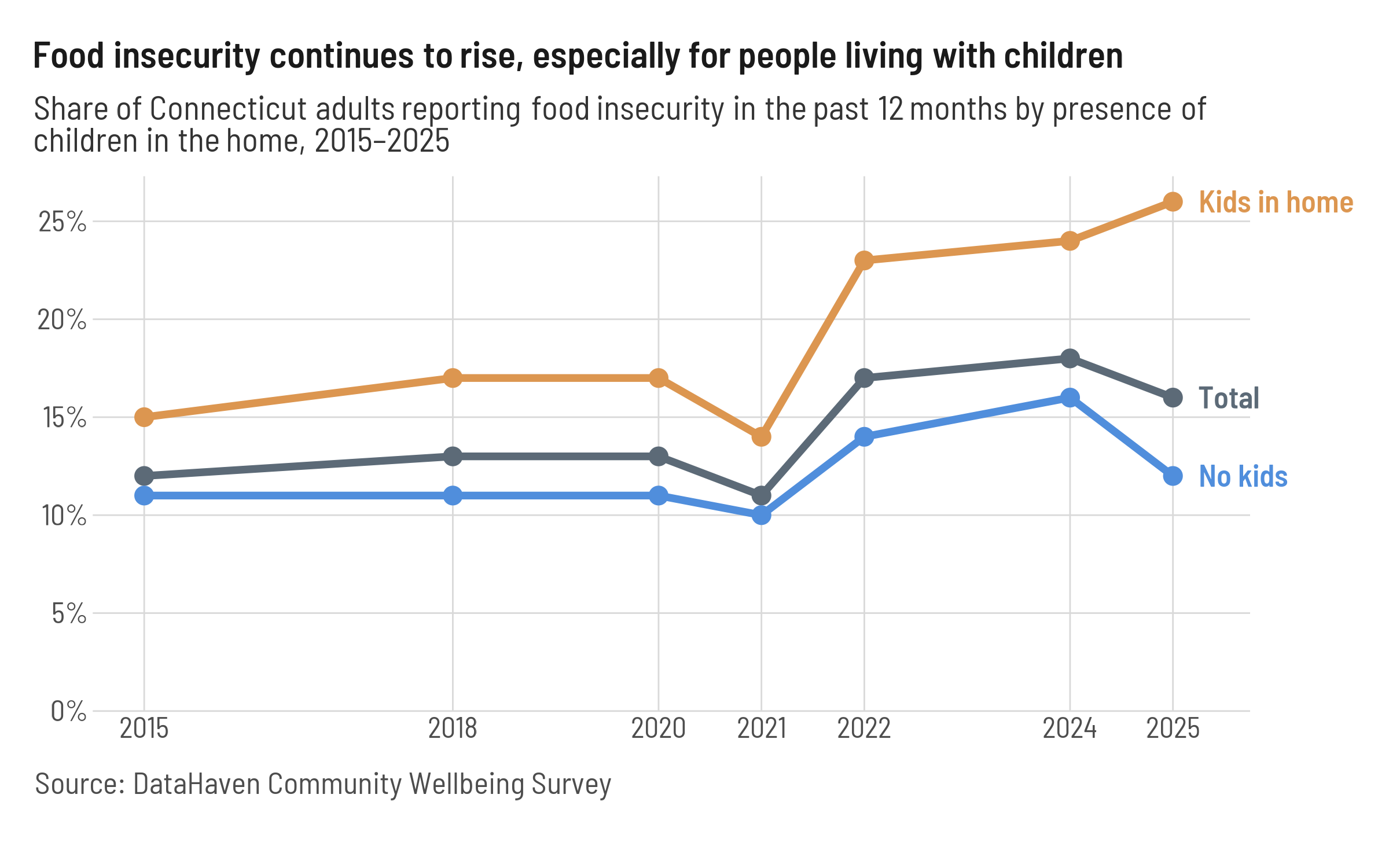
• Food insecurity is rising, increasing by 100,000 adults from pre-pandemic levels. The increase is particularly large for adults living with children (with 26 percent reporting that they ran out of money for food in the past year, compared to 11 percent of adults without children). Abraham noted that this increase is even more striking if compared to 2021’s record low in the food insecurity rate, when the expanded Child Tax Credit helped families and slashed child poverty nationally. In some of Connecticut’s largest city centers, up to half of adults with children report that they ran out of money for food this past year.
• Access to care remains an issue, with 100,000 more adults unable to get needed medical treatment in the last year. The rate of missed care spiked during the peak year of the COVID-19 pandemic and has since improved for higher-income adults but continued to worsen among moderate- and lower-income residents.
• About 100,000 fewer adults in the state smoke cigarettes, though this is partly because vaping has become more popular, especially among younger adults.
• About 150,000 additional residents say they have safe places to ride bicycles, likely reflecting the construction of new protected bike paths in many towns.
• Social support declined, especially for adults with below-median incomes, with 100,000 fewer adults saying they usually receive the social or emotional support they need.
Despite these shifts, Abraham emphasized that “most measures have remained stable over time, meaning that Connecticut continues to outperform national averages on many dimensions of health and well-being.”
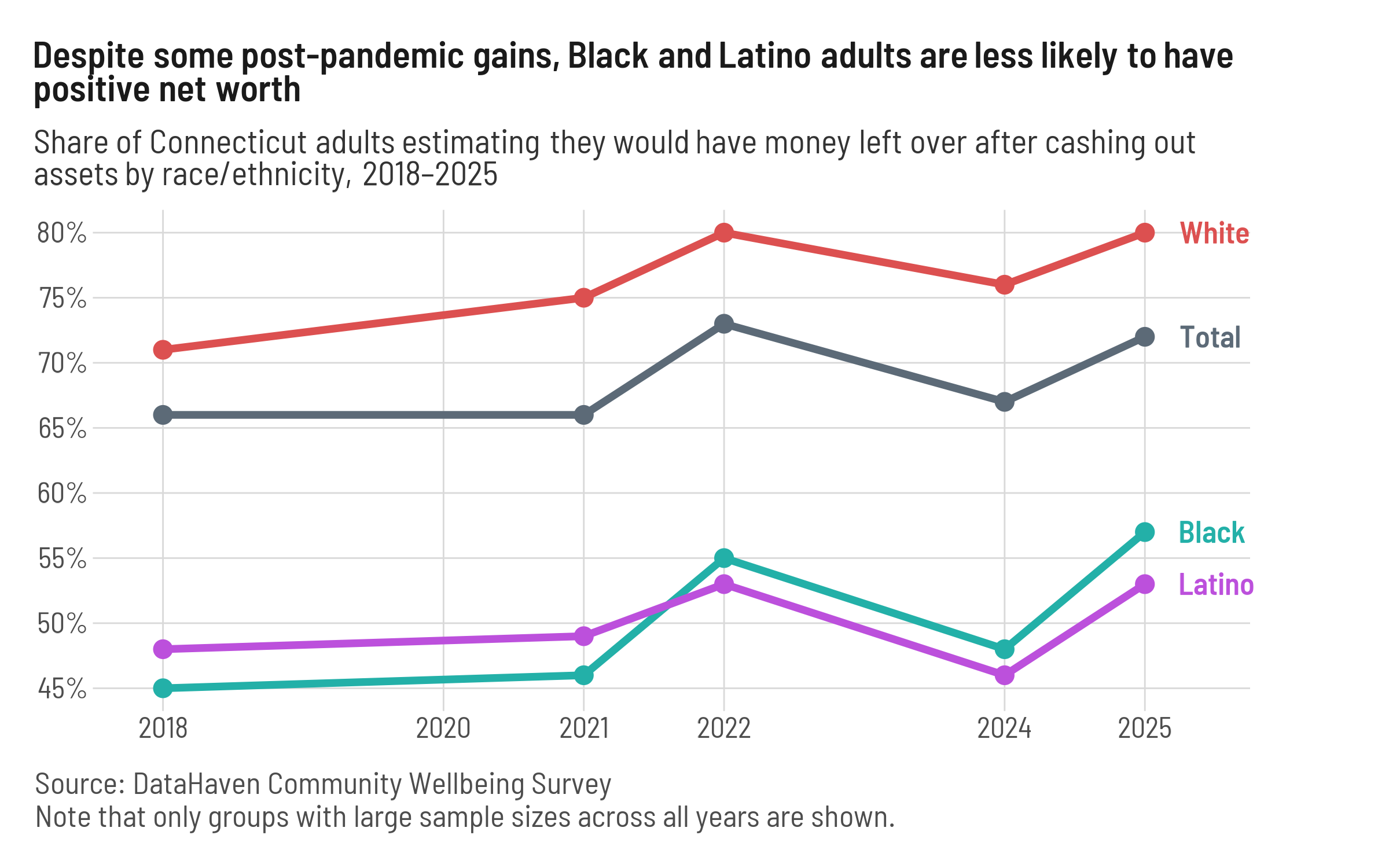
Key Topics Shared at the Event
The presentation covered several additional findings from this year’s data:
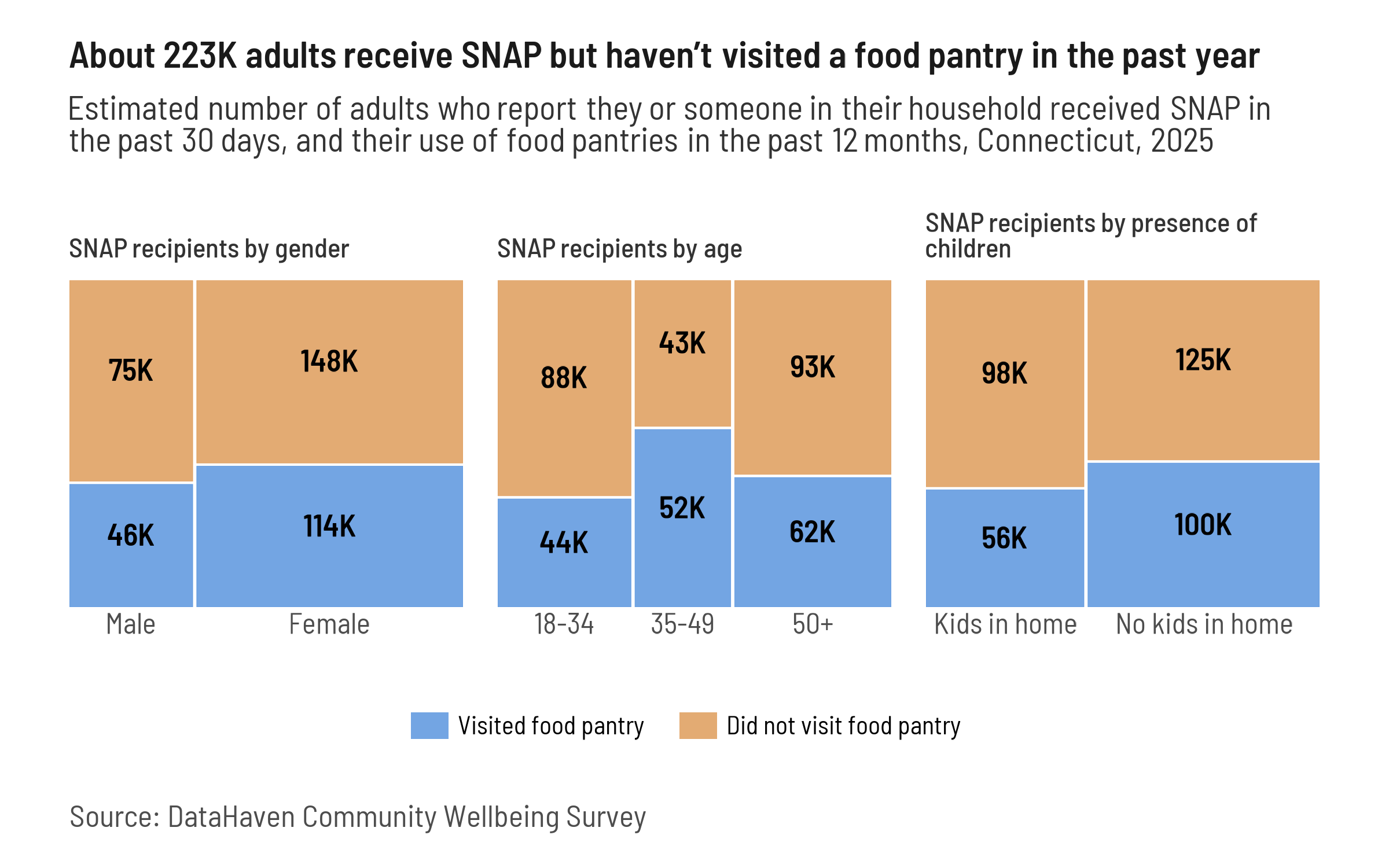
• SNAP and the Social Safety Net: In 2025, new questions were added on public benefits. The survey found that 26 percent of Connecticut adults or their household members have received SNAP at some point, 36 percent have received Medicaid/HUSKY, 9 percent received rental housing assistance, and more than 1 in 10 used a food pantry in the past year. The survey also found that of the adults who received SNAP within the past 30 days, the majority had not used a food pantry or emergency food service at all within the past year. “These numbers help communities understand who depends on safety net programs, and how policy changes like the pause in SNAP benefits are likely to drive a huge increase in demand at food banks,” Abraham said. The survey also examined residents’ attitudes about public programs, finding that most say that there is not enough assistance for low income people, and that most residents are concerned that current national policy changes will lead to more people going hungry or unable to access health care or housing.
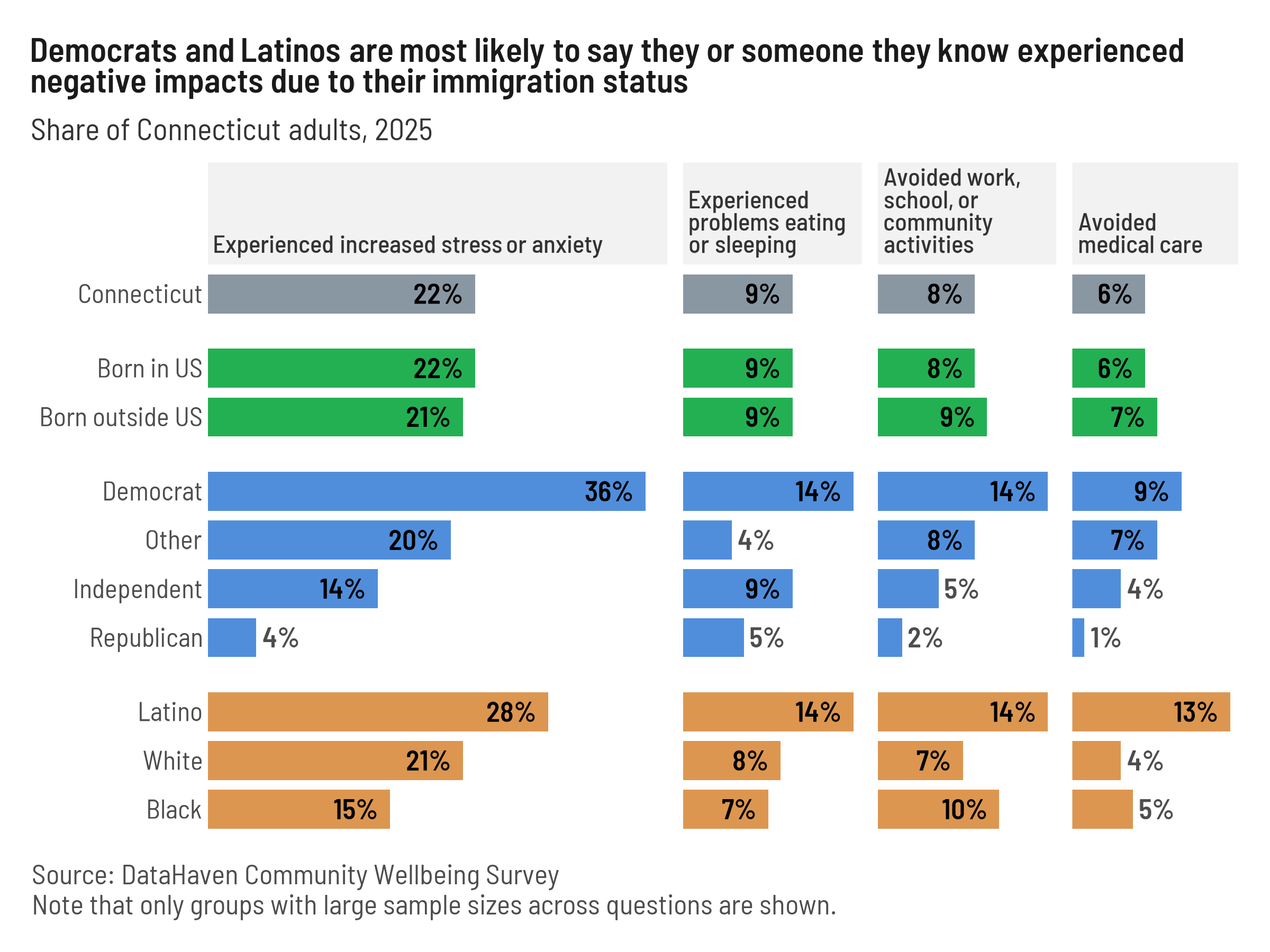
• Immigration Concerns: The survey included questions about the personal and community effects of immigration enforcement. In Connecticut, 31 percent of all adults worry “somewhat” or “a lot” that they or someone they know could be detained, deported, or have their legal immigration status revoked. Many residents, particularly Latino adults, reported heightened stress, lost sleep, and delayed medical care related to these concerns. “Even before new policies take effect that will dramatically increase the federal budget for immigration enforcement and deportations, many residents are already feeling an impact on their health and well-being,” Abraham noted.
• Eviction and Criminal Justice: A new survey item showed clear disparities in evictions by incarceration experience, suggesting a need for policy interventions that reduce the barriers to stable housing for people with past justice involvement.
• Mental Health: About 13 percent of all adults, including 22 percent of young adults, reported needing mental health treatment within the past year but being unable to get it, often due to cost or lack of available services.
• Social Support: Abraham noted that this single measure of how much support people feel from family and friends predicts happiness and well-being more than any other item in the survey. “The increase in loneliness is something we should take seriously, and we should consider what we can collectively do to support each other in our state,” he said.
Data Access and Next Steps
The 2025 DCWS Connecticut Crosstabs, along with graphics and “Data Placemats,” were distributed to attendees and are publicly available at ctdatahaven.org/wellbeingsurvey. Survey data are also accessible in DataHaven’s town reports and its Connecticut Town Data Viewer, which combines results since 2015 to provide neighborhood-level insights for each of the 169 towns in the state. DataHaven encourages partners and advocates to reach out for analyses or presentations that can bring the findings to life at the local level.
Media Contact
Mark Abraham, MPH, Executive Director, DataHaven, Email: info [at] ctdatahaven.org, Phone: (203) 500-7059.
[Article excerpt by Gary Larkin, April 4, 2025]
NORWALK – By closing gaps in income, home ownership, home values, and educational attainment Fairfield County could generate $15.6 billion in gross domestic product growth, according to a recently released report.
A new research report unveiled on Wednesday called The Upside—Growth, Potential, and the Future of Fairfield County co-authored by experts from Fairfield County’s Community Foundation, the Urban Institute and DataHaven paints a clear picture of what’s possible for Fairfield County if it comes together to create a more competitive, resilient, and inclusive regional economy.
Intentionally planning to expand opportunity could generate a $15.6 billion boost to the region’s GDP, the equivalent of the entire annual economic output of nations like the Bahamas, the report states.
“This research sends a powerful message: Expanding opportunity is a game-changing economic strategy,” said Mendi Blue Paca, CEO and president of Fairfield County’s Community Foundation. “For the first time, we have hard data proving that an inclusive Fairfield County isn’t just possible — it’s the key to unlocking our region’s full economic potential. The time for bold action is now.”
Key outcomes from closing opportunity gaps:
- $13.3 billion in additional aggregate income for local residents
- 33,000 more homeowners and 84,000 more college graduates
- $603 million in additional local property tax revenue and $1.2 billion in state tax revenue.
- Despite being one of the wealthiest counties in the nation, Fairfield County ranks second highest in income inequality among U.S. metro areas.
“Fairfield County has long been recognized as one of the most unequal counties in America,” said Kelly Davila, principal research associate at DataHaven. “While we often rely on economic indicators and well-being surveys to demonstrate the various factors driving these disparities and their effect on quality of life, this new research goes a step further and actually demonstrates the benefits to all residents that could arise from closing opportunity gaps in Fairfield County.”
The report highlights deep economic disparities that contribute to widening income inequality such as White households earn $134,000 more on average annually than Black households and approximately $125,000 more than Latino households. It also found median home values for White households are approximately $580,000, compared to $343,000 for Black and $413,000 for Latino households.
“Fairfield County, Connecticut, has the opportunity to strengthen the local and state economy, creating new opportunities for residents and local businesses,” said Dr. Christina Plerhoples Stacy, principal research associate, at the Urban Institute. “In our research, we found that increasing opportunities for Fairfield County residents and closing socioeconomic gaps could lead to long-term economic gains. At a time of economic uncertainty, this new evidence-based research outlines ways in which the Fairfield County community can continue to grow and thrive using recommendations from local leaders across the private, public, nonprofit, and philanthropic sectors.”
A Call to Action
FCCF is urging business leaders, policymakers, philanthropists, and community members to act now. The study outlines key steps to drive inclusive growth, including:
- Expanding access to education: Universal preschool, stronger K-12 support, and college/trade school subsidies.
- Workforce & small business development: More apprenticeships, fair hiring practices, and expanded business financing.
- Housing solutions: Down-payment assistance for first-time homebuyers and reducing barriers to new housing construction.
- Wealth-building programs: Baby bonds, matched savings initiatives, and financial coaching.
By Andrew Carr, Kelly Davila, and Mark Abraham, DataHaven
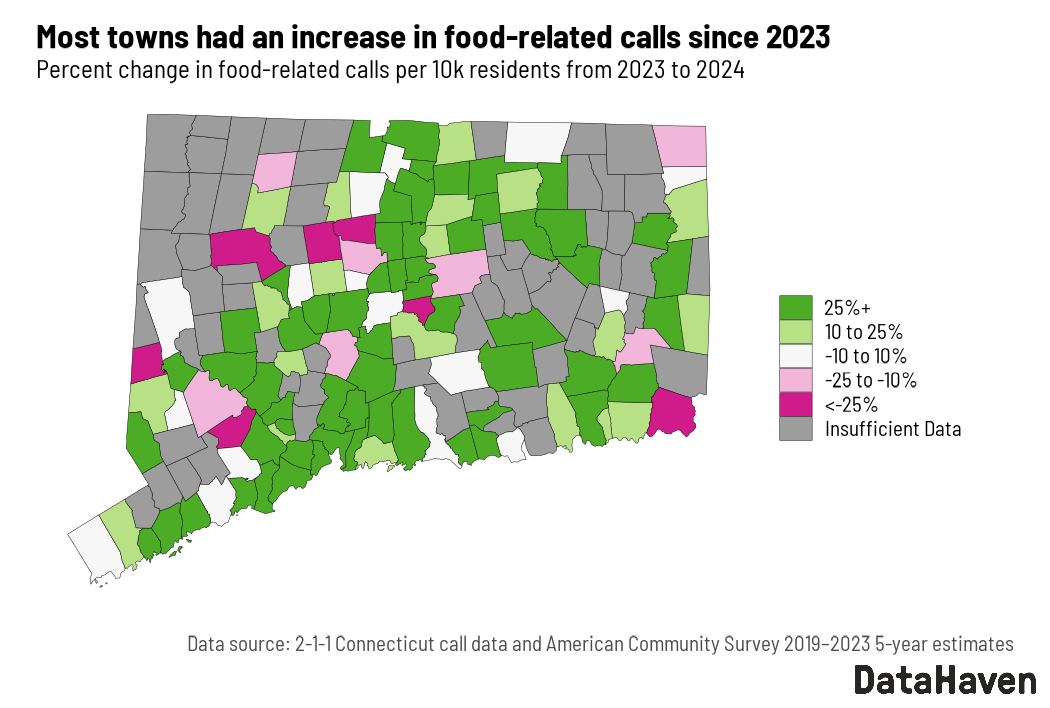
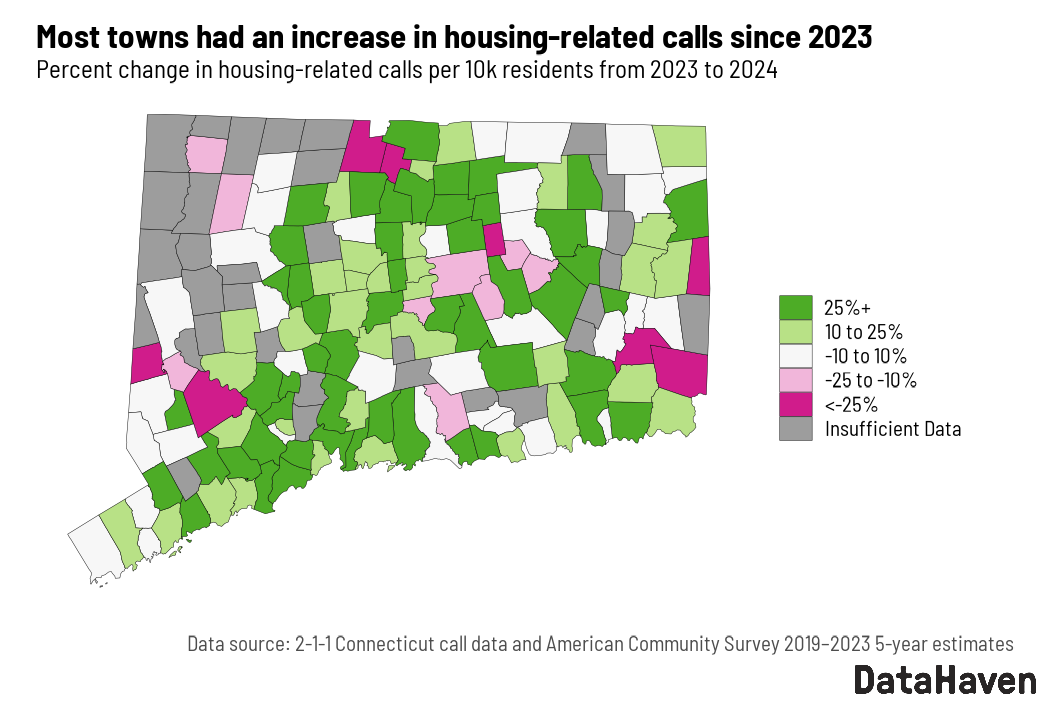
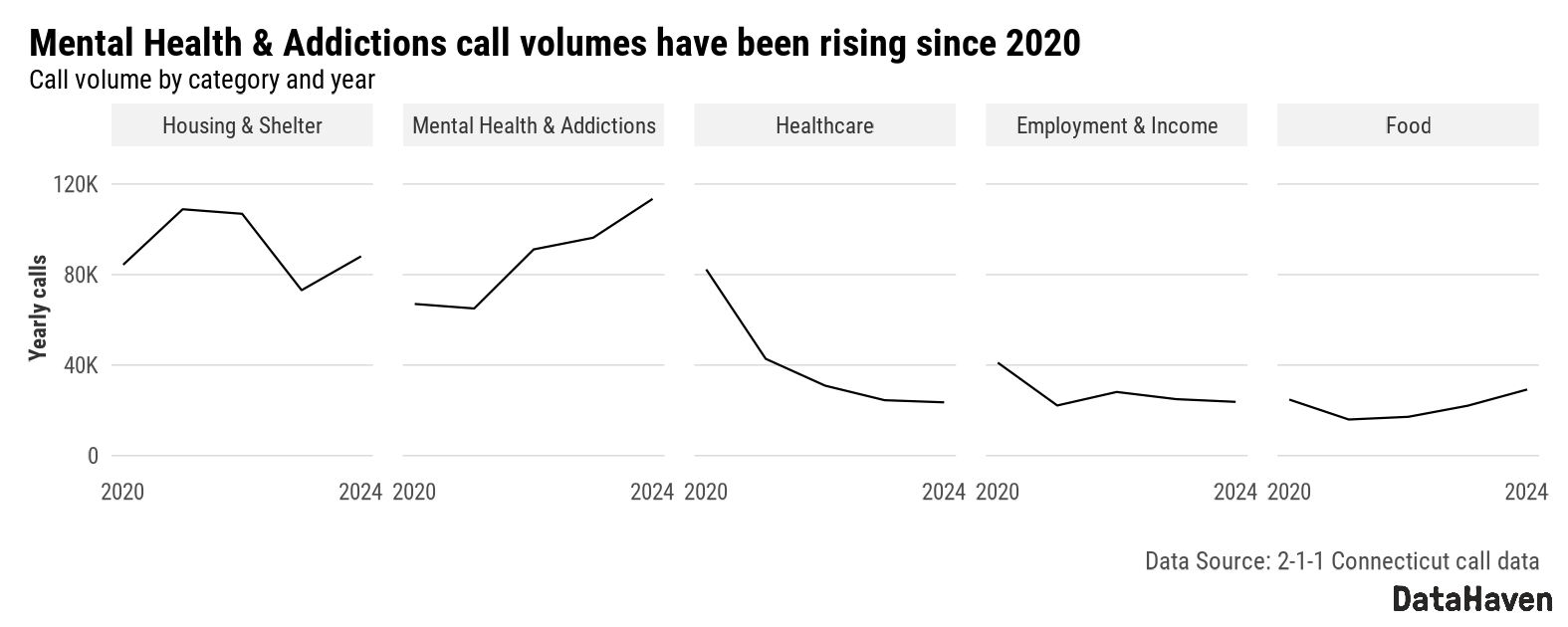
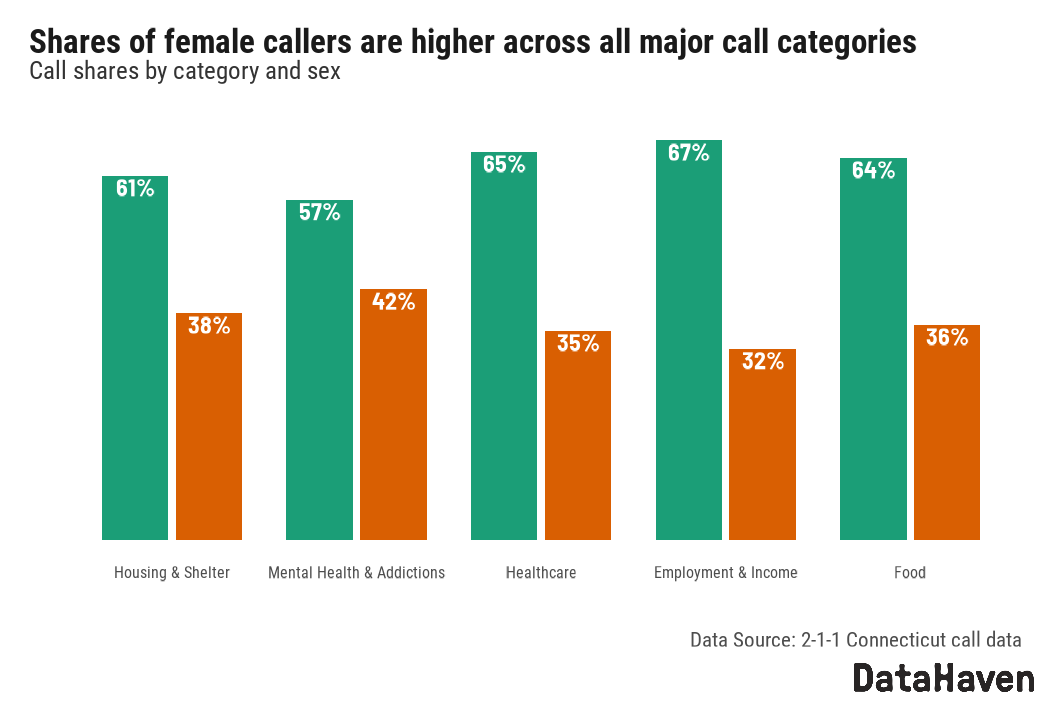
The number of calls to United Way’s Connecticut 211 that requested assistance for food, housing, and mental health needs increased from 2023 to 2024. Maps created by DataHaven show that calls increased in towns all over the state.
In some areas, the increase in call volumes tracks with needs that can be observed in other datasets. For example, rates of food insecurity and housing insecurity among Connecticut adults both hit all-time highs in the 2024 DataHaven Community Wellbeing Survey, which has been tracking those indicators statewide since 2015. Food insecurity rates were much lower in 2021, particularly among families with children; families received an expanded federal child tax credit during that year.
The DataHaven report also finds that calls are higher among women. This could relate to gender inequities, as women report significantly higher rates of financial need statewide when compared to men, according to DataHaven’s 2024 survey. For example, in 2024, 21 percent of women, 14 percent of men, and 32 percent of nonbinary adults statewide reported that they had been unable to afford food at times during the past year.
The 211 call data analyzed by DataHaven could allow policymakers to better understand how the need for assistance is related to other data. The data in this report may differ from the data presented elsewhere due to the ways we deduplicate call records and call requests. For the purposes of this section, a “call” refers to a single caller, who may have many needs. A “request” is an individually-tagged program or service the caller is in search of.
Looking in-depth at calls for shelter assistance
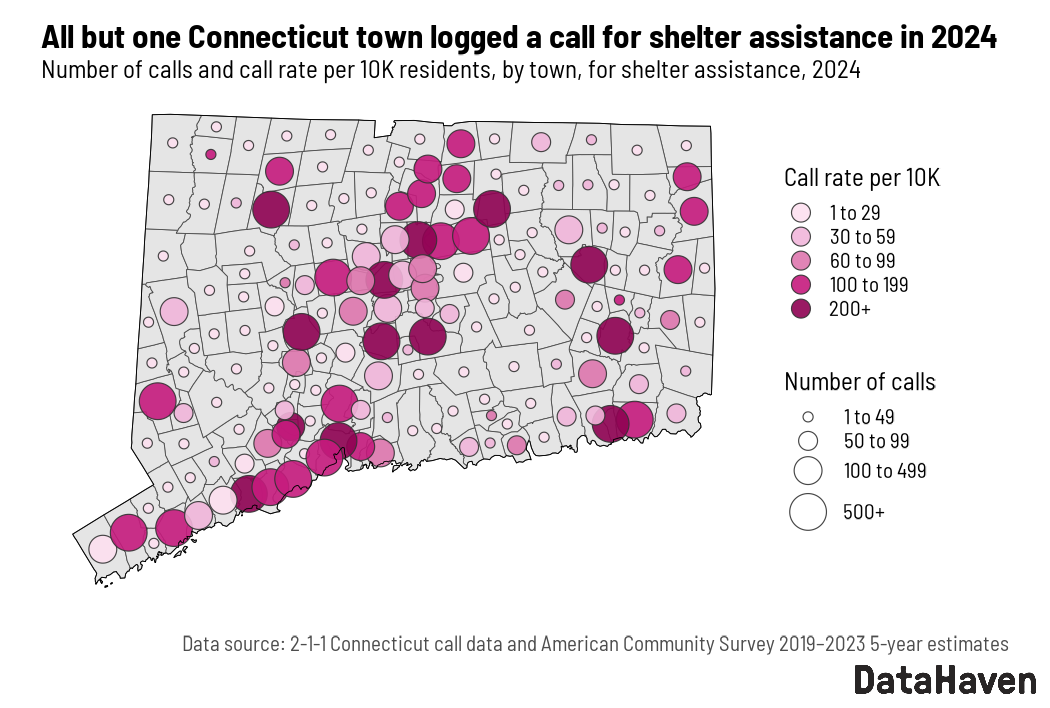
According to our analysis, 211 Connecticut received more than 62,000 calls for shelter-related assistance in 2024, comprising 71 percent of all calls associated with a housing need, and 18 percent of all calls received across the state.
Homelessness has been increasing annually in Connecticut and nationally. In fact, 2024 was the year with the highest rate of homelessness ever recorded in the United States, with an estimated 771,480 Americans experiencing homelessness, including 3,410 Connecticut residents, according to a December 2024 report by the U.S. Department of Housing and Urban Development. In Connecticut, an estimated 32 percent of homeless people were families with children and 5 percent were unaccompanied youth. These are, however, likely undercounts of the homeless population due to data being collected on only one night per year.
The increasingly limited supply of housing combined with rapidly rising prices during the past decade means that more and more renters may find themselves in need of emergency housing assistance, such as shelters. For example:
● Zillow found that rents in the Greater Hartford area rose by nearly 8 percent from 2023 to 2024, the fastest increase of any major metropolitan area in the United States.
● Data from the Census Housing Vacancy Survey show that Greater New Haven had the second-lowest rental vacancy rate of any metropolitan area in the United States between January 2023 and September 2024, with just 2.90 percent of units vacant, with Fairfield County ranking third in the nation at 2.92 percent, and Greater Hartford not far behind at 4.28 percent.
● In 2024, the DataHaven Community Wellbeing Survey found that 12 percent of adults had trouble paying for housing costs at some point in the past year, an increase from 6 percent of adults in 2015. Fourteen percent of adults with children at home and 18 percent of renters struggled to cover housing costs in 2024.
Homelessness is often the result of continuous housing instability that is largely preventable with the right combination of counseling and social assistance. 211 Connecticut houses a Coordinated Action Network (CAN) platform that connects callers facing housing insecurity or loss of housing through evictions or other circumstances with services that can help them.
On the whole, DataHaven’s analysis of the 211 Connecticut call data show that call rates for shelter are highest in Connecticut towns where at least 30 percent of households are renters. As the share of renters grows, so too does the rate for shelter assistance calls. Furthermore, the rate of calls for shelter assistance increases somewhat with the ratio of rent to income, though many towns with relatively modest rent-to-income ratios also have high call rates. Towns across the state, including urban centers like Bridgeport, Hartford, and New London, suburban towns like Vernon, Enfield, and Milford, smaller urban areas like Torrington, Meriden, Middletown, and the Lower Naugatuck Valley, and several rural towns in Eastern Connecticut, all have high call rates for shelter assistance (see map).
All of this speaks to a deep need statewide for affordable housing. A low supply of available housing has quickly increased the cost of both rental units and single-family homes. As a result, thousands of Connecticut residents are reaching out for housing assistance each month.
Methods
For this analysis, DataHaven used Connecticut 211 call data provided by the United Way of Connecticut. The dataset’s unit of analysis is call need – each row represents a unique call need, and individual calls may appear multiple times if attributed to more than one need. The data were deduplicated to remove multiple entries from the same caller within the same need category. Yearly call volumes represent the total number of calls each year. Call rates are the number of calls per 10,000 residents in a given area. Population estimates are based on the Total Population (B01003) table from the 2019-2023 American Community Survey (ACS). In the maps, call rates were suppressed for towns with fewer than ten calls in either 2023 or 2024. This analysis does not include requests that were made via the 211 website.
[Excerpt of article from Viktoria Sundqvist, CT News Junkie, 12/4/2024]
State Republican lawmakers say a recent survey showing nearly 40% of adults in Connecticut are struggling financially should be “a wake-up call to all state Democrats.” Democrats, however, stress that now is the time to come together across party lines to respond to the needs of Connecticut families.
The well-being survey, conducted by DataHaven, also revealed a rise in food and housing insecurity, with certain populations facing disproportionately high rates of hardship, such as immigrants from Puerto Rico, people with disabilities and LGBTQ+ individuals, the organization said.
The survey used probability sampling and consisted of in-depth interviews with nearly 7,500 randomly-selected adults in every Connecticut town.
The results of this year’s survey marks the highest rate of financial insecurity since the start of statewide data collection in 2015, DataHaven said.
“The gender gap is especially notable, with women reporting higher rates of financial hardship than men across most indicators,” DataHaven Executive Director Mark Abraham said in a news release.
“The financial strain faced by so many Connecticut residents is a major concern, especially given the rising costs of housing, healthcare, and everyday essentials. These trends highlight the urgent need for policy solutions that provide long-term economic stability for our communities.”
The survey also looked at things like the quality of parks and bike lanes, trust in local and state government, access to mental health services, social support, discrimination, and life satisfaction.
The Senate Republican Caucus was quick to blame Democratic state leadership for the situation, claiming Democrats have “no sense of urgency to address the cost of living crisis” in Connecticut.
“Wherever we go, Connecticut Republicans hear this same troubling message loud and clear from working and middle class families. From groceries and electric bills to insurance and housing, Connecticut is becoming increasingly unaffordable,” the Republican caucus said in a news release. “Every issue the state legislature debates in the 2025 must focus on one word: Affordability. Because right now, as this survey clearly reveals, Connecticut is trending in the wrong direction.”
Senate President Pro Tempore Martin Looney, however, said Connecticut voters have made it clear they trust Democrats to respond to the pressures families across the country are facing.
“Instead of engaging in obstructionist political games and voting against overwhelmingly popular economic initiatives, we welcome Connecticut Republicans to join us in responding to the needs of Connecticut families,” Looney said.
The DataHaven report repeatedly cites the drop in federal pandemic aid – including the federal child tax credit – as the primary driver for increased costs, Looney said, and that Democrats are “focused on delivering” for low- and middle-income families, whether that be through increasing the minimum wage or passing the largest income tax cut in state history.
“We encourage the Trump administration and our Republican colleagues in the General Assembly to join us in investing the state and federal funds necessary to improve the economic security of all residents in Connecticut,” Looney said. “With or without their support, we will be forging ahead to deliver real relief for residents.”