by DataHaven Staff
(Screenshot from January 31, 2025, 9:40pm)
The recent move by the federal government to remove thousands of publicly-funded web pages and datasets is a threat not just to our work at DataHaven, but to the many non-profits, health care researchers, and resident advocates collectively working toward healthier, more equitable communities. We rely on having accessible, trustworthy data from these federal agencies, but the impact goes far beyond that. The datasets currently under fire inform many aspects of our lives, from understanding health trends to funding schools and transportation to directing pandemic relief.
There’s little being done to hide this being an ideological purge, complete with lists of banned words. Recently, when we tried to update important public health indicators from the CDC, such as rates of asthma and diabetes, we were instead met with a notice that the data portal was down pending compliance with an executive order to protect women from “gender ideology”. This dataset has no mention of gender identity, but it does, ironically, have rates of women’s health screenings, as well as economic measures like food insecurity that tend to impact women and children more. Other data deemed too inclusive include the tables from a major youth survey, a key tool for school districts to track trends in youth substance use, bullying, and suicidality, as well as the CDC’s social vulnerability index, used by FEMA and local agencies to identify areas with more seniors or car-less households for disaster planning and evacuation.
Very few datasets contain any information about gender identity. Very few Americans identify as transgender (we estimate about 1 percent of Connecticut adults do). From the data we do have, we see trans adults in Connecticut and elsewhere generally being at greater risk of depression, anxiety, and financial hardship.
No one is made safer or healthier by being “protected” from those facts. It’s not really about the data: this is a move to further politicize basic health information, and to explicitly scapegoat, criminalize, and inflict harm on our trans community members, with dangerous precedent. When we allow basic concepts of equity to be outlawed and women’s health to be used to further marginalize LGBTQ people, we all lose.
We believe in data as a powerful tool—for knowledge, for advocacy, and for accountability. We are seeing first-hand what can happen when public information—or its censorship—is weaponized, and it stands to harm us all. We don’t know how this will play out over the coming months and years, but we know that we and our allies are clever, determined, and prepared with backups.
Media Advisory, March 7, 2024
New Haven, CT—Fentanyl continues to be the top substance found in overdose deaths in the five-town area covering New Haven, Hamden, North Haven, Woodbridge, and Bethany. According to a new report, each month, approximately 11 people in the area fatally overdose on fentanyl. Xylazine—a potent drug used in veterinary applications—is also on the rise as it is often mixed with street fentanyl. Unlike fentanyl overdose, which can potentially be reversed with Narcan (also called naloxone), no method exists to reverse a xylazine-involved overdose, complicating intervention response.
The report was funded by the CDC’s Overdose Data to Action program which supports comprehensive data collection to help local health departments plan and implement overdose prevention activities. It was compiled by DataHaven in partnership with the New Haven Health Department and the Quinnipiack Valley Health District, which covers the towns of Hamden, North Haven, Woodbridge, and Bethany. The report summarizes data trends related to overdose, substance use, harm prevention, and related metrics, and provides recommendations for overdose prevention. It can be found online at https://www.ctdatahaven.org/reports/overdose-data-action-2023-update. An earlier version of the report was completed in 2021.
The COVID-19 pandemic made the opioid crisis substantially worse in Connecticut and nationwide. Limited access to intervention and treatment was one driving factor in the increase in overdose deaths. While the worst year for fatal overdoses nationally and statewide was in 2021, the number of overdoses in the five-town region continued to rise in 2022. In that year, there were 154 deaths in the five-town area covered by the report, surpassing the previous record of 147 in 2021.
“This report further highlights the drug overdose crisis we’re seeing every day in our communities,” said Maritza Bond, MPH, Health Director for the City of New Haven. “Losing 154 lives across the region in one year is heartbreaking. Now more than ever, we must remain steadfast in our efforts to continue using evidence-based interventions to save lives while also testing new approaches. This past year we expanded our regional coordinated efforts thanks to the CDC’s OD2A: LOCAL grant award of $10 million over the next five years. We are hiring outreach workers who will be ‘boots on the ground’ to educate residents on the dangers of xylazine and fentanyl and link people who use drugs with critical support and services. We are also launching a more coordinated, streamlined data surveillance program across six health departments in New Haven County so we can make real-time decisions to prevent overdoses. We want to make sure no stone is left unturned in the next phase of our work as a region.”
A few additional findings from the report include:
- As of May, 2023, 87 percent of overdose deaths in the region involved opioids, 79 percent involved fentanyl, 48 percent involved cocaine, 26 percent involved ethanol, 13 percent involved xylazine, and 6 percent involved heroin.
- After converging for many years, the overdose rate is now higher for people of color than white people. In the five-town area, the overdose death rate for Black people is 71.0 per million residents; for Latinos, 63.2; and for white people, 51.2.
- There were 5,504 accidental, nonfatal overdoses in the five-town area between 2018 and 2022. There are about 10 nonfatal overdoses for every fatal overdose in the region.
- Of the roughly 16,000 people in Connecticut admitted to treatment for opiates or heroin in 2020, 88 percent had been in treatment at least once before. More than a third had been in treatment five or more times.
- In 2023, naloxone was approved by the FDA as an over-the-counter medication and is now available at local drug stores for about $45 per box. Local health departments also provide naloxone to residents, free of charge.
- The report finds a relationship between personal health, financial wellbeing, civic trust, and overdose.
“As we discovered during the input process for the community health assessment for the QVHD region, mental health and substance use concerns are top-of-mind for many residents in the area,” said Kelly Davila, Senior Research Associate at DataHaven and lead author of the report. “New scholarship increasingly points to the need to unify programs that address structural drivers of overdose alongside substance use. Overdose prevention centers, housing-first initiatives, and employment opportunities can all work hand-in-hand to reduce the number of overdose deaths we see in our area.”
Contact
Kelly Davila
Senior Research Associate, DataHaven
Email: kelly [at] ctdatahaven.org
or
Mark Abraham
Executive Director, DataHaven
Email: info [at] ctdatahaven.org, Phone: 203-500-7059
About DataHaven
DataHaven is a New Haven-based non-profit organization with a 30-year history of public service to Connecticut communities. Its mission is to empower people to create thriving communities by collecting and ensuring access to data on well-being, equity, and quality of life. Learn more at ctdatahaven.org.
DataHaven will be closed June 20, 2022 in observance of Juneteenth, in commemoration of the delayed liberation of enslaved Black people on June 19, 1865, more than two years after the Emancipation Proclamation was signed.
Equity is central to our mission, and DataHaven is committed to ensuring access to information on the impact of the legacy of racist policies that continue to affect the health and well-being of Black residents in neighborhoods and towns across Connecticut.
During this holiday, and beyond, consider donating to Bridgeport Generation Now, Black Lives Matter New Haven, The Black Infinity Collective, Hearing Youth Voices in New London, and many other organizations committed to advancing equity for Black residents in Connecticut; shopping and dining at Black-owned establishments; and continuing to learn more about the legacy of racism in America, and the role of data to amplify Black voices (we recommend W.E.B. Dubois’ Visualizing Black America, Ida B. Wells’ The Red Record, and the national organization Data for Black Lives).
PRESS RELEASE
For Release August 24, 2021
Press contact
Kelly Davila, Senior Research Associate, DataHaven
Email: kelly [at] ctdatahaven.org
According to a new report by DataHaven (available at ctdatahaven.org/od2a), fatal overdoses were at a record-high during 2020, with a total of 141 overdose deaths—up from the previous record-high of 101 deaths in 2019. The report, commissioned by Quinnipiack Valley Health District (QVHD) in partnership with the New Haven Health Department (NHHD), summarizes overdose data for the towns covered by those two regions, including Bethany, Hamden, New Haven, North Haven, and Woodbridge.
“This increase occurred as public health organizations revised harm prevention strategies to slow the spread of COVID-19. Individuals who may have been exposed to someone positive for COVID-19 were recommended to isolate or quarantine, yet this had a negative impact on a key harm reduction message of not using drugs alone. QVHD is working with our local partners to increase awareness in risk reduction strategies and to connect residents without stigma to community resources and supports”, says Karen Ann Wolujewicz, Director of Health at Quinnipiack Valley Health District.
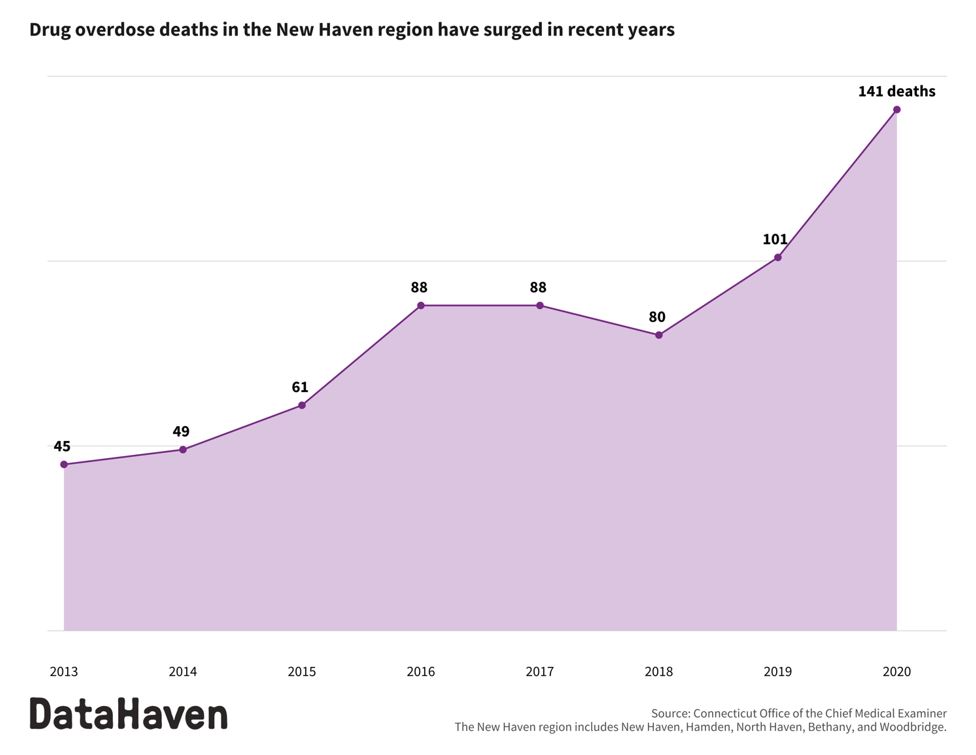
Nationwide, the CDC estimates that more than 93,000 deaths were caused by overdose in 2020—an increase of 30 percent over 2019. The 40 percent increase in local overdose deaths in the QVHD/NHHD towns eclipses the nationwide trend.
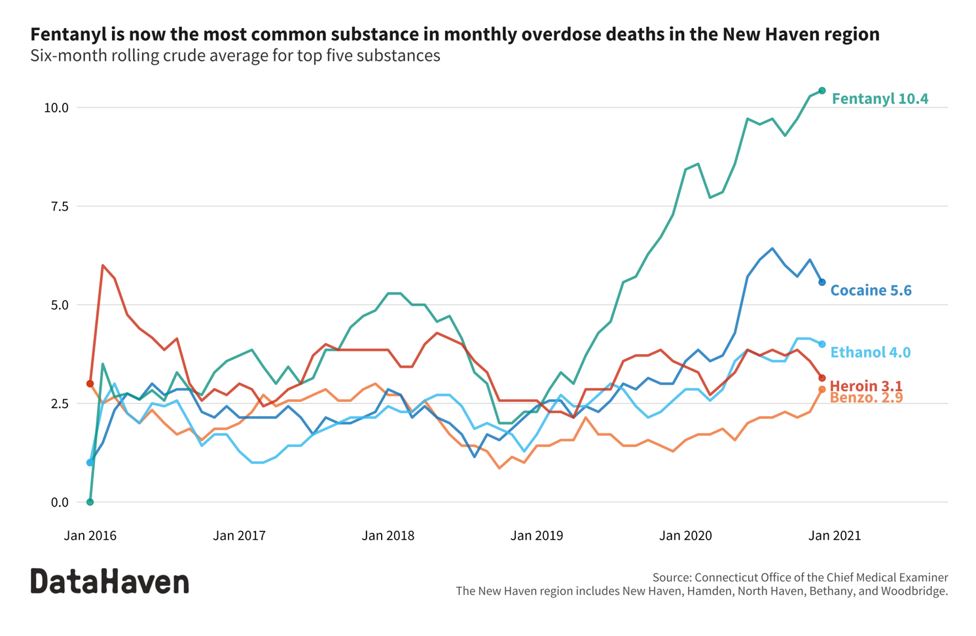
The sharp rise in local overdose fatalities is related to the prevalence of the synthetic opioid, fentanyl. As recently as 2016, fentanyl was an emerging substance of concern, but it is now by far the most common drug involved in overdose fatalities. Last year, fentanyl was involved in 94 percent of overdose deaths. There are more than 10 overdose deaths involving fentanyl every month in the region.
But data indicate that substance users may not be aware of how widespread fentanyl is in the local drug supply. The DataHaven report summarizes the responses of a 2021 survey of people who had overdosed in the past year. Of those surveyed, only 9 percent thought fentanyl was involved in their last overdose. Kelly Davila, lead author of the report and Senior Research Associate at DataHaven, commented that “the disconnect between users’ perceptions of how widespread fentanyl is compared to the data from fatal overdoses was striking. It suggests that users might not be aware of the product they’re using or how potent it might be.” To help users determine if drugs have been contaminated with fentanyl, rapid test strips are available through harm prevention programs, often for no cost.
“I applaud this report for focusing on understanding perspectives of people who use drugs” says Dr. Mehul Dalal, Community Services Administrator for the City of New Haven. “It reinforces the approach of the New Haven Harm Reduction Taskforce, which is focused on engagement, education, and meeting people where they are.”
Support and resources more important than ever
Fortunately, medication-assisted treatment is an evidence-based approach that combines medication and behavioral therapy to treat substance use disorder. There are approximately 1,000 adults per 1 medication-assisted treatment provider in the five-town region—triple the average number of providers in the state. In the five-town region, admissions for opioid treatment increased 44 percent between 2014 and 2018. In 2018, Connecticut ranked third in the nation for opioid treatment admissions behind Maryland and Delaware
Naloxone, also known as Narcan, is a safe and effective harm prevention drug that can reverse overdose related to opioids, including heroin and fentanyl. It is readily available through harm prevention programs, such as QVHD’s Overdose Data 2 Action program; retail pharmacies without a prior prescription or can be prescribed by physicians. Naloxone is covered by health insurance plans including HUSKY/Medicaid. Despite its availability and ease of use, it is not in wide circulation in the general public. Only 32 percent of surveyed substance users knew where to obtain naloxone, and only 17 percent of overdose related emergency dispatch calls involved a bystander administering the first dose of naloxone.
Low income, high unemployment, and chronic housing instability are already known to play a role in problematic substance use. Each of these needs were worsened by the pandemic-related economic downturn. The report highlights several neighborhoods which experience the compound effects of low access to social and economic resources and high rates of overdose. Due to a legacy of racism in federal, state, and local policy, these communities are also disproportionately communities of color.
The dramatic increase in overdose deaths in 2020 is likely related to the effects of the ongoing COVID-19 pandemic. Public health concerns during the pandemic’s deadly first wave last spring limited in-person outreach and treatment efforts, although many of these programs are back underway. With an uneven economic recovery threatened by a slow vaccine uptake, and the sunset of expanded benefits programs, without continued efforts and outreach, 2021 may turn out to be another record-breaking year for drug-related fatalities.
We all have the power to change this narrative by connecting those impacted to necessary resources. Anyone can overdose, anyone can save a life; learn more about local health’s Overdose Data to Action initiatives by visiting www.connectgnh.org.
by John Park
The current opioid epidemic began 20 years ago as people’s lives were ruined by the very substance that was supposed to relieve their pain. With the rise of synthetic opioids, we have seen an alarming and continued increase in drug overdose deaths. Annual drug overdoses in Connecticut surpassed 1,000 deaths in 2019, and 94 percent of those deaths involved opioids or opiates, including heroin, fentanyl, and a variety of prescription opioids.
The story of America’s opioid epidemic is intertwined with the epidemic of mass incarceration and disinvestment in Black communities. As calls to defund police departments and invest in Black communities reach local and state governments, a long-term redistribution of some of these funds toward combating the opioid epidemic is urgently needed.
According to Connecticut’s Office of Policy and Management, in 2016, 52 percent of people who died from an overdose had been incarcerated at some point in their lives. Incarceration creates an environment of risk for opioid-related overdose—including trauma, suicidality, disruption of social relations, interruptions and barriers to medical care, and social stigma—that persists long after people are released. The current investment in the criminal justice system is worsening this crisis.
For opioid drug users, the COVID-19 pandemic adds crisis on top of crisis. Physiologically, opioid users may be more vulnerable to health complications related to COVID-19 because of compromised respiratory and pulmonary health. Socially, since opioid addiction is a disease of isolation, the social isolation under the pandemic may cause people to relapse and increases the risk of overdose. Due to stigma and profit-driven structures that have criminalized drug use, drug users are more likely to be incarcerated or homeless—both alarming risks in the face of the virus, and both situations that make good hygiene difficult and social distancing nearly impossible.
The pandemic also presents challenges for therapy clinics and harm reduction programs. Governor Lamont’s executive order to expand Medicaid during the outbreak permitted methadone clinics to continue Medicaid services via telehealth. But this shift to online health care reveals another disparity: access to broadband. Equitable access to health care will remain far from reach without addressing the digital divide in Connecticut. Increasing support to harm reduction programs, such as syringe exchange centers and naloxone providers, will also be crucial to keep the COVID-19 pandemic from undoing the state’s decade-long effort to curb the opioid epidemic. In Manchester, a recent USA Today report highlighted how therapy centers are not only losing funding due to the cutback in in-person programs, but have also been blocked from federal relief funds, resulting in life-threatening consequences for their patients.
More up-to-date data are needed to fully understand how the pandemic is affecting drug overdose rates in Connecticut. In Cook County, Illinois, opioid overdose has caused twice as many deaths so far this year than the same period last year.
In Connecticut, the opioid epidemic has sometimes been associated more with rural communities. But since 2012, the problem has become most acute in our city centers, where COVID-19 has also hit hardest.
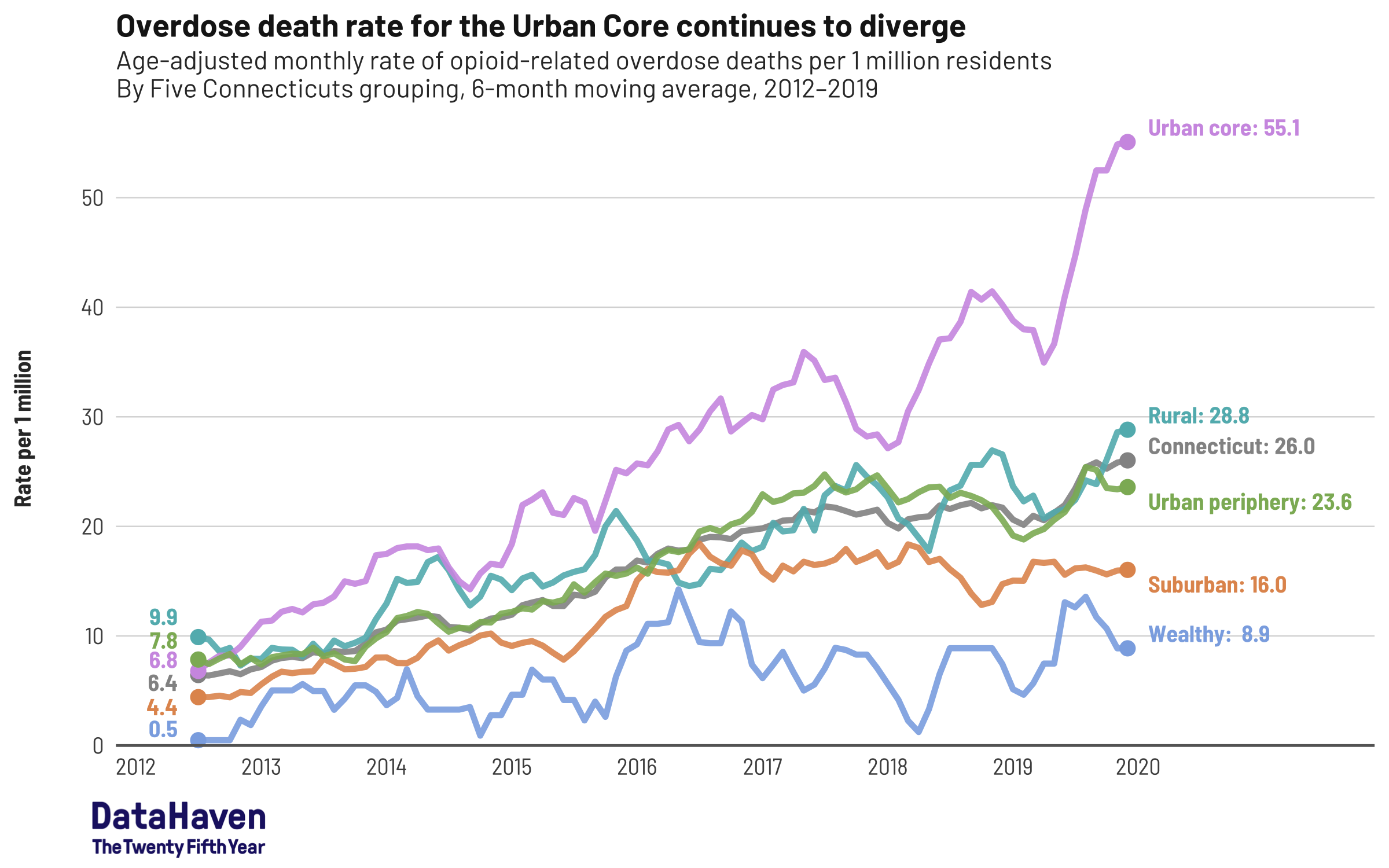
According to DataHaven’s newly released publication, “Towards Health Equity in Connecticut: The Role of Social Inequality and the Impact of COVID-19”, opioid overdose deaths in urban areas are commonly attributed to illicit drug use and the surge in the presence of fentanyl in the illegal drug supply. Yet rates are not uniform. Hartford and New Britain (45 and 52 deaths per 100,000 residents, respectively) have notably higher overdose death rates than Bridgeport or New Haven (both 28 per 100,000), while rates in Stamford (8 per 100,000) are much lower. And the report shows that overdose death rates among Black and Latino residents are now as high or higher as those experienced by white residents.
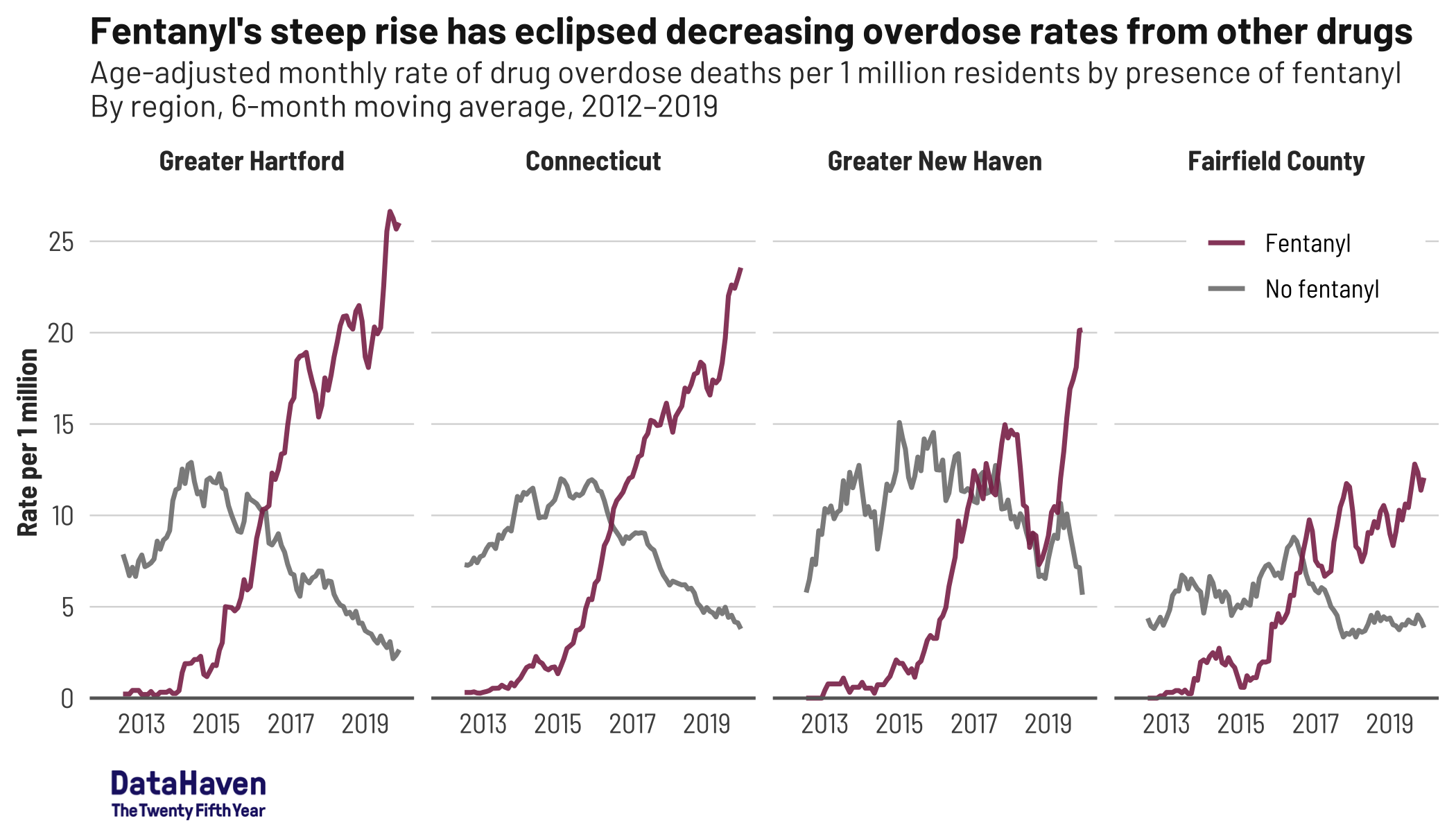
The new report also notes that the reasons why people turn to illicit drugs—specifically opiates—are often related to an accumulation of social and economic factors, including adverse childhood experiences, experiences in the criminal justice system, inadequate health care, family history, and stress. For some, seeking treatment for drug misuse is complicated by mistrust of health care providers or fear of law enforcement. Some individuals give up on seeking help.
Meanwhile, in rural areas, research suggests that years of economic decline in former industrial areas, often with long histories of alcohol and drug misuse, have left residents socially and economically isolated. Many who were dealing with workplace injuries or disability may have received prescription opioids for legitimate medical reasons, then progressed toward opioid misuse over time. Nationally, about one quarter of individuals on prescription pain opioids engage in misuse. For rural individuals, access to treatment is often complicated by their distance from providers.
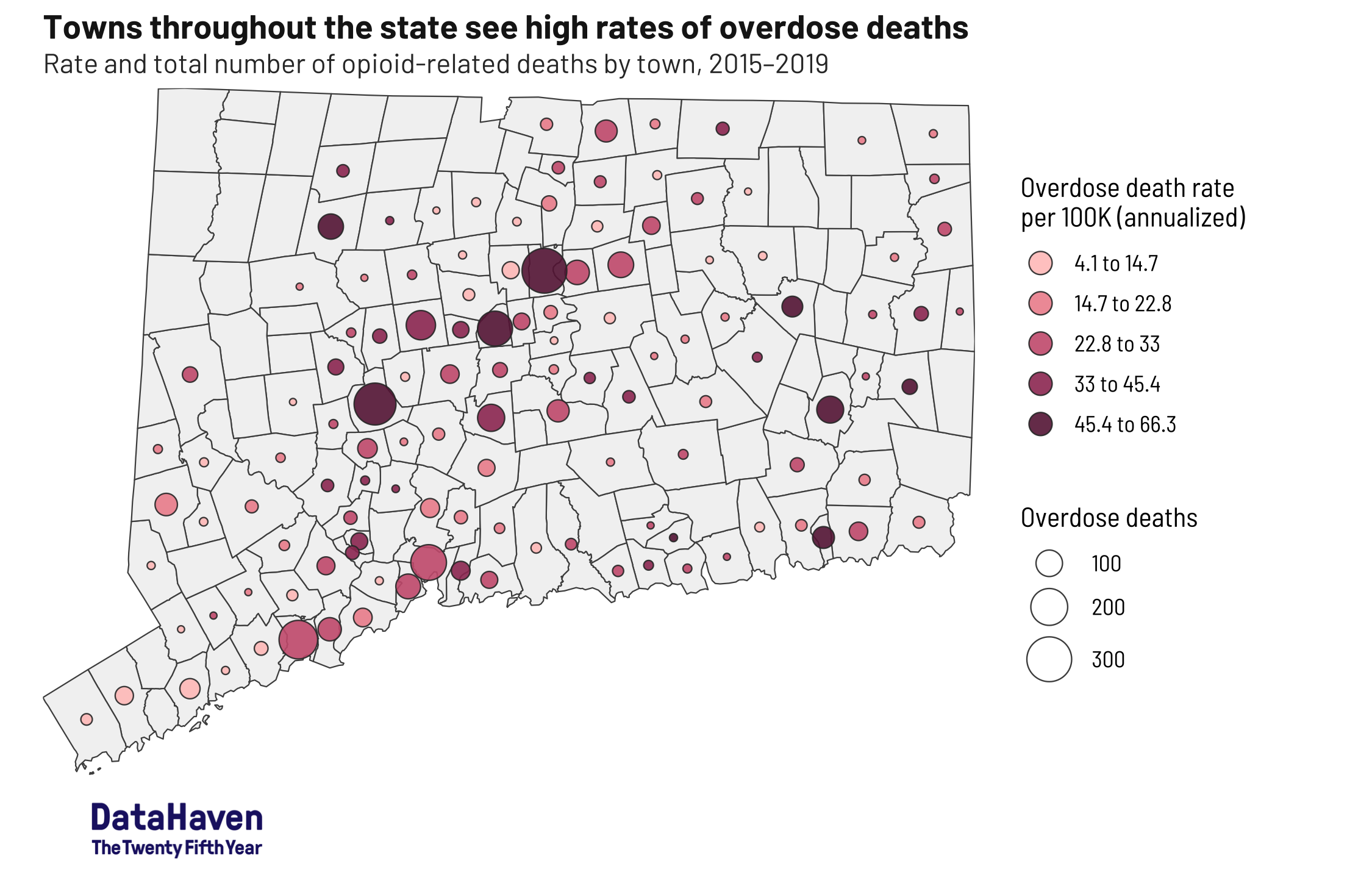
The opioid epidemic is not simply the sum of individual addictions. It is an economic and social phenomenon, affecting people all over the state, and the COVID-19 pandemic has made the fight against it harder. Understanding this, and ramping up our treatment and intervention response as a result, can save lives.
John Park is Research Assistant at DataHaven, a New Haven-based non-profit organization with a 25-year history of public service to Connecticut communities. Its mission is to empower people to create thriving communities by collecting and ensuring access to data on well-being, equity, and quality of life. Some of the content for this article is drawn from DataHaven’s new publication on health equity (ctdatahaven.org/healthequity), and data graphics are contributed by Camille Seaberry, Senior Research Associate.
by Numi Katz
On June 29, amidst pandemic-induced unemployment and economic uncertainty, the Gov. Ned Lamont’s administration released a sweeping $33 million assistance program for renters, homeowners, and local landlords. Connecticut has been lauded as a national leader in the housing policy response to the COVID-19 pandemic.
The relief package features state and federal support, ranging from rental assistance for those experiencing income or job loss to mortgage relief programs for homeowners. Critically, the program works to augment patchwork policy at the federal level, providing support to those who may not qualify for CARES Act benefits.
With data from the Census Bureau’s new Household Pulse Survey showing that 34 percent of Connecticut renters reported having “no” or “slight” confidence in their ability to pay next month’s rent, these programs will help vulnerable individuals avert crisis.
The stress of housing insecurity and homelessness has been shown to produce marked negative effects on mental and physical health. DataHaven’s 2018 Community Wellbeing Survey found that only 34 percent of recently evicted adults reported being in very good health.
The stories behind these numbers reveal the web of factors that expose some groups to the worst effects of one health or economic crisis after another. In the four-part video series “COVID-19 Reckonings” produced by Purple States and DataHaven, we hear from community members with the most at stake in Connecticut’s short- and long-term response to COVID-19. The first episode, “More exposure,” explored the uneven spread of the virus. In the second episode of the video series, we meet Wanda, who was homeless for 32 years. In 2007, she managed to escape a cycle of abuse and addiction. But she was unable to escape the cumulative impact of so many years of homelessness on her heart. The episode, entitled “Deadlier,” conveys the danger posed by the pandemic to individuals like Wanda who are already facing adverse health outcomes.
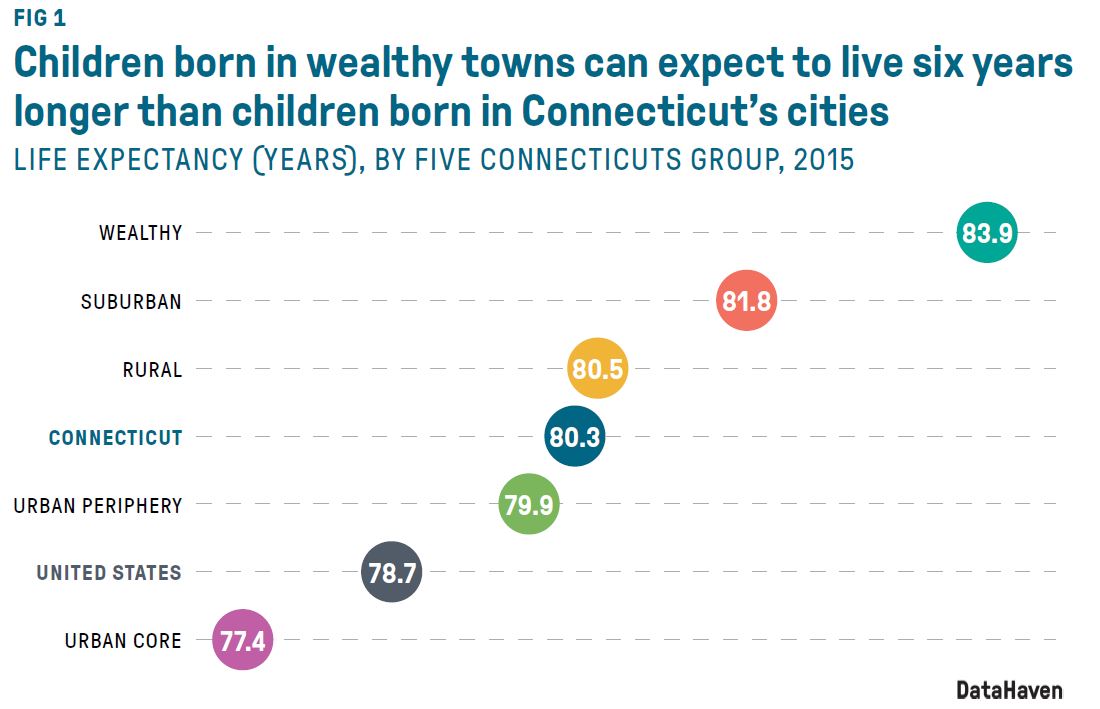
Safe and stable housing must be seen as imperatives of the state-level reopening and recovery strategy. However, achieving an equitable recovery demands not only short-term support and relief programs for individuals but also a reevaluation of the housing policies that have made Connecticut one of the most segregated states in the country. In a state where children born in wealthy towns have a life expectancy six years longer than those born in urban areas, our pandemic response must address the network of social factors— housing, access to health care, nutrition, and economic stability— that reproduce and exacerbate unequal outcomes.
Connecticut has an unprecedented opportunity to pursue bold innovation and experimentation in housing policy: tackling long standing issues such as housing affordability, housing insecurity, and economic segregation. The far-reaching scope of the crisis unites a new coalition of renters, landlords, and homeowners in desperate need of state support that will outlast the immediate relief package. State and local policymakers must capitalize on this newfound appetite for housing reform, coordinating short- and long-term policy responses at a state and regional level. The $10 million of CARES Act funding earmarked for cities also allows them to pursue previously cost-prohibitive local housing initiatives.
Findings from DataHaven’s new report “Towards Health Equity in Connecticut” show the central role stable housing will play in achieving the goals of a successful reopening. If we hope to reunite people with jobs, we must combat evictions and the subsequent prolonged search for housing which mean that evicted adults and those who are made homeless are much more likely to experience unemployment than those with stable housing. If we hope to return children to productive learning environments, we must combat evictions, which have been shown to worsen educational outcomes for children, a trend compounded by access to many school’s education programs predicated on a child’s reliable access to the internet.
But we also know that economic hardship is not distributed equally: COVID-19 has strikingly illuminated and compounded existing inequalities in Connecticut. Policy decisions made in a more explicitly racist past have created deep and abiding inequality. We cannot excise current policy decisions from this history; rather, we must learn from the contours of inequality COVID-19 has heartbreakingly put into focus and address them head on.
Connecticut’s struggle with housing affordability sheds light on the necessity of approaching housing relief holistically. Renters, who, like Wanda, are more likely to be Black, Latino, or female, are also more likely than homeowners to experience severe housing cost burden or pay more than half of their income on housing. No part of the state is spared; for example, DataHaven’s new report finds that in Stamford and Greenwich, 36 percent of Latino, 33 percent of Black, 19 percent of Asian, and 17 percent of white households are severely cost-burdened.
Income loss due to the COVID-19 pandemic exacerbates pre-existing inequalities: data from April and May show that 67 percent of Latino households and around 50 percent of Black and Asian households reported a loss of income from employment, compared to 43 percent of white households. DataHaven analysis of microdata from the Household Pulse Survey show that 47 percent of Latino and 33 percent of Black renters reported that they were not likely to be able to make their June rent payments, compared to 19 percent of white renters.
Prior to the pandemic we already witnessed Connecticut’s lopsided housing stock — with single-family homes located in predominantly wealthier suburban areas and rental as well as affordable housing located in urban areas— contributing to worsening economic and racial segregation within the state. Now, analysis from DataHaven’s COVID-19 dashboard shows that transmission of the virus has been higher in urban areas, where the pandemic compounds issues of housing insecurity, forcing residents into unsafe or overcrowded housing or for the most vulnerable, leaving them homeless.
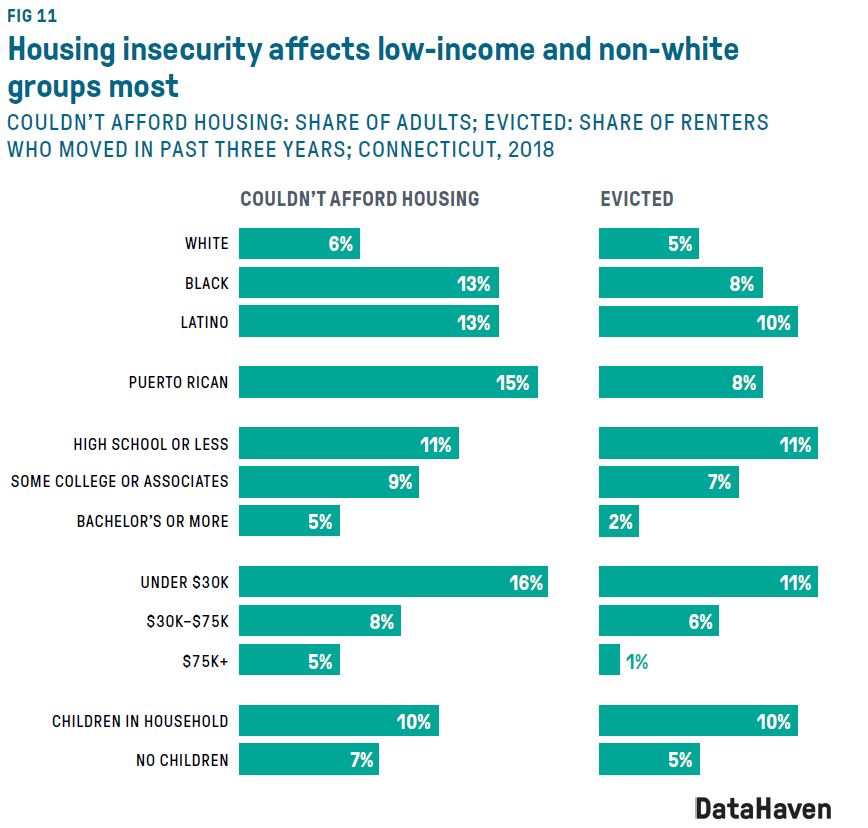
Through policy experimentation, leaning on local data, engaging diverse and newly united stakeholders, and paying attention to the experiences of residents like Wanda and others featured in COVID-19 Reckonings, we can build more resilient communities. For example, using the new initiatives the governor’s relief program outlines for supporting homeless populations or renters as a bridge to building the long-term institutional capacity and support to improve our communities.
Through proper coordination and implementation, these programs can provide invaluable policy insight into what programs work best for our communities. We have the rare opportunity to observe how innovative housing policy — from rethinking a hyper-local approach to affordable housing to block grants for improving communal well-being— can transform communities. This information will arm us with the tools to take on the difficult task of breaking down entrenched inequalities at a state level.
The honor of being celebrated as a leader in COVID-19 housing policy comes with responsibility. We know that building communal resilience —providing people the tools necessary to emerge from the pandemic— begins at home.
Local and state officials have a once-in-a-lifetime chance to tackle not merely the consequences but the causes of inequality. By equalizing the odds of achieving health and well-being, we can emerge from the pandemic as a stronger Connecticut for all residents regardless of their zip code.
Numi Katz is at DataHaven, a New Haven-based non-profit organization with a 25-year history of public service to Connecticut communities. Its mission is to empower people to create thriving communities by collecting and ensuring access to data on well-being, equity, and quality of life. Graphics in this piece are from a new report by DataHaven.
[Excerpt from Hearst Connecticut Media Editorial Board masthead, June 19, 2020]
[….]
Federal estimates show the unemployment rate, which skyrocketed at the start of the pandemic, will remain high at least through the end of the year. Thousands of people in Connecticut will remain in need of serious help to make ends meet, and that is not likely to change in the near term.
All that makes Gov. Ned Lamont’s comments this week on the future of unemployment assistance hard to understand. Lamont said he doesn’t see a need to extend the federal government’s $600-a-week unemployment benefit, saying it could discourage people from going back to work. “I don’t think we need that,” Lamont said of a program that congressional Democrats have proposed extending into next year, putting him in agreement with Republicans who seem uninterested in further stimulus as the economy recovers.
It also puts him at odds with state Democrats. “The $600 a week has been a lifeline not just for families across the state — but for our economy as a whole,” state Sen. Matt Lesser said this week. “Our economy is hurting because of a global pandemic, not because people don’t want to work.”
Meanwhile, the economic toll on the state is real and growing. According to census data as interpreted by DataHaven, some 47 percent of Latino and 33 percent of black renters in Connecticut reported last month they were not likely to be able to make their June rent payments, a direct result of lost work from the coronavirus, where people of color have been disproportionately impacted. Experts warn of the danger of a “housing apocalypse” as thousands of people are unable to pay rent or mortgages, resulting in evictions on a grand scale if unemployment assistance is not extended.
[…]
For immediate release — June 18, 2020
For media: Download this media advisory and an Executive Summary as a PDF:

New Haven, CT – The COVID-19 pandemic has exposed stark differences in how Connecticut residents are able to access the resources they need to maintain good health. These health disparities are rooted in broader inequities in education, economic stability, nutrition, housing, health care, and social context, all of which must be addressed in order to help communities to recover from the pandemic and promote resilience, according to a new report from DataHaven.
The new report, titled “Towards Health Equity in Connecticut: The Role of Social Inequality and the Impact of COVID-19” (click here to visit the main report page) offers an in-depth analysis of the factors underlying widespread health inequities in the state, such as discrimination, poverty, and access to community resources. Among the most pronounced results of these are the gaps in life expectancy, where people born in neighborhoods just a few miles apart may see life expectancy gaps of up to 20 years. The report is available for free online at ctdatahaven.org/healthequity.
“Never has the DataHaven report on health equity in our state been more timely,” said Sten Vermund, Dean of the Yale School of Public Health. “The documentation of how social inequalities drive adverse health care outcomes is stark, reminding us that social determinants of disease are the strongest drivers in Connecticut of who lives and who dies.”
The report focuses on five social determinants of health: Education & Economic Stability, Nutrition & Hunger, Housing & the Physical Environment, Health Care Coverage & Affordability, and the Social Context of Health Care. Each of these categories draws on relevant indicators from a wide range of data sources, including DataHaven’s live interviews with over 32,000 randomly-selected individuals across Connecticut. An executive summary is attached.
Indicators throughout the report reveal that social inequality has created a chasm between Connecticut residents with access to resources that are instrumental in maintaining health—economic opportunity, healthy living conditions, safe neighborhoods, and medical care—and those without the same resources.
COVID-19’s disparate impact on different demographics has thrust health inequity into the spotlight. However, these disparities pre-date the pandemic. Barriers to health disproportionately impact people of color, low-income individuals, people experiencing homelessness, women, the elderly, and people with disabilities. These are some of the same groups that have faced the most severe cases of illness and death from COVID-19.
Unequal access to health care providers, insurance coverage, or COVID-19 testing resources are just the beginning. Even before an individual requires medical attention, their likelihood of being exposed to the virus and getting sick are tightly linked to social factors like food and housing insecurity, discrimination in the health care system, pre-existing comorbidities—often resulting from financial insecurity, working conditions requiring close contact with many people and other obstacles to social distancing.
“The racial and ethnic health disparities that are so clear during this pandemic reflect longstanding disparities in health outcomes and access to resources that cannot be separated from the impact of racism and discrimination,” said Patricia Baker, president and CEO of the Connecticut Health Foundation, a funder of the new report. “It is critical that as we work to eliminate disparities, we recognize and address the many ways that racism shapes health outcomes and influences the systems and institutions we all rely on for health and well-being. This report provides important context for everyone working to respond to COVID-19 and underscores the importance of data on race and ethnicity to identify disparities.”
This report offers actionable recommendations for mitigating health disparities by addressing social disparities, such as expanding insurance coverage; closing gaps in educational opportunities beginning in youth; increasing economic opportunities and access to food, housing, and comprehensive social services; and reducing discrimination in employment, health care, policing, wealth building, and urban planning. To target communities most affected by the legacy of discrimination, these policies should be designed and executed in collaboration with community-based organizations. These measures alone will not end the devastation of COVID-19—that will require continued work—but reducing social inequality can alleviate the pandemic’s burden on the most vulnerable Connecticut populations and boost community resilience.
“Connecticut must take corrective action on the policies and practices that have led to the social inequities documented in this new report,” said Mark Abraham, Executive Director of DataHaven. “These are more important than ever to monitor through a health equity lens, as the data about Connecticut’s recovery as a whole can otherwise hide how conditions may be worsening for groups that are impacted by racism and other forms of oppression.”
“The new DataHaven report is a vital tool. The COVID-19 pandemic and recent community stresses highlight the need to continue to address health inequities among communities of color,” said Maritza Bond, Director of the New Haven Health Department.
“Social inequities erect barriers to health for people of color in Connecticut,” said Karen Siegel, Director of Policy at Health Equity Solutions, an organization that promotes equal access to health in Connecticut. “This report points to the need to mobilize community health workers to connect their communities with the social, health, and economic services needed to weather the pandemic and long recovery period ahead.”
“In our society, racism is a virus too. The new DataHaven report reinforces that we cannot address the consequences of COVID-19 without treating the symptoms of this much older and more resistant affliction, said Mendi Blue, Chief Community Impact Officer at Fairfield County’s Community Foundation. “Fairfield County’s Community Foundation is doubling down on our commitment to achieving equity, and explicitly acknowledging that health inequity is overwhelmingly correlated with race. We cannot close opportunity gaps without facing this reality and targeting our funding, capacity building, and other resources towards racial justice. We are committed to this complex, sometimes uncomfortable, and transformative work.”
About DataHaven: DataHaven is a New Haven-based non-profit organization with a 25-year history of public service to Connecticut communities. Its mission is to empower people to create thriving communities by collecting and ensuring access to data on well-being, equity, and quality of life. Learn more at ctdatahaven.org.
[Excerpt from feature article by Peggy McCarthy, C-HIT]
Beyond the gleaming office towers overlooking I-95 in Stamford and the pleasure boats that frequent the city’s marinas, thousands of city residents are struggling with hunger, a situation worsened by the pandemic.
Severe food needs in Stamford, which has the most COVID-19 cases in Connecticut, reflect the state and national food emergency wrought by record unemployment. Consistent with the national experience, Latino and black residents, who comprise about 40% of the city’s population, are disproportionately contracting COVID-19 and losing low-wage work. Latinos comprise 26% (33,000) of Stamford’s population, blacks 14% (17,000).
The Brookings Institution has reported that more than one in five households nationally were food insecure by the end of April. The Connecticut Food Bank, which services 270,000 people in its region, projects that the pandemic will result in as many as 187,000 additional state residents becoming food insecure.
A 2018 DataHaven survey titled the Fairfield County Community Wellbeing Index found that food insecurity was experienced in Stamford by 17% of blacks, 13% of Latinos, and 9% of residents overall. The pandemic and resulting loss of jobs have heightened that food insecurity. Social services providers say the crisis illuminates ethnic and racial disparities in health and income that lead to food insecurity.
Many immigrants are undocumented and can’t get unemployment compensation, said Catalina Horak, executive director of an immigrant program called Building One Community, which offers educational and social programs. She says immigrants have lost jobs in restaurants, hotels, construction, landscaping, and as housekeepers and nannies without “the luxury of working from home.”
[….]
[Excerpt of feature article by Jacqueline Rabe Thomas, Connecticut Mirror, March 19, 2020]
“Every elementary school student in Glastonbury was sent home with an iPad on the day Connecticut’s governor declared a “public health emergency” to blunt the spread of the coronavirus. On it were all the learning platforms students would need to resume learning online. Students without internet access at home were provided a connection by the district. [….]
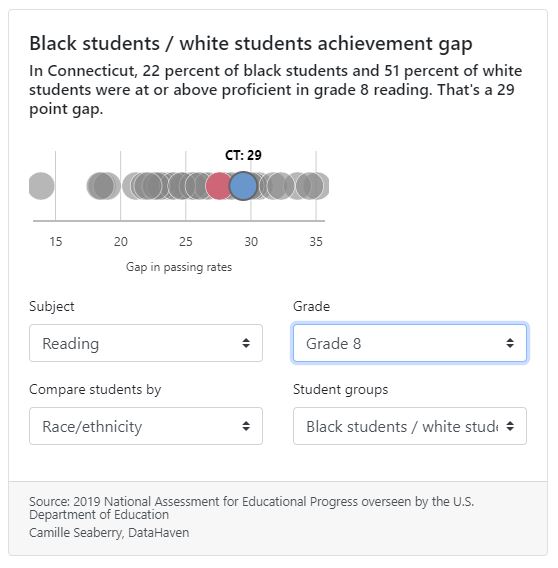
[The article contains an embedded visualization of national data from the 2019 National Assessment of Educational Progress developed by Camille Seaberry of DataHaven. A direct link to the visualization is here: https://ct-data-haven.github.io/naep_viz/ ]